
Iran’s Supreme Leader Ayatollah Ali Khamenei, Who Led the Islamic Republic Since 1989, Is Dead at 86
Iran confirms the death of long-time Supreme Leader Ayatollah Ali Khamenei at 86 after a joint U.S.–Israeli strike, ushering in a period of uncertainty for Tehran and the region.

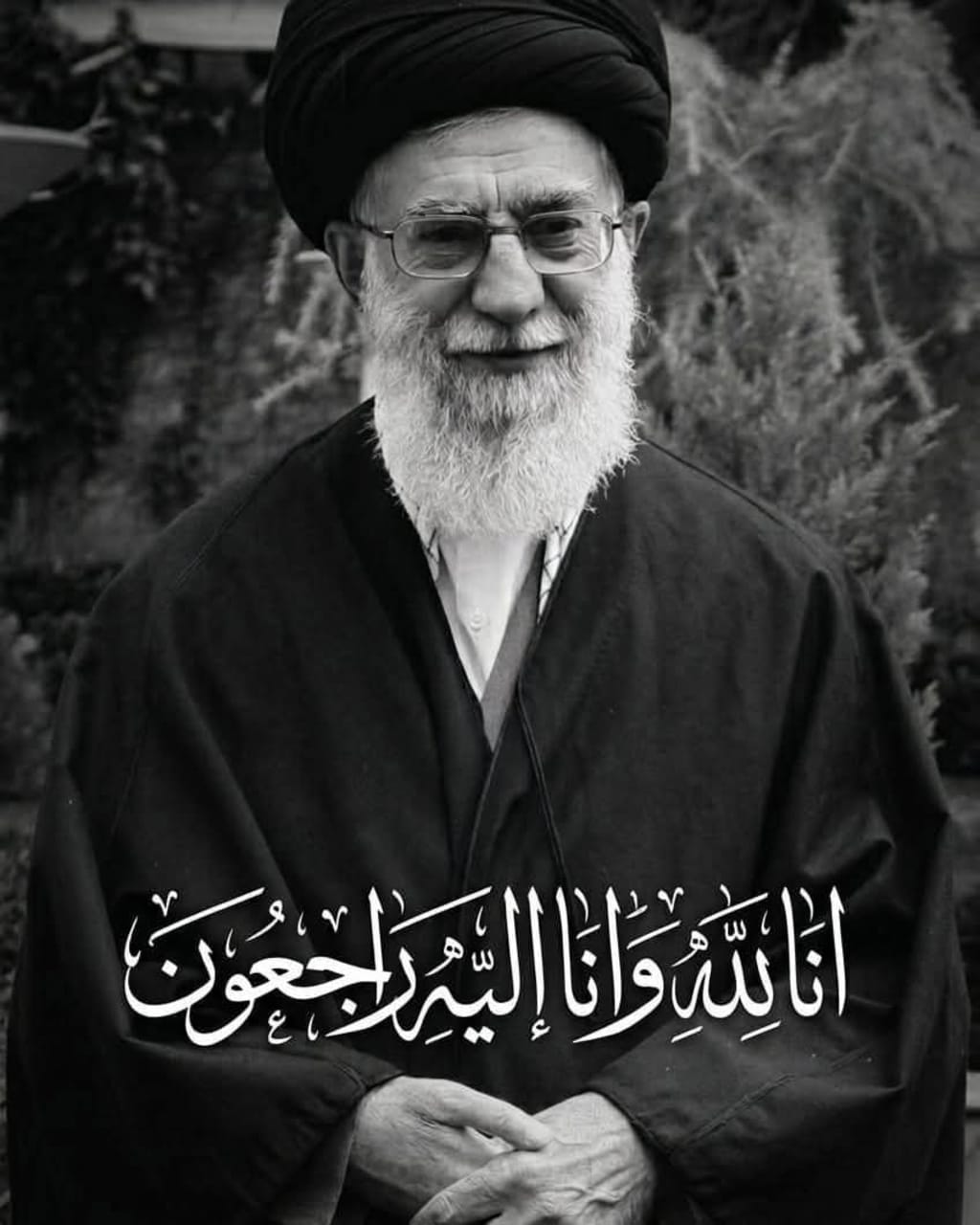
Ayatollah Ali Khamenei, the supreme leader of the Iran for more than three decades, has died at age 86, Iranian state media confirmed, marking a historic turning point for Tehran and a potential reshaping of Middle East geopolitics. His death was announced Sunday following a major joint military operation by the United States and Israel that reportedly struck his compound in Tehran over the weekend.
Iran’s official broadcaster described Khamenei’s death in solemn terms, saying the supreme leader “has reached martyrdom” and announcing 40 days of public mourning across the country. Authorities declared a week-long holiday to honour him, a signal of his central role in Iran’s state identity.
A Leader Who Dominated Iranian Politics
Khamenei assumed the post of supreme leader in 1989 after the death of Ayatollah Ruhollah Khomeini, the founder of the Islamic Republic. Although originally seen by some as a compromise successor with weaker religious credentials, Khamenei consolidated power over time and became one of the most influential figures in Iran’s modern history.
As supreme leader, he held ultimate control over the government, military, judiciary, and state media — outranking elected officials such as the president and parliament. He was the commander-in-chief of the armed forces and the final authority on foreign policy, security, and national ideology, shaping Iran’s path through repeated domestic and international crises.
Domestic Hardline Rule and Crises
Domestically, Khamenei’s tenure was marked by repeated unrest and government crackdowns. Major waves of protest erupted under his watch, including large-scale demonstrations in 2022 over the death of Mahsa Amini, an Iranian Kurdish woman who died in morality police custody, sparking widespread outrage. Security forces were accused of lethal force against demonstrators, intensifying international criticism of Tehran.
Through periods of economic hardship, unemployment, inflation, and social restrictions, opposition to the clerical establishment grew among younger Iranians who chafed under political and cultural repression. Yet, the regime maintained control through a network of loyal institutions, including the powerful Islamic Revolutionary Guard Corps (IRGC), which became a dominant force in both security and economic spheres.
Foreign Policy and Regional Influence
Khamenei’s foreign policy was defined by opposition to Western powers, particularly the U.S. and Israel, and by expanding Iran’s influence across the Middle East. Tehran supported allied militias and political groups in countries such as Iraq, Syria, Lebanon, and Yemen, viewing them as part of an “Axis of Resistance” against Western influence.
His resistance to U.S. pressure over Iran’s nuclear ambitions was a defining feature of his leadership. Although he issued a religious ruling that nuclear weapons were forbidden under Islam, Tehran advanced its nuclear program significantly, drawing intense scrutiny and sanctions from the West. In 2015, Iran agreed to an international nuclear deal, but the U.S. withdrawal from the pact in 2018 led to renewed escalation and reciprocal violations.
The Strike and Its Aftermath
According to multiple reports, Khamenei was killed on February 28, 2026, after a coordinated military operation by U.S. and Israeli forces targeting key locations in Tehran, including his residence and other strategic sites. President Donald Trump publicly confirmed the death on social media platforms, framing it as justice for the victims of the Iranian regime and a potential catalyst for change in Iran’s governance.
Before Iranian state confirmation, there was confusion about his status, with semi-official outlets initially reporting that he remained “steadfast and firm.” However, the state broadcaster’s confirmation has now ended that uncertainty.
Business Standard
Uncertain Succession and Power Struggles
Khamenei’s death leaves a significant power vacuum. Iran’s constitution empowers the Assembly of Experts, a body of senior clerics, to select his successor, but no clear front-runner has emerged. Analysts warn that factional infighting among hard-liners, conservatives, and pragmatic elements could intensify as various interests seek to shape the next era of Iranian leadership.
The role of the IRGC is also critical; the powerful military institution has played a central role in maintaining internal order and executing foreign policy goals. Its influence may be decisive in determining Iran’s political direction and stability in the coming months.
Regional and Global Repercussions
The death of such a pivotal figure is bound to send shockwaves beyond Iran’s borders. Middle Eastern governments, global powers, and international markets are all closely watching the developments. Security measures have been heightened across the region amid fears of retaliation or escalation, while diplomatic efforts to manage tensions are likely to intensify.
Oil markets, already sensitive to geopolitical risk, may also react to the leadership transition and potential instability, given Iran’s strategic position in global energy corridors.
End of an Era
Ayatollah Ali Khamenei’s death marks the end of an era that saw Iran transform from a revolutionary state into a formidable regional power, albeit one fraught with internal repression and international isolation. His legacy is deeply polarizing — venerated by loyalists and reviled by critics who accuse him of authoritarianism and human rights abuses.
As Iran enters a period of uncertainty, questions loom about its future direction, leadership dynamics, and the broader implications for Middle East stability in an already volatile geopolitical landscape.
About the Creator
Fiaz Ahmed
I am Fiaz Ahmed. I am a passionate writer. I love covering trending topics and breaking news. With a sharp eye for what’s happening around the world, and crafts timely and engaging stories that keep readers informed and updated.
Keep reading
More stories from Fiaz Ahmed and writers in The Swamp and other communities.
Ukraine War Briefing: Kyiv to Accelerate Placement of Anti-Drone Nets Across Frontline
Ukrainian authorities have announced plans to rapidly expand the installation of anti-drone protective nets along key sections of the front line, as Russian aerial attacks intensify and low-cost drones continue to inflict casualties and disrupt military logistics. The move reflects Kyiv’s growing emphasis on defensive innovation as the war enters another grueling phase marked by attrition and technological adaptation. Officials in Kyiv said the nets — often made of reinforced steel mesh or industrial cables — will be deployed over trenches, vehicle routes, ammunition depots, and medical evacuation corridors. The aim is to intercept or detonate incoming drones before they strike troops or equipment. President Volodymyr Zelenskyy praised frontline units and civilian volunteers who have pioneered the use of such barriers, calling the initiative “a practical and life-saving response to a changing battlefield.” He added that expanding the program is now a national priority as Ukraine confronts daily drone assaults from Russia. Rising Drone Threat Over the past year, drones have become one of the most lethal tools of modern warfare in Ukraine. Cheap, commercially modified quadcopters and long-range explosive drones have been used to target infantry positions, armored vehicles, and even civilian infrastructure. Military analysts say that Russia has dramatically increased its production and deployment of so-called “kamikaze” drones, forcing Ukraine to adapt quickly. While air defense systems remain critical against missiles and aircraft, they are often too costly or scarce to counter every small drone. Anti-drone nets offer a low-tech but effective alternative. By physically blocking drones from reaching their targets, the nets reduce the impact of explosive payloads and prevent surveillance drones from identifying troop positions. A Ukrainian engineer involved in the project said the design was inspired by fishing nets and industrial safety barriers. “We needed something simple, fast to install, and cheap enough to cover kilometers of front line,” he explained. Frontline Implementation The initial rollout has focused on eastern and southern sectors where fighting is most intense. Soldiers have already begun installing net corridors over supply routes and trench systems, sometimes using cranes and trucks to suspend them several meters above ground. Commanders report early success. In several cases, drones became entangled in the mesh and exploded harmlessly above defensive positions. “It doesn’t solve everything, but it gives our troops an extra layer of protection,” said one field officer. Ukraine’s defense ministry confirmed that funding has been allocated to accelerate production and deployment. Civilian factories and metal workshops are being contracted to manufacture standardized net systems, while volunteers continue to help transport and install them near the front. Psychological and Tactical Impact Beyond physical protection, the nets are said to have a psychological benefit. Soldiers operating under constant drone threat often experience stress and fatigue. Knowing that some form of barrier exists overhead has reportedly improved morale in certain units. Military experts caution, however, that the measure is not foolproof. Drones can be programmed to fly higher or attack from different angles, and heavy artillery can destroy net structures. Still, analysts describe the strategy as part of a broader trend toward improvised battlefield defenses. “This war has shown that innovation doesn’t always mean high technology,” said a European defense analyst. “Sometimes simple engineering solutions can shift the balance, at least locally.” Broader Strategic Context The decision to expand anti-drone nets comes as Ukraine continues to face shortages of ammunition and air defense interceptors. Western military aid has resumed but remains uneven, prompting Kyiv to emphasize cost-effective defensive tools. Meanwhile, Russia has continued its drone and missile campaign against Ukrainian cities and infrastructure. Energy facilities, rail networks, and residential areas have all been targeted in recent weeks, underscoring the urgency of defensive adaptations. Zelenskyy’s office said discussions are underway with international partners to share lessons learned from the net deployment program. Some NATO officials have reportedly expressed interest in studying the system for potential use in future conflicts. Looking Ahead As the war grinds on, Ukraine’s approach highlights a shift toward layered defense: combining traditional air defense systems with physical barriers, electronic warfare, and rapid battlefield engineering. The expansion of anti-drone nets may not change the overall strategic picture, but it reflects Kyiv’s determination to protect its forces with whatever tools are available. For Ukrainian soldiers on the front line, the nets represent more than metal and cables. They are a symbol of adaptation in a conflict where survival increasingly depends on creativity as much as firepower.
By Fiaz Ahmed 5 days ago in The Swamp
A Gathering of Evil Bosses
“I’m the queen of chin jutting while I smooth my hair, attacking, insulting, and deflecting to protect my appointer.” “Oh, please, Blondi, my hair is curled, highlighted, and longer than yours. I feature television commercials telling immigrants that we will give them a free plane ride home, and if they voluntarily turn themselves in, they will be allowed to legally apply for re-entry. It runs everywhere, and I look good in it! You can’t compete because of your blond hair. Mine is nicer, and my lips are prettier than yours.”
By Andrea Corwin 13 days ago in The Swamp



Comments
There are no comments for this story
Be the first to respond and start the conversation.