
Iran Vows to Attack Any Ship Trying to Pass Through Strait of Hormuz
A maritime threat that could shake global energy markets and widen an already volatile conflict
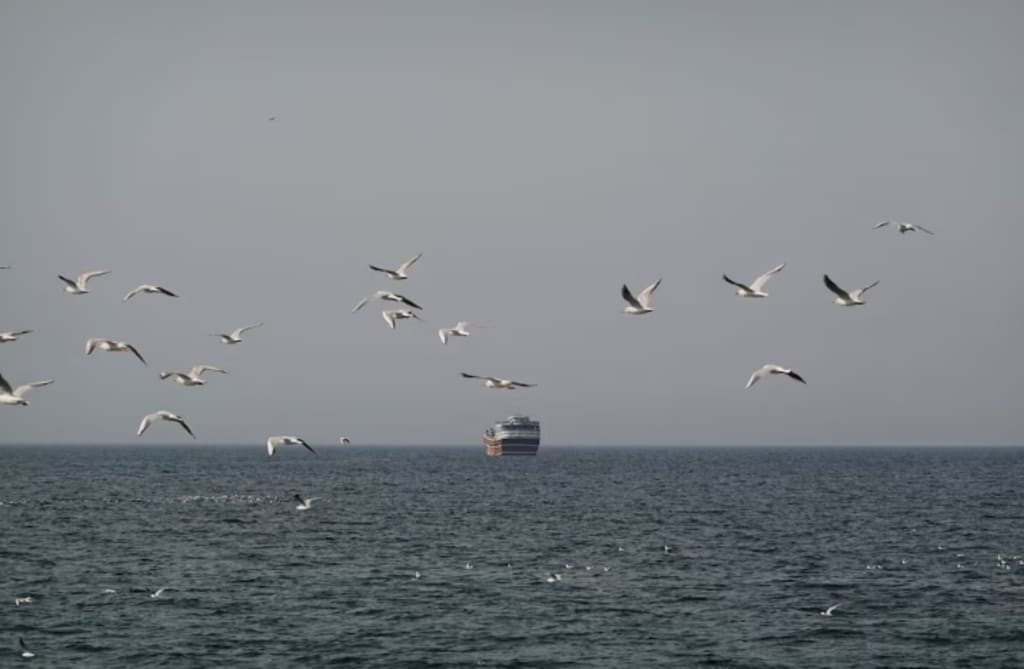
When Iran warned that it would attack any ship attempting to pass through the Strait of Hormuz, it wasn’t just another headline in an already tense regional standoff. It was a signal — loud and deliberate — that one of the world’s most vital maritime chokepoints could become the next frontline in an expanding Middle East conflict.
The statement, attributed to officials within the Islamic Revolutionary Guard Corps (IRGC), effectively challenges the long-standing principle of freedom of navigation in international waters. And because the Strait of Hormuz is one of the most strategically important waterways on Earth, the implications stretch far beyond the region.
Why the Strait of Hormuz Matters So Much
The Strait of Hormuz is a narrow stretch of water between Iran and Oman that connects the Persian Gulf to the Gulf of Oman and the Arabian Sea. At its narrowest point, it is only about 21 miles wide — yet roughly a fifth of the world’s oil supply passes through it every day.
Major oil exporters such as Saudi Arabia, the United Arab Emirates, Kuwait, Iraq, and Qatar depend on this route to move crude oil and liquefied natural gas to global markets. For energy-importing nations in Asia and Europe, the strait is an economic lifeline.
Any serious disruption — even temporary — can send oil prices soaring, rattle financial markets, and increase shipping insurance costs overnight.
That’s why Iran’s threat carries such weight.
What Triggered the Threat?
Iran’s warning comes amid heightened military tensions in the region, particularly involving Israel and Western allies. Tehran has accused outside powers of aggression and interference, framing its maritime posture as a defensive measure.
In recent days, reports have emerged of commercial vessels receiving radio warnings not to enter the strait. Some shipping companies have already delayed or rerouted vessels, wary of escalating risk.
While Iran has threatened closure before — especially during periods of sanctions pressure — explicitly vowing to attack any vessel attempting passage marks a sharper escalation.
It moves from symbolic deterrence to declared military enforcement.
Is Iran Capable of Closing the Strait?
The short answer: not easily — but it can certainly make transit dangerous.
Iran possesses fast attack boats, anti-ship missiles, naval mines, and drones. The IRGC Navy specializes in asymmetric maritime warfare, designed to harass and disrupt larger naval forces and commercial shipping.
However, fully closing the strait would likely provoke an international response. The United States and allied navies maintain a significant presence in the region to protect commercial traffic and uphold freedom of navigation.
Historically, even at moments of peak tension, Iran has used the threat of closure as leverage rather than carrying out sustained enforcement.
But in a rapidly escalating conflict environment, miscalculations become more likely.
The Global Energy Impact
Oil markets are extremely sensitive to geopolitical risk. Even without physical disruption, the perception of danger can drive price spikes.
When shipping companies hesitate, supply chains slow. When insurers raise “war risk” premiums, transport becomes more expensive. Those costs often trickle down to consumers in the form of higher fuel and commodity prices.
Asia would feel the impact most acutely. Countries like China, India, Japan, and South Korea rely heavily on Gulf energy supplies. Europe, already navigating energy instability in recent years, would also face renewed vulnerability.
The strait’s significance isn’t just about oil. It’s about economic stability.
A Challenge to International Law
Under international maritime law, commercial vessels have the right to transit international straits without interference. Any attempt to attack or block ships in such waterways would be viewed by many governments as a serious violation.
This puts Tehran’s threat in direct tension with established norms.
The international community — including maritime organizations — has urged caution and restraint. Naval forces in the region are likely reviewing contingency plans to ensure shipping lanes remain open.
But the line between deterrence and confrontation is thin.
Regional Fallout
Iran’s warning doesn’t exist in isolation. It intersects with broader conflicts unfolding across the Middle East.
Escalation in one theater can ripple outward. If vessels are attacked, insurance markets could freeze up. If naval forces respond, military incidents could multiply.
Gulf states — already wary of being drawn into larger confrontations — may increase their own defensive measures. Meanwhile, global powers will face difficult choices about how directly to respond.
The Strait of Hormuz has long been described as a “pressure point.” Right now, that pressure appears to be rising.
Is This Leverage or a Red Line?
Iran has historically used bold rhetoric about the strait as a negotiating tool, particularly when facing sanctions or military pressure. The threat alone can shift diplomatic calculations.
The question now is whether this latest vow is strategic signaling — or the beginning of a more dangerous phase.
If the threat is enforced, even in a limited way, it would represent one of the most consequential maritime escalations in decades. If it remains rhetorical, it may still succeed in demonstrating Iran’s ability to disrupt global systems without firing a shot.
Either way, the world is watching.
The Bigger Picture
The Strait of Hormuz is more than a waterway. It’s a barometer of regional stability.
When tensions flare there, markets react. Governments recalibrate. Military planners brace for contingencies.
Iran’s vow to attack any ship attempting passage underscores how interconnected today’s geopolitical crises have become. A decision made in Tehran can influence gas prices in Tokyo, stock markets in London, and shipping insurance rates in Singapore.
In an era of fragile global supply chains and heightened regional rivalries, maritime security is no longer a distant strategic concept — it’s an everyday economic concern.
Whether diplomacy can cool the waters remains uncertain. But one thing is clear: if the Strait of Hormuz becomes an active battlefield, the consequences will reach far beyond its narrow shores.
About the Creator
The Saddest Thing - The Billionaires Who Rule America Aren't Even Enjoying Themselves
This single post says more about our ruling class than a thousand policy papers. The saddest thing about today's system is that the men robbing the rest of us - sabotaging our economic prospects, our pensions, our access to affordable healthcare - are not even happy.
By Scott Christenson🌴24 days ago in The Swamp
Here Are The 10 Most Powerful Air Forces in the World in 2025 – And France Is Second to Last
As global military technology continues to evolve, the ranking of the world’s most powerful air forces has shifted dramatically in 2025. Military analysts have assessed air forces based on a combination of fleet size, technological sophistication, readiness, operational experience, and strategic reach. The results reveal significant disparities between nations, with some long-standing military powers retaining dominance, while others, including France, surprisingly lag behind despite their historical military reputation. At the top of the list is the United States Air Force (USAF), which continues to maintain an unmatched edge in technology, global reach, and operational readiness. The USAF’s fleet of fifth-generation stealth fighters, including the F-22 Raptor and F-35 Lightning II, along with advanced bomber aircraft such as the B-2 Spirit and the B-21 Raider, provides the United States with unmatched aerial dominance. Coupled with a global network of bases, satellite reconnaissance, and rapid deployment capabilities, the U.S. remains the uncontested leader in air power. Second on the list is China, whose People’s Liberation Army Air Force (PLAAF) has grown rapidly in both size and sophistication. China has invested heavily in stealth fighters, such as the Chengdu J-20, and has expanded its strategic bomber capabilities with aircraft like the Xian H-20, reflecting the nation’s ambitions to project air power regionally and globally. The PLAAF has also developed advanced drone programs, hypersonic weapons, and integrated electronic warfare capabilities, making it a formidable opponent in any potential conflict scenario. Third place is held by Russia, which continues to maintain a strong air force with a focus on both quantity and quality. The Sukhoi Su-57 stealth fighter and modernized versions of the Su-35 provide Russia with a credible air combat capability. Additionally, Russia’s strategic bomber fleet, including the Tu-160 and Tu-95, enhances its long-range strike potential. While Russia faces challenges in logistics and modernization, its operational experience and robust defense industry keep it among the top air powers. Other countries in the top ten include India, Japan, Israel, South Korea, Turkey, and the United Kingdom, each demonstrating a mix of advanced aircraft, operational readiness, and domestic aerospace production capabilities. India and Japan have heavily invested in modern fighters and domestic production programs, while Israel is known for its highly trained pilots and integrated defense networks. South Korea and Turkey balance modern Western aircraft with indigenous upgrades, while the UK leverages its nuclear deterrent and fifth-generation fighter capabilities. Surprisingly, France, traditionally regarded as a military power with one of Europe’s most advanced air forces, ranks second to last in the 2025 assessment. Analysts point to several factors contributing to France’s low ranking. Although France possesses modern aircraft such as the Dassault Rafale, the air force suffers from limited fleet size, aging support systems, and budget constraints that restrict large-scale modernization. Additionally, France’s global deployment capacity is constrained compared to the U.S., China, or Russia, limiting its strategic reach. While operationally competent and technologically advanced, France’s air force cannot match the scale or depth of its global rivals. Several key takeaways emerge from the 2025 ranking. First, technological sophistication alone does not guarantee top ranking; fleet size, maintenance, training, and logistical support play equally important roles. Second, countries investing in domestic aerospace programs, such as China and India, are gaining strategic advantages by reducing reliance on foreign suppliers. Third, nations with limited defense budgets may struggle to maintain parity with more resource-rich powers, regardless of technological competence. Experts suggest that France’s position should not be interpreted as an immediate strategic weakness. Its air force remains capable for regional operations, NATO missions, and nuclear deterrence. However, the ranking highlights the increasing importance of scale, industrial capacity, and integrated technology in defining air power in the 21st century. In conclusion, the 2025 assessment of the world’s most powerful air forces reflects the shifting balance of global military power. While the U.S. continues to dominate, emerging powers such as China and India are rapidly advancing, and traditional European powers, including France, face challenges in maintaining competitive edge. The rankings underscore that in modern warfare, a combination of technological innovation, fleet size, strategic reach, and industrial capability determines the strength of a nation’s air force.
By Fiaz Ahmed a day ago in The Swamp


Comments
There are no comments for this story
Be the first to respond and start the conversation.