
Rafale: India prepares a second major Rafale M carrier jet contract
India moves toward a follow-on deal for Rafale M carrier fighters, strengthening naval air power and deepening its strategic defence partnership with France.

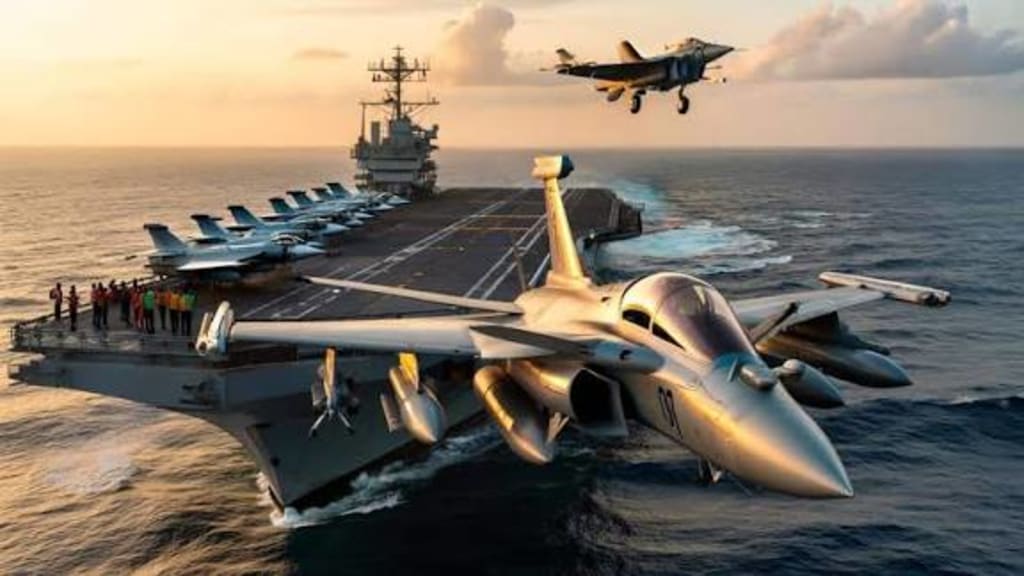
India is gearing up for yet another significant step in its growing partnership with Dassault Aviation by preparing a follow-on contract to expand its fleet of Rafale M carrier-based fighter jets. This potential new agreement comes on the heels of India’s landmark acquisition of 26 Rafale Marine aircraft — the first export order for the naval version of the French multirole fighter — and underscores New Delhi’s ambition to modernize its naval air power as it faces evolving security challenges in the Indian Ocean region.
In April 2025, India and France concluded a major intergovernmental agreement for 26 Rafale M jets, consisting of 22 single-seat and four two-seat aircraft, valued at roughly ₹63,000 crore (about $7.5 billion) and slated for delivery starting in 2028. These jets are intended to operate from India’s indigenous aircraft carrier INS Vikrant as well as the Soviet-origin INS Vikramaditya, replacing ageing MiG-29K platforms.
Now, barely a year after that deal was signed, New Delhi is laying the groundwork for an additional contract that could substantially increase its inventory of Rafale M fighters. Reports and defence sources indicate that India’s Navy has identified a requirement for more carrier-capable Rafale Marine jets to complement the existing order, potentially bringing the total number of Rafale Ms in Indian service to well over 50 aircraft.
This prospective contract is part of a broader strategy to ensure India’s maritime dominance in the Indian Ocean — a region of increasing geostrategic importance due to rising Chinese naval activity, contested sea lanes, and ongoing competition with other regional powers. The addition of more Rafale M aircraft would enhance the Indian Navy’s strike, reconnaissance, and air defence capabilities, enabling more robust carrier air wing operations for extended periods at sea.
The expanded Rafale M fleet would be expected to feature the latest F4 standard upgrades, including advanced avionics, reinforced structures, improved weapons integration, and enhanced sensor fusion designed to boost survivability and lethality in multi-domain operations. The F4 standard also improves interoperability with allied forces, a key consideration given India’s increased cooperation with Western and Indo-Pacific partners.
From a tactical perspective, carrier-borne aircraft like the Rafale M are critical for projecting power beyond a nation’s shores. They provide significant flexibility during maritime air defence missions, strike operations, fleet escort duties, and humanitarian assistance and disaster relief tasks. India’s Navy has placed emphasis on building a credible carrier strike capability as part of its overall force structure modernization, and these additional aircraft would play a central role in achieving that objective.
While official details about the second Rafale M contract — including the number of jets, monetary value, and timeline — have not been confirmed publicly, industry analysts believe negotiations between New Delhi and Paris are in advanced stages. A formal contract announcement could be linked to high-level diplomatic engagements, defence dialogues, or visits by senior officials from both countries.
In addition to the direct tactical benefits, this emerging contract has broader strategic implications. It signals India’s continued reliance on French aerospace technology in its quest to modernize its armed forces, even as New Delhi explores indigenous production and global partnerships for future combat aircraft. Past discussions have highlighted India’s desire for deeper technology transfer and local industrial participation — although France has historically been cautious about sharing sensitive source code and core intellectual property.
Economically, the expanded Rafale M deal could also involve a wide network of Indian suppliers and aerospace firms under India’s “Make in India” initiative. This would not only support local industry but also build up technical expertise and sustainment infrastructure for high-end military aircraft. Some commentators suggest that a significant portion of future jets could eventually be assembled or serviced domestically with French technical collaboration.
The potential new contract for additional Rafale M fighters illustrates how defence procurement is evolving into a long-term partnership between India and France. It builds on the foundation of previous deals — including orders for 36 Rafale jets for the Indian Air Force and the initial 26 naval Rafale Ms — and reinforces the importance of enduring military-industrial ties between the two democracies.
As India prepares to finalize this second contract, it is clear that carrier aviation remains a cornerstone of its military strategy. The expanded Rafale M fleet will significantly enhance the Indian Navy’s operational reach, contributing to deterrence and stability in the wider Indian Ocean region. Whether at sea or anchored at home ports, the aircraft are poised to become a defining feature of India’s naval aviation for decades to come.
About the Creator
Fiaz Ahmed
I am Fiaz Ahmed. I am a passionate writer. I love covering trending topics and breaking news. With a sharp eye for what’s happening around the world, and crafts timely and engaging stories that keep readers informed and updated.
Keep reading
More stories from Fiaz Ahmed and writers in The Swamp and other communities.
Starmer Faces Dilemma After Drone Hits British Base in Cyprus
British Prime Minister Keir Starmer is confronting a fraught political and diplomatic challenge after a hostile drone strike struck a United Kingdom military base in Cyprus, drawing international attention and raising questions about Britain’s role and response amid heightened tensions in the Middle East. The incident has tested both the UK’s defence posture and Starmer’s leadership at home, as officials and opposition politicians debate how to balance national security, diplomatic restraint, and global commitments. The attack occurred late last week at one of the UK’s sovereign base areas in Cyprus, long a strategic hub for British operations across the region. The base hosts signals intelligence facilities, logistics units supporting operations in the Middle East and Eastern Mediterranean, and serves as a key staging point for humanitarian and military missions. According to defence sources, the drone caused structural damage but no casualties, highlighting both the vulnerability of overseas facilities and the ability of small unmanned systems to penetrate otherwise secure perimeters. Early investigations suggest the drone strike was deliberate rather than accidental, prompting immediate concern in London and among NATO allies. While no group has formally claimed responsibility, officials suspect actors aligned with Iranian proxy forces in the broader regional conflict may be involved. Such groups have increased their operations in recent months, targeting Western and allied military assets in retaliation for allied strikes against Iranian interests further east. Starmer’s government has publicly condemned the attack, emphasizing that the UK will defend its personnel and interests. “We will not tolerate attacks on our forces or bases overseas,” a Downing Street spokesperson said, underscoring Britain’s resolve. However, Starmer’s response has been measured, avoiding retaliatory rhetoric that might escalate the situation. That cautious stance reflects the broader dilemma confronting the prime minister: how to respond firmly to aggression without drawing the UK deeper into a widening conflict. With British troops still supporting NATO missions and humanitarian operations in volatile regions, a heavy-handed response could risk escalation and entangle London in a broader confrontation. Opposition figures have seized on the incident to criticise the government’s defence strategy. Some Conservative MPs and defence analysts argue that the UK must send a stronger message of deterrence, potentially through joint military exercises with allies or sanctions targeting those believed responsible. Others, however, warn that such steps could be counterproductive, risking retaliation against British forces and citizens abroad. Foreign policy experts stress that the UK’s options are constrained by geography and alliances. Cyprus’s proximity to the Middle East places British bases within range of various actors, especially unmanned systems that are increasingly prevalent in modern warfare. While drones offer tactical advantages to militant groups, they also complicate defence planning, making fixed installations more vulnerable despite traditional perimeter security. In this context, Starmer’s government is exploring both defensive and diplomatic responses. Defence officials have accelerated efforts to harden UK facilities overseas, incorporating advanced counter-drone technologies and improved surveillance measures. These include electronic jamming systems, radar tracking networks, and rapid response teams capable of intercepting small unmanned aerial vehicles before they can strike. On the diplomatic front, London has urged United Nations and regional partners to condemn the attack and support investigations into its origin. British diplomats in the region are engaging with counterparts in Cyprus, Greece, and broader EU networks to coordinate messaging and reinforce commitments to de-escalation. Starmer’s dilemma is further complicated by domestic politics. Labour traditionally positions itself as cautious on military engagement, favouring diplomatic solutions where possible. Yet public opinion in the UK remains sensitive to perceived threats against British personnel. A response seen as too tentative could erode confidence in the government’s ability to protect national interests. Media coverage has reflected this tension, with commentators debating whether the attack should lead to a recalibration of British defence policy. Some argue that the UK must invest more heavily in autonomous defence systems and cyber capabilities to counter asymmetric threats like drones. Others caution against policies that could entwine Britain in conflicts fought primarily by larger powers with direct stakes in the region. For now, Starmer appears to be steering a careful course — condemning the strike, strengthening defensive measures, and seeking international support while avoiding actions that might provoke a broader confrontation. The coming weeks will likely see intensified debate in Westminster over the UK’s strategic priorities and how best to safeguard its forces abroad. As investigations continue and the international community weighs in, the Cyprus drone strike will remain a critical test of Starmer’s leadership and Britain’s role in a turbulent global security environment. The challenge will be finding a balance between deterrence and diplomacy as the UK navigates one of the most complex foreign policy dilemmas of the year.
By Fiaz Ahmed about 2 hours ago in The Swamp
The Saddest Thing - The Billionaires Who Rule America Aren't Even Enjoying Themselves
This single post says more about our ruling class than a thousand policy papers. The saddest thing about today's system is that the men robbing the rest of us - sabotaging our economic prospects, our pensions, our access to affordable healthcare - are not even happy.
By Scott Christenson🌴24 days ago in The Swamp
Switching Energy Deal Can Save £200 as Price Cap Falls, Say Experts
Energy experts are urging households to review their gas and electricity tariffs after the latest price cap reduction opened a potential savings window of up to £200 per year. While many consumers remain on standard variable tariffs protected by the energy price cap, analysts say switching to competitive fixed deals could now offer meaningful financial relief.
By Aarif Lashari3 days ago in The Swamp



Comments
There are no comments for this story
Be the first to respond and start the conversation.