
Starmer Faces Dilemma After Drone Hits British Base in Cyprus
A drone strike on a British base in Cyprus leaves Prime Minister Keir Starmer balancing military deterrence with diplomatic restraint amid rising Middle East tensions.

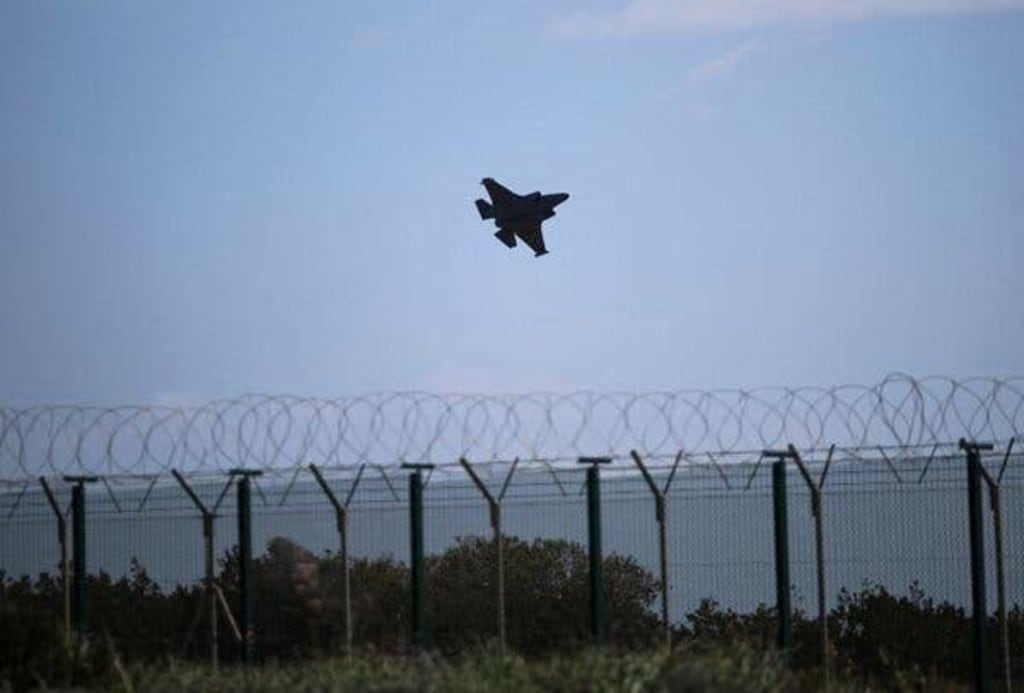
British Prime Minister Keir Starmer is confronting a fraught political and diplomatic challenge after a hostile drone strike struck a United Kingdom military base in Cyprus, drawing international attention and raising questions about Britain’s role and response amid heightened tensions in the Middle East. The incident has tested both the UK’s defence posture and Starmer’s leadership at home, as officials and opposition politicians debate how to balance national security, diplomatic restraint, and global commitments.
The attack occurred late last week at one of the UK’s sovereign base areas in Cyprus, long a strategic hub for British operations across the region. The base hosts signals intelligence facilities, logistics units supporting operations in the Middle East and Eastern Mediterranean, and serves as a key staging point for humanitarian and military missions. According to defence sources, the drone caused structural damage but no casualties, highlighting both the vulnerability of overseas facilities and the ability of small unmanned systems to penetrate otherwise secure perimeters.
Early investigations suggest the drone strike was deliberate rather than accidental, prompting immediate concern in London and among NATO allies. While no group has formally claimed responsibility, officials suspect actors aligned with Iranian proxy forces in the broader regional conflict may be involved. Such groups have increased their operations in recent months, targeting Western and allied military assets in retaliation for allied strikes against Iranian interests further east.
Starmer’s government has publicly condemned the attack, emphasizing that the UK will defend its personnel and interests. “We will not tolerate attacks on our forces or bases overseas,” a Downing Street spokesperson said, underscoring Britain’s resolve. However, Starmer’s response has been measured, avoiding retaliatory rhetoric that might escalate the situation.
That cautious stance reflects the broader dilemma confronting the prime minister: how to respond firmly to aggression without drawing the UK deeper into a widening conflict. With British troops still supporting NATO missions and humanitarian operations in volatile regions, a heavy-handed response could risk escalation and entangle London in a broader confrontation.
Opposition figures have seized on the incident to criticise the government’s defence strategy. Some Conservative MPs and defence analysts argue that the UK must send a stronger message of deterrence, potentially through joint military exercises with allies or sanctions targeting those believed responsible. Others, however, warn that such steps could be counterproductive, risking retaliation against British forces and citizens abroad.
Foreign policy experts stress that the UK’s options are constrained by geography and alliances. Cyprus’s proximity to the Middle East places British bases within range of various actors, especially unmanned systems that are increasingly prevalent in modern warfare. While drones offer tactical advantages to militant groups, they also complicate defence planning, making fixed installations more vulnerable despite traditional perimeter security.
In this context, Starmer’s government is exploring both defensive and diplomatic responses. Defence officials have accelerated efforts to harden UK facilities overseas, incorporating advanced counter-drone technologies and improved surveillance measures. These include electronic jamming systems, radar tracking networks, and rapid response teams capable of intercepting small unmanned aerial vehicles before they can strike.
On the diplomatic front, London has urged United Nations and regional partners to condemn the attack and support investigations into its origin. British diplomats in the region are engaging with counterparts in Cyprus, Greece, and broader EU networks to coordinate messaging and reinforce commitments to de-escalation.
Starmer’s dilemma is further complicated by domestic politics. Labour traditionally positions itself as cautious on military engagement, favouring diplomatic solutions where possible. Yet public opinion in the UK remains sensitive to perceived threats against British personnel. A response seen as too tentative could erode confidence in the government’s ability to protect national interests.
Media coverage has reflected this tension, with commentators debating whether the attack should lead to a recalibration of British defence policy. Some argue that the UK must invest more heavily in autonomous defence systems and cyber capabilities to counter asymmetric threats like drones. Others caution against policies that could entwine Britain in conflicts fought primarily by larger powers with direct stakes in the region.
For now, Starmer appears to be steering a careful course — condemning the strike, strengthening defensive measures, and seeking international support while avoiding actions that might provoke a broader confrontation. The coming weeks will likely see intensified debate in Westminster over the UK’s strategic priorities and how best to safeguard its forces abroad.
As investigations continue and the international community weighs in, the Cyprus drone strike will remain a critical test of Starmer’s leadership and Britain’s role in a turbulent global security environment. The challenge will be finding a balance between deterrence and diplomacy as the UK navigates one of the most complex foreign policy dilemmas of the year.
About the Creator
Fiaz Ahmed
I am Fiaz Ahmed. I am a passionate writer. I love covering trending topics and breaking news. With a sharp eye for what’s happening around the world, and crafts timely and engaging stories that keep readers informed and updated.
Keep reading
More stories from Fiaz Ahmed and writers in The Swamp and other communities.
Ukraine war: German parts make their way into Russian drones
Investigators examining wreckage from Russian drones used in the war in Ukraine have found electronic components traced back to Germany, raising new concerns about how Western-made technology continues to reach Moscow’s weapons programs despite sweeping sanctions. The discoveries underscore the complexity of enforcing export controls in a globalized electronics market and the challenges European governments face in preventing sensitive dual-use goods from being diverted to military purposes. Since the start of Russia’s full-scale invasion of Ukraine in 2022, Western nations have imposed strict restrictions on the export of advanced technologies to Russia. These measures were designed to cut off access to components critical for weapons manufacturing, including microchips, navigation systems, and communications equipment. Yet forensic analysis of downed drones has repeatedly shown that parts produced in Europe, the United States, and Asia still appear inside Russian military hardware. According to Ukrainian officials and independent researchers, several Russian-made drones recovered from the battlefield contained power regulators, microcontrollers, and signal-processing units produced by German manufacturers. While these components are widely used in civilian industries such as automotive electronics and industrial automation, they can also be repurposed for military applications, particularly in unmanned aerial systems. Germany has been among Ukraine’s strongest supporters in Europe, providing air defense systems, armored vehicles, and financial aid. At the same time, Berlin has tightened export rules and expanded its list of restricted technologies. The presence of German parts in Russian drones has therefore triggered political scrutiny and demands for stronger oversight. Officials in Berlin stress that there is no evidence German companies deliberately supplied Russia’s military. Instead, they point to complex supply chains that often involve intermediaries in third countries. Components legally exported to firms in Asia or the Middle East can be resold multiple times before ultimately reaching Russia through gray or black markets. In many cases, the original manufacturer has little visibility over the final destination of its products. Experts say this highlights a central weakness in sanctions enforcement: modern electronics are small, cheap, and widely available. A single drone may contain dozens of parts sourced from different countries, making it difficult to trace responsibility. “Sanctions were never designed to stop every resistor or chip,” one European trade analyst noted. “They are meant to raise the cost and slow production, not eliminate it entirely.” For Ukraine, the findings are deeply troubling. Russian drones have become a key tool in the conflict, used for reconnaissance, targeting, and long-range strikes against infrastructure. Shahed-type drones and domestically produced variants have been deployed in large numbers, often overwhelming air defenses through sheer volume. Even basic commercial components can significantly enhance their reliability and accuracy. Ukrainian authorities have urged the European Union to introduce tighter controls on so-called dual-use goods—items that can serve both civilian and military purposes. They also want harsher penalties for companies that fail to conduct proper due diligence on buyers and distributors. Some lawmakers in Kyiv have proposed the creation of a centralized database to track recovered components and identify recurring supply routes. Within the European Union, the issue has reignited debate over how to close loopholes in sanctions regimes. Several member states have called for more cooperation with countries outside Europe to monitor re-exports. Germany, in particular, is reviewing its export licensing system and considering new rules that would require companies to verify the end users of sensitive electronics more rigorously. Meanwhile, Russia continues to adapt. With limited access to high-end Western technology, its defense industry has shifted toward using commercially available components that are easier to acquire. Analysts believe this strategy has allowed Moscow to maintain drone production despite sanctions, though at the cost of lower performance and higher failure rates. For Germany, the revelations pose both a political and moral dilemma. As one of Ukraine’s main backers, Berlin wants to ensure its industrial output is not indirectly fueling the very weapons used against Ukrainian cities. Government officials have promised investigations and closer coordination with manufacturers, while urging international partners to strengthen controls across borders. The appearance of German parts in Russian drones serves as a stark reminder that modern warfare is deeply entangled with global trade networks. Even as sanctions aim to isolate Russia’s military sector, the realities of interconnected supply chains make complete separation nearly impossible. The challenge for Europe now is to reduce these leakages as much as possible—before more civilian technology is transformed into tools of war.
By Fiaz Ahmed about 2 hours ago in The Swamp
A Gathering of Evil Bosses
“I’m the queen of chin jutting while I smooth my hair, attacking, insulting, and deflecting to protect my appointer.” “Oh, please, Blondi, my hair is curled, highlighted, and longer than yours. I feature television commercials telling immigrants that we will give them a free plane ride home, and if they voluntarily turn themselves in, they will be allowed to legally apply for re-entry. It runs everywhere, and I look good in it! You can’t compete because of your blond hair. Mine is nicer, and my lips are prettier than yours.”
By Andrea Corwin 12 days ago in The Swamp



Comments
There are no comments for this story
Be the first to respond and start the conversation.