
Ukraine war: German parts make their way into Russian drones
Investigations reveal German-made electronic components inside Russian drones, exposing gaps in sanctions enforcement and the hidden routes of dual-use technology into the Ukraine war.

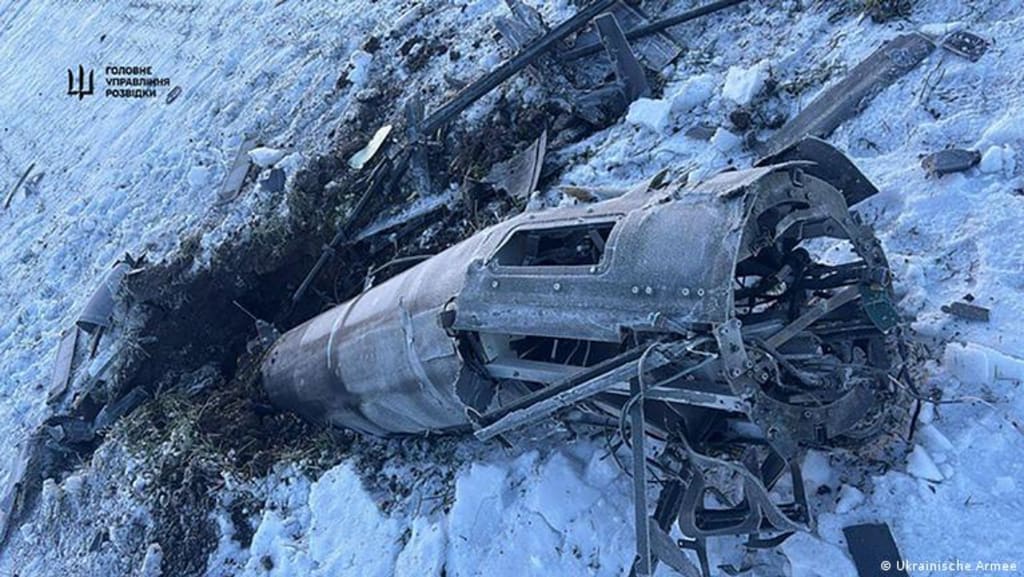
Investigators examining wreckage from Russian drones used in the war in Ukraine have found electronic components traced back to Germany, raising new concerns about how Western-made technology continues to reach Moscow’s weapons programs despite sweeping sanctions. The discoveries underscore the complexity of enforcing export controls in a globalized electronics market and the challenges European governments face in preventing sensitive dual-use goods from being diverted to military purposes.
Since the start of Russia’s full-scale invasion of Ukraine in 2022, Western nations have imposed strict restrictions on the export of advanced technologies to Russia. These measures were designed to cut off access to components critical for weapons manufacturing, including microchips, navigation systems, and communications equipment. Yet forensic analysis of downed drones has repeatedly shown that parts produced in Europe, the United States, and Asia still appear inside Russian military hardware.
According to Ukrainian officials and independent researchers, several Russian-made drones recovered from the battlefield contained power regulators, microcontrollers, and signal-processing units produced by German manufacturers. While these components are widely used in civilian industries such as automotive electronics and industrial automation, they can also be repurposed for military applications, particularly in unmanned aerial systems.
Germany has been among Ukraine’s strongest supporters in Europe, providing air defense systems, armored vehicles, and financial aid. At the same time, Berlin has tightened export rules and expanded its list of restricted technologies. The presence of German parts in Russian drones has therefore triggered political scrutiny and demands for stronger oversight.
Officials in Berlin stress that there is no evidence German companies deliberately supplied Russia’s military. Instead, they point to complex supply chains that often involve intermediaries in third countries. Components legally exported to firms in Asia or the Middle East can be resold multiple times before ultimately reaching Russia through gray or black markets. In many cases, the original manufacturer has little visibility over the final destination of its products.
Experts say this highlights a central weakness in sanctions enforcement: modern electronics are small, cheap, and widely available. A single drone may contain dozens of parts sourced from different countries, making it difficult to trace responsibility. “Sanctions were never designed to stop every resistor or chip,” one European trade analyst noted. “They are meant to raise the cost and slow production, not eliminate it entirely.”
For Ukraine, the findings are deeply troubling. Russian drones have become a key tool in the conflict, used for reconnaissance, targeting, and long-range strikes against infrastructure. Shahed-type drones and domestically produced variants have been deployed in large numbers, often overwhelming air defenses through sheer volume. Even basic commercial components can significantly enhance their reliability and accuracy.
Ukrainian authorities have urged the European Union to introduce tighter controls on so-called dual-use goods—items that can serve both civilian and military purposes. They also want harsher penalties for companies that fail to conduct proper due diligence on buyers and distributors. Some lawmakers in Kyiv have proposed the creation of a centralized database to track recovered components and identify recurring supply routes.
Within the European Union, the issue has reignited debate over how to close loopholes in sanctions regimes. Several member states have called for more cooperation with countries outside Europe to monitor re-exports. Germany, in particular, is reviewing its export licensing system and considering new rules that would require companies to verify the end users of sensitive electronics more rigorously.
Meanwhile, Russia continues to adapt. With limited access to high-end Western technology, its defense industry has shifted toward using commercially available components that are easier to acquire. Analysts believe this strategy has allowed Moscow to maintain drone production despite sanctions, though at the cost of lower performance and higher failure rates.
For Germany, the revelations pose both a political and moral dilemma. As one of Ukraine’s main backers, Berlin wants to ensure its industrial output is not indirectly fueling the very weapons used against Ukrainian cities. Government officials have promised investigations and closer coordination with manufacturers, while urging international partners to strengthen controls across borders.
The appearance of German parts in Russian drones serves as a stark reminder that modern warfare is deeply entangled with global trade networks. Even as sanctions aim to isolate Russia’s military sector, the realities of interconnected supply chains make complete separation nearly impossible. The challenge for Europe now is to reduce these leakages as much as possible—before more civilian technology is transformed into tools of war.
About the Creator
Fiaz Ahmed
I am Fiaz Ahmed. I am a passionate writer. I love covering trending topics and breaking news. With a sharp eye for what’s happening around the world, and crafts timely and engaging stories that keep readers informed and updated.
Keep reading
More stories from Fiaz Ahmed and writers in The Swamp and other communities.
Norwegian F-35s Engage Russian Knights Su-35s During Strategic Bomber Escort Mission
In a notable air operation over the Barents Sea, two F‑35 Lightning II jets from Royal Norwegian Air Force intercepted and shadowed a formation of Russian strategic bombers escorted by Su-35 fighters — including aircraft associated with Russia’s famed “Russian Knights” aerobatic team — during a routine NATO air policing mission. The encounter, which occurred in international airspace, underlines ongoing vigilance by NATO members in the High North amid heightened military activity. The mission unfolded on February 27, 2026, when Norwegian F-35s assigned to NATO’s Arctic watch were scrambled from Evenes Air Station to investigate two Tupolev Tu-95 Bear H strategic bombers accompanied by two Sukhoi Su-35 Flanker-M fighters. These Russian aircraft were flying over international airspace in the Barents Sea, north of Norway’s border, as part of a long-range aviation sortie. Upon detecting the foreign formation, the Norwegian pilots closed in to visually identify and monitor the Russian aircraft. The intercept was carried out in a professional and measured manner, with no violation of Norwegian sovereign airspace reported. “Today, two Norwegian F-35s at NATO mission identified and shadowed two Russian Tu-95 Bear H bombers and two Su-35 Flanker M fighters in international airspace over the Barents Sea — a routine activity, but an important part of monitoring and safeguarding our region,” the Norwegian Armed Forces said in an official statement posted on social platforms. What drew particular attention from analysts and aviation enthusiasts was the presence of one Su-35 aircraft bearing the distinctive colors of the Russian Knights, an aerobatic demonstration team known for performing at air shows and national ceremonies. Instead of flying in performance configuration, the aircraft was equipped in a combat-ready setup with air-to-air missiles, indicating its operational deployment alongside the escort mission. Military observers note that the use of aircraft traditionally associated with aerobatic displays in an armed escort role may reflect broader operational pressures within the Russian Aerospace Forces. Experts suggest that high operational tempos and continuing demands on frontline squadrons could lead to the integration of all available aircraft — even those from demonstration units — into routine combat or patrol assignments. While intercepts such as this are not unusual — NATO air forces regularly scramble fighters to identify and monitor Russian long-range aviation — the Barents Sea has become a focal area due to its strategic location and proximity to the alliance’s northern flank. Norway plays a significant role in NATO’s Quick Reaction Alert (QRA) system, maintaining F-35 fighters on alert to rapidly respond to unidentified or foreign military flights near alliance territories. The Tu-95 Bear H bombers involved in the mission are long-range aircraft with historical significance dating back to the Cold War. Capable of carrying cruise missiles and operating at great distances from their bases, the Bear series continues to feature in Russian long-range aviation patrols. Their flights near NATO airspace routinely trigger allied responses to ensure situational awareness and deterrence. Russia’s use of Su-35 fighters for escort duties underscores the multirole nature of the Flanker-M design, which combines air-to-air and secondary air-to-ground capabilities. In this mission, the role of the Su-35s was to protect the strategic bombers from potential aerial threats as they traversed international airspace. NATO interceptors, including Norway’s F-35s, monitored the formation closely, ensuring that all aircraft adhered to international aviation law and did not stray into restricted zones. Despite the potentially sensitive context, Norwegian authorities emphasized the routine nature of the operation. Such intercepts help maintain open skies while ensuring that aerial activity near alliance borders is properly observed and recorded. They also reinforce NATO’s commitment to collective defense and rapid response readiness in northern Europe. The encounter highlights both the evolving operational landscape of Northern Europe and the critical role played by advanced fighter aircraft in modern air policing missions. As tensions persist between NATO and Russia, especially over strategic regions like the Arctic, routine interceptions may continue to be a key aspect of maintaining security and stability in international airspace. In sum, the Norwegian F-35s’ engagement with Russian bombers and Su-35 escorts demonstrates the ongoing vigilance required to manage military air operations in sensitive regions. While no aggressive action occurred, the event underscores the importance of robust air defense protocols and coordinated monitoring by allied forces as part of broader security efforts in northern Europe.
By Fiaz Ahmed about 2 hours ago in The Swamp
A Gathering of Evil Bosses
“I’m the queen of chin jutting while I smooth my hair, attacking, insulting, and deflecting to protect my appointer.” “Oh, please, Blondi, my hair is curled, highlighted, and longer than yours. I feature television commercials telling immigrants that we will give them a free plane ride home, and if they voluntarily turn themselves in, they will be allowed to legally apply for re-entry. It runs everywhere, and I look good in it! You can’t compete because of your blond hair. Mine is nicer, and my lips are prettier than yours.”
By Andrea Corwin 12 days ago in The Swamp
New Explosions Heard in Dubai, Plumes of Smoke Over Port
Residents of Dubai were jolted by the sound of powerful explosions late Tuesday as thick plumes of smoke rose from the city’s main port area, triggering widespread alarm and speculation about the cause of the incident. Videos and images quickly spread across social media platforms, showing dark clouds billowing into the night sky while sirens echoed across nearby neighborhoods.
By Sajida Sikandara day ago in The Swamp




Comments
There are no comments for this story
Be the first to respond and start the conversation.