
Rafale Revolution: How India’s $40B Deal for 114 Jets Could Supercharge Air Power, Industry & Geopolitics
India’s $40 billion purchase of 114 Rafale fighter jets could transform its air force’s capabilities, accelerate domestic aerospace growth, and redefine regional power balances.

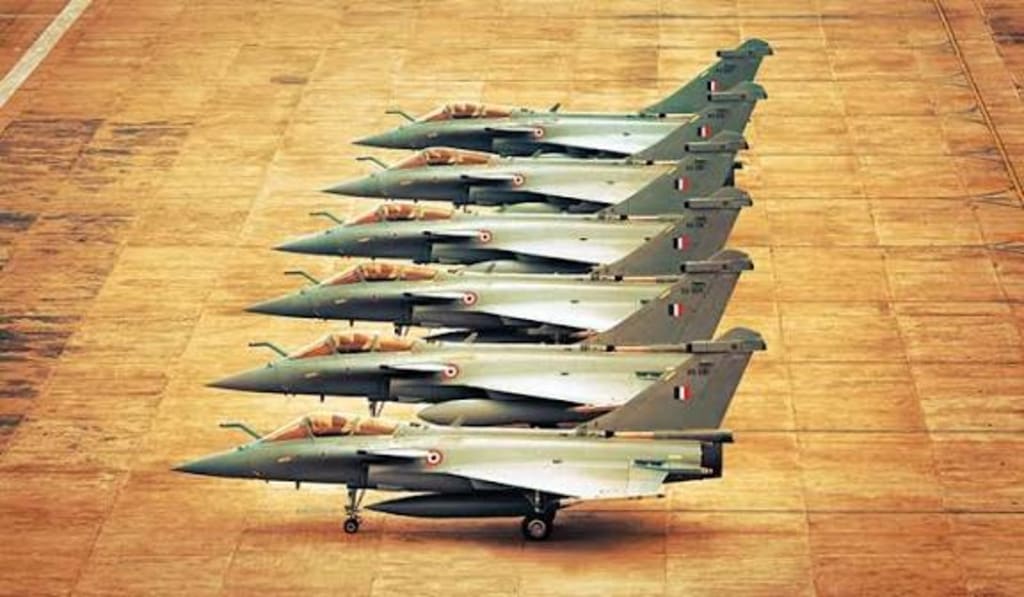
India’s ambitious $40 billion deal to procure 114 Dassault Rafale fighter jets marks one of the most consequential defence acquisitions in the country’s history — a move that is poised not only to transform the India Air Force’s combat capability but also carries significant implications for its defence industry and geopolitical posture in a rapidly evolving security environment.
The Rafale deal — signed over the past decade — was designed to meet India’s urgent need for more modern airpower while bolstering domestic manufacturing through offset obligations. It comes as India faces multiple threats along its borders and seeks to maintain a technological edge against potential adversaries.
A Leap in Combat Capability
The Rafale is a twin-engine, multirole combat aircraft manufactured by Dassault Aviation, widely regarded as one of the most versatile fighters in service today. India’s variant is configured with advanced avionics, electronic warfare systems, and powerful weapons packages, making it suitable for air superiority, precision strike, reconnaissance and nuclear delivery missions.
Defense analysts say the Rafale’s superior radar, data fusion capabilities and integration with beyond-visual-range (BVR) missiles will significantly enhance the Indian Air Force’s (IAF) ability to penetrate contested airspace and conduct long-range operations. “India’s Rafales will be a game-changer,” said an airpower expert in New Delhi. “They bring together lethality, situational awareness, and networked warfare — features that legacy platforms struggle to match.”
The deal’s initial phases have already seen a frontline Rafale squadron fully operational, with pilots and ground crews reporting high levels of performance in simulated and real-world missions. The Indian Air Force has praised the aircraft’s reliability and ease of maintenance, factors that will be critical as more jets are inducted.
Industrial Offsets and Domestic Production
A defining feature of India’s Rafale agreement is its large offset component — requirements that the foreign supplier reinvest a percentage of the contract value back into India’s defence industry. Airbus, Thales and other European partners involved in the Rafale ecosystem have committed to offset investments exceeding $8 billion, spread across aerospace, avionics, and training systems.
Indian companies such as Hindustan Aeronautics Limited (HAL) and private sector firms are slated to receive technology transfers and workshare in areas including maintenance, repair and overhaul (MRO), simulation, and sub-assembly production. Over time, this could seed capabilities that enable India to maintain and upgrade its fleet indigenously, reducing reliance on foreign supply chains.
Proponents argue that these offsets will accelerate India’s push toward Aatmanirbhar Bharat — or self-reliant India — by deepening expertise in advanced aerospace systems and creating thousands of skilled jobs.
Regional Power Dynamics
In strategic terms, the Rafale deal also reverberates across South and Central Asia. India’s primary near-peer, China, has continued to modernize its air force with fifth-generation fighters and long-range systems. Meanwhile, tensions along the India-China border and persistent challenges from Pakistan have underscored the need for credible deterrence.
With Rafales and their advanced weapons — including Meteor BVR missiles and Scalp cruise missiles — India gains a qualitative edge that may deter adversaries and strengthen its negotiating position in crises. Analysts say the aircraft’s extended range and precision strike capability enhance India’s ability to project power across the Indian Ocean and into contested airspace.
The Rafale’s integration with Indian defence networks — including airborne early warning and control (AEW&C) platforms and ground-based air defence systems — further amplifies its strategic value. This integrated warfare construct can enhance deterrence by complicating an adversary’s operational planning.
Diplomatic and Geopolitical Significance
Beyond the battlefield, the Rafale deal has broader diplomatic implications. India’s growing defence ties with France — a strong advocate of a multipolar global order — have strengthened cooperation in maritime security, space, counterterrorism, and joint exercises. Paris has endorsed India’s role in Indo-Pacific security frameworks and supported its ambitions for greater global influence.
The aircraft deal also signals India’s preference for diversifying defence partnerships beyond traditional suppliers, reflecting a nuanced strategic calculus that balances autonomy with strong international ties.
Challenges and Future Prospects
Despite its promise, the Rafale acquisition is not without challenges. Questions remain about sustaining costs, logistics infrastructure, and integrating future upgrades. Additionally, ensuring that offset commitments translate into real industrial gains requires consistent policy focus and transparency.
Still, many in India’s defence establishment view the deal as a model for future procurements, one that marries capability enhancement with industrial growth. With additional squadrons expected to be operational in the coming years, the Rafale is likely to remain central to India’s airpower strategy.
A New Chapter in Airpower
India’s $40 billion Rafale deal represents a decisive shift in the country’s military and industrial trajectory. By acquiring one of the world’s most capable fighters and linking it to domestic industry growth, New Delhi is investing in both deterrence and self-reliance.
As geopolitical fault lines evolve and security challenges persist, the Rafale fleet will be a cornerstone of India’s strategy to protect its skies, assert regional influence, and modernize its defence ecosystem for decades to come.
About the Creator
Fiaz Ahmed
I am Fiaz Ahmed. I am a passionate writer. I love covering trending topics and breaking news. With a sharp eye for what’s happening around the world, and crafts timely and engaging stories that keep readers informed and updated.
Keep reading
More stories from Fiaz Ahmed and writers in The Swamp and other communities.
Oil Shipments in Persian Gulf Already Disrupted by Iran Attack
Oil markets and global shipping routes have been thrown into disarray following the recent U.S. and Israeli military strikes on Iran, with major disruptions already reported in the Persian Gulf — a region that handles a substantial share of the world’s energy exports. The attacks have sent shockwaves through global shipping, forcing oil companies and tanker operators to halt or reroute shipments, at least temporarily, raising questions about supply security and broader economic impact. Strait of Hormuz Under Strain At the centre of the disruption is the Strait of Hormuz, a narrow waterway between Iran and Oman that links the Persian Gulf to the Gulf of Oman and the open sea. It is one of the most strategically important maritime chokepoints in the world: roughly 20% of global crude oil and a similar share of liquefied natural gas (LNG) exports pass through it every day. In the aftermath of the strikes, Iranian authorities — including elements of the Islamic Revolutionary Guard Corps — reportedly broadcast radio warnings telling all vessels that no ship is allowed to pass through the strait, effectively asserting a ban on navigation through the key trade route. Although these broadcasts are not legally binding, they have dramatically raised fears among shipowners and insurers alike. Shipping Suspensions and Vessel Backups Major oil companies, global trading houses, and tanker operators have responded by suspending shipments of crude oil, refined fuels, and LNG through the Strait of Hormuz. Several vessels that were en route are now idling near ports such as Fujairah in the United Arab Emirates, with satellite tracking imagery showing congestion at key anchorage points. A top trading desk executive told Reuters that many ships are expected to remain in port for several days until the situation stabilises. Additionally, international advisories from naval and maritime security bodies — including warnings that the U.S. Navy cannot guarantee safe passage through the region — have prompted Greek, British, and Japanese ship owners to recommend avoiding the Persian Gulf, Gulf of Oman, and Hormuz until further notice. Japanese shipping companies, among others, have temporarily halted operations in the region, instructing crews to stay in safer waters as a precaution, since there are no viable alternative routes for the vast quantities of oil that typically transit the strait. Impact on Oil Markets The disruptions present significant risks to global energy markets. Because such a large share of crude and LNG shipments passes through the strait, any sustained interruption — even temporarily — has the potential to tighten supply, drive up wholesale prices and increase volatility in energy derivatives markets. Traders and analysts have already noted sharp increases in war-risk premiums for tankers operating in the region, with some insurers cancelling policies or raising costs sharply to reflect heightened risk. War-risk insurance prices in the Gulf and Hormuz corridor could increase by up to 50%, significantly raising the cost of transporting oil by sea and reflecting growing concern about the possibility of a broader conflict extending to commercial shipping. Broader Logistical and Economic Consequences Even before a potential full closure of the strait, tanker operators are making decisions that will have ripple effects on shipping schedules and supply chains. Some vessels have halted or reversed course, while others are delaying entry into the area altogether. According to tracking data, some tankers carrying crude from Gulf producers like Saudi Arabia, Iraq, and the UAE have stopped outside the Gulf of Oman rather than risk navigating a contested waterway. Experts warn that the longer these conditions persist, the more likely it is that buyers will seek alternative supply routes or sources, which could involve lengthier voyages around the southern tip of Africa or other strategic adjustments — all of which are costlier and slower. That, in turn, could put upward pressure on refined fuel and shipping costs globally. Regional Dynamics and Future Risk Why the disruption is taking place now is directly tied to the broader military confrontation involving Iran, the United States, and Israel — hostilities that have introduced new layers of risk into maritime trade. Tehran’s reprisals, warnings to shipping, and the perceived risk of escalation are collectively affecting operational decisions by energy companies and shipowners. The situation also highlights the geopolitical sensitivity of the Strait of Hormuz: any escalation that is perceived to threaten security along this narrow sea lane almost immediately resonates in oil markets and the global economy at large. Policymakers and oil market watchers are closely monitoring developments, especially as the impact of sustained disruptions could extend far beyond the region.
By Fiaz Ahmed 3 days ago in The Swamp
A Gathering of Evil Bosses
“I’m the queen of chin jutting while I smooth my hair, attacking, insulting, and deflecting to protect my appointer.” “Oh, please, Blondi, my hair is curled, highlighted, and longer than yours. I feature television commercials telling immigrants that we will give them a free plane ride home, and if they voluntarily turn themselves in, they will be allowed to legally apply for re-entry. It runs everywhere, and I look good in it! You can’t compete because of your blond hair. Mine is nicer, and my lips are prettier than yours.”
By Andrea Corwin 13 days ago in The Swamp



Comments
There are no comments for this story
Be the first to respond and start the conversation.