
Starmer Seeks to Carve Out Distinct UK Approach to This Conflict
Britain’s prime minister walks a diplomatic tightrope as Middle East tensions escalate
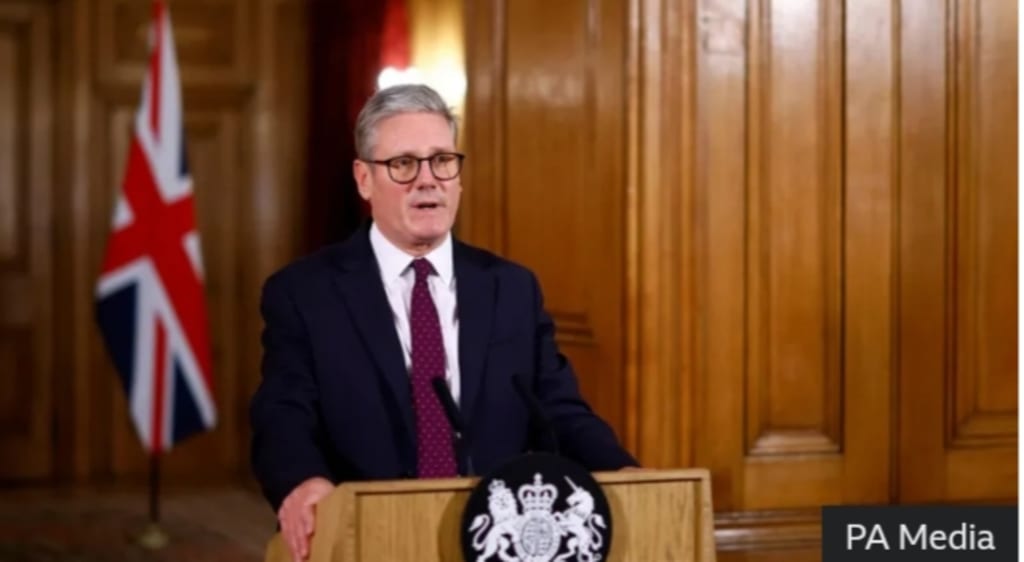
As violence ripples across the Middle East, British Prime Minister Keir Starmer is attempting to shape what aides describe as a “distinctly British” approach to the growing conflict. Balancing historic alliances, domestic political pressures, and Britain’s global standing, Starmer faces one of the most delicate foreign policy tests of his leadership.
With hostilities widening across multiple fronts — from Gaza to Lebanon and beyond — the United Kingdom has been forced to clarify its position. Unlike some of its closest allies, Britain is signaling a strategy that emphasizes de-escalation, humanitarian access, and long-term diplomatic engagement, even while reaffirming Israel’s right to self-defense.
The question now is whether that calibrated approach can hold amid intensifying regional turmoil.
A Deliberate Diplomatic Tone
From Downing Street, the messaging has been measured. Starmer has avoided inflammatory rhetoric, instead emphasizing the need to prevent regional escalation. In parliamentary statements, he has underscored three pillars of Britain’s response:
Support for Israel’s security.
Protection of civilian lives.
Urgent diplomatic engagement to prevent wider war.
This balance reflects Britain’s longstanding role as both a transatlantic ally and an advocate for multilateral diplomacy. The UK’s foreign policy machinery — including the Foreign, Commonwealth & Development Office — has intensified outreach to European partners, Gulf states, and Washington.
While the United States has taken a more assertive public stance, Britain appears intent on positioning itself as a moderating voice — one that can communicate across divides without abandoning core alliances.
Navigating the “Special Relationship”
Britain’s partnership with the United States remains central. Successive prime ministers have upheld what is often called the “special relationship,” and Starmer is no exception. However, subtle differences in tone and emphasis have emerged.
Washington’s posture in the conflict has leaned heavily on deterrence and military readiness. Britain, while aligned on key security principles, has placed stronger public emphasis on humanitarian corridors and international law.
Starmer’s government has worked to ensure its messaging does not signal division with Washington, but neither does it want to appear as a mere echo of American policy.
This nuanced positioning reflects both strategic calculation and domestic political realities.
Domestic Pressures at Home
The conflict resonates deeply within the United Kingdom, a country with diverse communities and strong civic engagement around foreign policy issues. Protests in major cities have underscored public concern about civilian casualties and the risk of regional escalation.
Starmer’s Labour Party must also manage internal divisions. Some lawmakers urge firmer support for Israel, while others demand stronger calls for ceasefire and restraint. Navigating these dynamics requires careful language and policy signaling.
By articulating a distinct British approach — one grounded in international law and humanitarian principles — Starmer aims to maintain party unity while preserving Britain’s credibility abroad.
Europe’s Role and Britain’s Position
Though no longer a member of the European Union, the UK continues to coordinate closely with European governments. In recent weeks, Britain has aligned with European calls for restraint and emphasized the need for a political pathway out of the conflict.
This positioning allows London to play a bridging role — connecting transatlantic security priorities with continental diplomatic initiatives.
Starmer has also signaled support for revitalizing discussions around a two-state solution, framing long-term peace as inseparable from current crisis management.
In doing so, he seeks to remind global audiences that Britain remains an influential diplomatic actor despite Brexit-era recalibrations.
Security Concerns and Regional Stability
Beyond rhetoric, Britain has taken practical steps. Royal Navy assets have maintained a presence in the eastern Mediterranean, while the Royal Air Force remains prepared for contingency operations. Officials describe these deployments as precautionary and defensive.
At the same time, Britain has pledged additional humanitarian aid to affected populations, reinforcing its emphasis on civilian protection.
This dual-track approach — deterrence combined with humanitarian engagement — encapsulates the strategy Starmer is attempting to define.
The government insists that military readiness does not contradict diplomatic ambition. Rather, it argues, credible deterrence can create space for political negotiation.
Risks of Escalation
The broader regional picture complicates any national strategy. With tensions flaring between Israel and armed groups in Lebanon, and with Iran’s influence woven through multiple arenas, the possibility of miscalculation looms large.
Starmer’s government has repeatedly warned against actions that could ignite a wider regional confrontation. British diplomats are reportedly engaged in back-channel efforts aimed at containing spillover effects.
Energy markets and global trade routes also remain vulnerable. Britain, as a major global trading nation, has a direct interest in preventing disruptions to maritime security in key corridors.
Thus, Starmer’s approach reflects both moral positioning and pragmatic economic calculation.
A Test of Leadership
Foreign policy often defines prime ministerial legacies. For Starmer, this conflict represents an opportunity — and a risk.
If Britain can help shape diplomatic outcomes, facilitate humanitarian access, or prevent broader escalation, the government may strengthen its claim to global relevance. Conversely, missteps could expose divisions at home or strain alliances abroad.
Starmer’s critics argue that a middle path risks pleasing no one. Supporters counter that in moments of volatility, moderation and diplomacy are strengths rather than weaknesses.
The prime minister appears determined to project steadiness — a contrast, perhaps, to the turbulence characterizing much of the geopolitical landscape.
Carving Out a Distinct Path
Ultimately, Britain’s strategy rests on a familiar but challenging premise: that it can remain firmly allied with key partners while retaining an independent diplomatic voice.
Starmer’s insistence on international law, humanitarian safeguards, and sustained dialogue seeks to distinguish Britain’s posture without undermining its alliances.
Whether this approach can influence the trajectory of the conflict remains uncertain. Much will depend on decisions made in Jerusalem, Tehran, Beirut, and Washington.
For now, the United Kingdom is attempting to navigate between solidarity and restraint — between deterrence and diplomacy — in one of the most complex regional crises of recent years.
In doing so, Starmer is not only responding to events abroad. He is defining how Britain sees itself on the world stage in an era of renewed global instability.
About the Creator
The Saddest Thing - The Billionaires Who Rule America Aren't Even Enjoying Themselves
This single post says more about our ruling class than a thousand policy papers. The saddest thing about today's system is that the men robbing the rest of us - sabotaging our economic prospects, our pensions, our access to affordable healthcare - are not even happy.
By Scott Christenson🌴24 days ago in The Swamp
No Escape, No Return
There are moments in life when the path behind us disappears and the road ahead is uncertain. In those moments, we find ourselves standing at a crossroads where turning back is no longer possible and moving forward feels frightening. This is the reality of a situation where there is no escape and no return. It is not just a dramatic phrase. For many people around the world, it represents the feeling of being trapped by circumstances, decisions, or consequences that cannot be undone. Whether in personal life, politics, war, relationships, or career choices, there are situations where the door behind us closes permanently. And when that happens, we are forced to confront the most difficult truth of all: the only way out is forward. The Moment When Everything Changes Every life has a turning point. Sometimes it happens quietly, like the decision to leave a job, move to a new city, or end a relationship. Other times it arrives suddenly, like an unexpected crisis or a mistake that changes everything. At first, we may believe that things can go back to the way they were. We tell ourselves that this situation is temporary, that we can fix it, undo it, or somehow return to the comfort of the past. But eventually reality becomes clear. Some doors close forever. And when they do, the past becomes a place we can remember but never revisit. Why Humans Fear the Point of No Return Psychologists often describe the fear of irreversible decisions as one of the deepest anxieties people experience. Human beings naturally prefer options. We like to believe that we can change our minds, correct mistakes, and reverse difficult situations. The idea of a point of no return challenges that sense of control. When we reach a moment where there is no escape and no return, we face three powerful emotions: Fear of the unknown Regret about the past Uncertainty about the future These emotions can feel overwhelming. Yet they are also part of what pushes people to grow, adapt, and discover strength they never knew they had. History Is Full of “No Return” Moments The idea of no escape and no return is not only personal—it is also historical. Entire nations have faced moments when decisions led them into situations that could not be undone. Wars, revolutions, economic crises, and political transformations often begin with a single decision that changes the course of history. Once that decision is made, events move forward like a chain reaction. History reminds us that once a society crosses a certain line, going back to the previous reality becomes impossible. Instead, the world must adapt to the new one. In many ways, progress itself is built on these irreversible moments. The Personal Battles We Fight Alone While history records the major turning points of nations, the quiet turning points of individuals often go unnoticed. A student who fails an important exam. A worker who loses their job. A person who makes a mistake that affects their reputation. A family that must rebuild after a loss. These experiences can feel like personal disasters. In those moments, people often believe they are trapped in circumstances that cannot be escaped. But within these difficult moments lies an important truth: the absence of escape does not mean the absence of possibility. Why Moving Forward Is the Only Choice When there is no return, the only direction left is forward. This realization can be terrifying at first. But it can also be liberating. When we accept that the past cannot be changed, we stop wasting energy trying to rewrite it. Instead, we begin focusing on what can still be built in the future. Many of the most successful people in the world reached their achievements only after facing situations that seemed impossible to recover from. Failure, loss, and hardship often become the foundation of resilience. The Strength Hidden in Difficult Situations Human beings are remarkably adaptable. History shows that people who survive the most difficult circumstances often emerge stronger, wiser, and more determined than before. The reason is simple: hardship forces us to grow. When life removes the option of turning back, we discover abilities we never realized we possessed. Courage, patience, creativity, and determination often appear when they are needed the most. The absence of escape can reveal the presence of strength. Learning to Accept the Irreversible One of the hardest lessons in life is learning to accept things that cannot be changed. People often spend years replaying past mistakes, wondering what might have happened if they had made a different decision. But dwelling on the past rarely provides answers. Instead, it keeps us trapped in a cycle of regret. Acceptance does not mean approving of what happened. It simply means recognizing that the past cannot be rewritten. Once we accept this truth, we free ourselves to focus on what still lies ahead. The Power of Responsibility Another important part of moving forward is taking responsibility. Sometimes the situations we face are caused by our own choices. Other times they are the result of events beyond our control. In either case, accepting responsibility for how we respond is essential. Responsibility gives us power. When we accept that we cannot change the past but can shape the future, we begin to regain control over our lives. Instead of seeing ourselves as victims of circumstance, we become authors of the next chapter. Stories of Transformation Throughout the world, there are countless stories of individuals who faced moments with no escape and no return. Entrepreneurs who lost everything and rebuilt their companies. Athletes who suffered career-ending injuries but found new paths in life. Refugees who fled war and created new futures in unfamiliar countries. These stories remind us that the end of one chapter does not mean the end of the story. Sometimes the most powerful transformations begin exactly at the moment when the old path disappears. Why the Future Still Matters When people feel trapped, they often lose sight of the future. Yet the future is the one thing that remains open, even when everything else feels closed. The future contains possibilities that cannot yet be seen. New opportunities, relationships, discoveries, and achievements often appear when people least expect them. Moving forward does not guarantee success, but refusing to move forward guarantees stagnation. Turning Fear Into Motivation Fear is a natural response to uncertainty. However, fear can also be transformed into motivation. Instead of allowing fear to paralyze us, we can use it as energy that pushes us to prepare, learn, and improve. The realization that there is no return can motivate people to work harder, think more creatively, and pursue goals with greater determination. Sometimes the most powerful motivation comes from knowing that failure is not an option. The Courage to Continue Courage is often misunderstood. Many people believe courage means the absence of fear. In reality, courage means continuing despite fear. When there is no escape and no return, courage becomes essential. It is the quiet decision to take another step forward even when the path is uncertain. It is the determination to keep moving even when the destination is unclear. And it is the belief that the future can still hold meaning, even after the past has closed its doors. Conclusion: The Road That Only Moves Forward Life rarely offers perfect choices. Instead, it presents us with challenges, decisions, and consequences that shape who we become. At some point, everyone encounters a moment where turning back is impossible. These moments may feel overwhelming, but they also mark the beginning of transformation. When there is no escape and no return, the only direction left is forward. And sometimes, that single direction leads us to places we never imagined we could reach.
By Zahid Hussaina day ago in The Swamp
When the Shelter Closes
Across the street from my house, a man slept under a tree, his dog by his side. My first, naive thought: he must be traveling through. But he kept coming back, often sleeping there during the day. Then it hit me—that person might not have a home.
By Bride of Sound5 days ago in Humans


Comments
There are no comments for this story
Be the first to respond and start the conversation.