history
Past politicians, legislation and political movements have changed the course of history in ways both big and small. Welcome to our blast to the past.
The United Empire of America
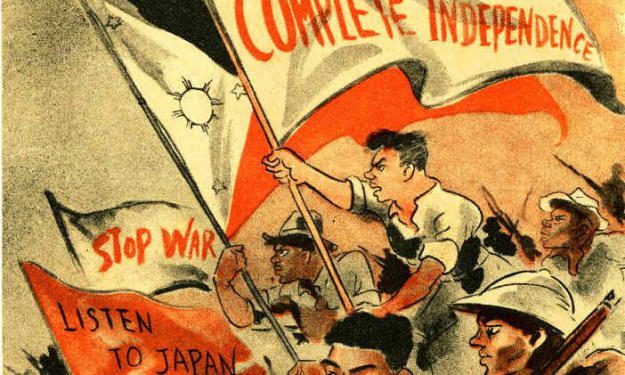
The United States likes to think of itself as an alternative to the empires of old, but in the Philippine-American War, America proved itself to just be a new version of that same imperial structure. Additionally, this unnecessary war of conquest was a clear show of the same imperial attitude that pervaded America’s westward expansion. These expansions, both the Philippine-American War and the conquest of the American West, exhibit imperialism in three main ways. One, through the expansion of land owned by the United States, as a key aspect of imperialism is expanding the territory controlled by the nation. Two, through the subjugation of the native people of the land the US took, the subjugation of conquered people being another key aspect. And three, through the attitudes of Americans before and during the conquest, as while the attitudes were different from traditional European thought in some ways, there was virtually no difference in other ways. This American imperialism in the West created a culture of expansion, one that couldn’t simply fade away once the US hit the Pacific coastline, forcing it to set its eyes on the Philippines.
By History Roundtable7 years ago in The Swamp
Pluralism in the Eyes of Gray and Asian Cultures
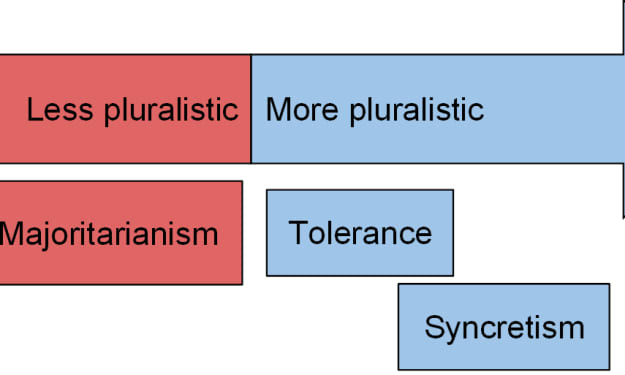
The pluralistic framework is embodied in the writings of John Gray can extend in ways to comprehend the values found in Asian countries. Pluralism is clarified as a system of society in which individuals come from various diverse racial, ethnic, religious and social groups that preserve and develop their traditional ritual or culture within the interest of civilization. Furthermore, pluralism is a condition that allows two or more systems coexist. John Gray argues within the existence of modern society, pluralism is timeless and the greatest philosophical ideal of our time.
By Sarah Elizabeth8 years ago in The Swamp
Remembering 9/11
Seventeen years ago today marks one of the most horrific tragedies within our great Nation that will forever replay in my mind. I was 11 years old when we had an indoor recess for a reason unexplained, then, after recess, we gathered into one classroom where my principal broke the news. I was shocked, sad, and moreover, scared of what could happen next. I remember running to my father, crying as I leaped into his arms. He soothed me, told me we were safe where we were and, the next day, he and my mother kept us home to talk to us about the attacks and why some people don't like Americans. I remember sitting there on the couch with my brothers, speechless.
By Morganne Thayer8 years ago in The Swamp
The War of 1812
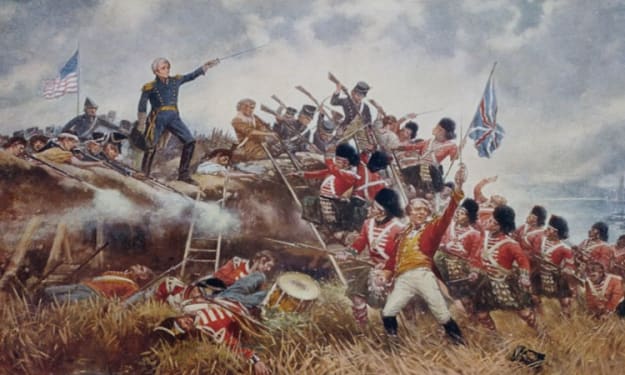
The War of 1812, one of many “forgotten wars”, is often ignored despite the part it played in forming the identities of the nations of North America. The United States, which, along with Canada, probably remembers the war best, experienced massive repercussions from the war, some physical—and some mental. The war helped stimulate the creation of the powerful standing army and navy America had never had before and would become known for in later conflicts; it created a new American nationalism based around various triumphs in the war, no matter how small; and it resulted in significant losses for the Native Americans, despite being a stalemate war between England and America. These changes shaped the American people as a whole and laid the groundwork for the nation we know today.
By History Roundtable8 years ago in The Swamp
Guardians of Scotland, Part 1
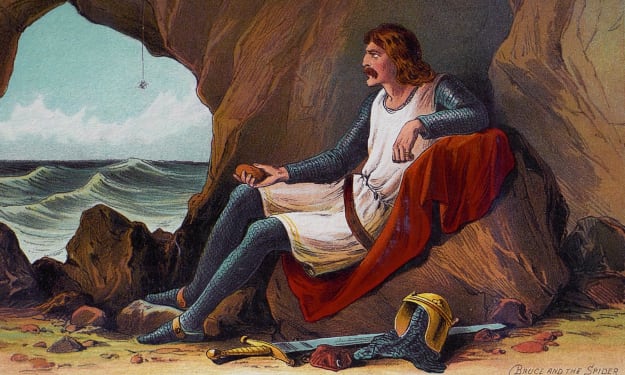
The Maid of Norway The untimely death of Alexander III of Scotland in 1286 brought to an end a period of relative stability during which Scotland’s existing status as an independent nation had remained secure after two reigns involving little conflict.
By David Morrison8 years ago in The Swamp
The Songhai Empire: The Golden Medieval African Civilization
The Songhai Empire (1464-1591) was the largest empire to emerge in West Africa. The capital of the Songhai Empire was Gao, which was located on the Niger River. This location was perfect for trading gold, kola, nuts, cloth, salt, and slaves for cowries (cowries are marine mollusks that was formally used as money in parts of Africa).
By Darryl C. Richie8 years ago in The Swamp
A 50-Year-Old Murder
A 50-Year-Old Murder: Why does it matter? My first awareness to the historical controversy surrounding the death of President John F. Kennedy arrived when I was about 12 years old. It may have been on the 30th Anniversary that I listened to my Dad recount his memory of that November weekend of 1963. He recalled it crisply, clearly and I remember it precisely. After graduating from Allen County High in 1962, he found employment at Woodmaster and was at work when the news came that the President had been shot. One of his coworkers told me that Dad left work early that day in tears.
By Drew Lindsey8 years ago in The Swamp
The Greenback
When the Kingston Trio came out with their rendition of "Greenback Dollar" with the lyrics saying, "I don't give a damn about a greenback dollar I spend it just as fast as I can," today, half of that phrase is actually true. Too many of us continue to spend that greenback ever faster though. But, what we do care about is why that ever-disappearing dollar doesn't afford the things it used to. We do give a damn about every last dime that comes into our possession today.
By Dr. Williams8 years ago in The Swamp
Best Political One-Liners in History
Great moments in history are often defined by the words used to describe the events. From ancient Roman critics to the modern era of political journalism, words have grown bigger than even the powerful men and women who speak them. There are political quotes for any number of situations, from lighthearted quotes at a fundraiser to powerful statements commemorating the outbreak of war. Whether humorous and witty or solemnly inspiring, political one-liners can take many shapes. Here are some of the best political one-liners in history.
By Joseph D. N. Kendrick8 years ago in The Swamp