new world order
With our new president comes a New World Order. A guided tour through dramatic shifts in political thought and power struggles that inform our future.
Trump Touts Third Term.
Trump must be one of the most boastful men on Earth. In his dreams, he probably sees himself as Superman, not unlike that Spitting Image puppet of Ronald Reagan in the 80s, a Genesis video "Land of Confusion" where Reagan rides a Triceratops putting everything right. In the video, Reagan is dressed as Superman and a cowboy. He wakes up next to his wife Nancy and realises it was all an illusional dream. Strange irony, really, as Trump has a picture of Ronald Reagan in the Oval Office. And we know while Trump doesn't literally think he is Reagan come again (although that wouldn't surprise me!), he is certainly an admirer of Reagan.
By Nicholas Bishop11 days ago in The Swamp
What resources does Venezuela have — apart from the world’s most oil?
Largest known oil reserves Venezuela has the world’s largest proven oil reserves, estimated at 303 billion barrels as of 2023, more than five times the amount the United States has, which is 55.25 billion barrels.
By Ibrahim Shah 11 days ago in The Swamp
Winter Olympics 2026: ‘I Felt Tears Welling in My Eyes’ — Our Readers’ Highlights. AI-Generated.
The 2026 Milan-Cortina Winter Olympics delivered drama, emotion, historic achievements, and unforgettable personal moments that captivated audiences around the world. As the Games drew to a close, fans shared their favourite highlights — from stunning victories and tear-jerking comebacks to moments that reignited the Olympic spirit. In voices from around the globe, one theme stood out repeatedly: these Games weren’t just about sport — they were about shared emotion, resilience, and human connection. A Historic Win That Stirred Hearts For many readers, the most poignant moment came in men’s ice hockey, when Team USA defeated long-time rivals Canada men's national ice hockey team 2-1 in overtime to win Olympic gold — the first for the United States in the event since the iconic “Miracle on Ice” in 1980. The victory sparked record viewership, with tens of millions tuning in across North America, and left fans overwhelmed with emotion as the winning goal sparked celebrations both on the ice and at home. “I felt tears welling in my eyes when that puck hit the net,” one reader wrote, describing the thrill of the moment. For many, it wasn’t just a win — it was closure and joy after years of anticipation. Triumph in Slalom and Comeback Stories Figure skating and alpine skiing also provided emotional highs. Mikaela Shiffrin, one of the most respected competitors in winter sports, had a deeply personal journey at these Games. After an eight-year Olympic medal drought and a difficult comeback from injury, she captured gold in the women’s slalom, a victory that moved fans and commentators alike. Spectators praised her resilience, noting the courage it took to return to the pinnacle of competition. “I’ve watched her career for years,” one fan said. “Seeing her finally win again brought tears to my eyes. It was a reminder of why we watch the Olympics — for moments of pure human triumph.” Unexpected Stories and Underdog Joy Readers also highlighted performances from athletes who defied expectations. Nordic competitors delivered classic tensions and camaraderie across cross-country and biathlon events, while sliding sports teams — from bobsleigh to skeleton — produced stunning ups and downs. In the women’s mass start biathlon, Oceane Michelon clinched gold with a breathtaking final lap, proving that perseverance and mental strength can overturn the odds. Underdogs also shone. Tales of first-time Olympic medallists and breakthroughs from smaller nations were among the most shared memories. Readers were especially touched by moments that represented more than medals — stories of athletes pushing through adversity, injuries, and personal struggles to achieve their Olympic dreams. Beyond the Podium: Camaraderie and Spirit Many of the most moving reader responses focused less on the medals themselves and more on the emotional resonance of shared sporting experience. People spoke of the warmth of the crowds in Milan and Cortina d’Ampezzo, the way competitors supported one another across national boundaries, and the joy of witnessing raw expressions of sportsmanship. One highlight frequently mentioned was the reaction to photo finishes, unexpected ties, and gestures of unity between athletes at the end of races, moments that radiated goodwill beyond competition. Another key theme was how the Games brought families and friends together, with many describing shared living-room celebrations, intense group viewings, and generational bonding over ancient and new Olympic traditions. Cultural Moments and Quirky Highlights Beyond competition, fans also reacted to the atmosphere of the Games themselves. Mascots Tina and Milo, beloved for their whimsical designs, became symbolic favorites. Close-ups of athletes celebrating with local fans, flowing pageantry during medal ceremonies, and the festive backdrop of Italy’s host cities added colour and character to the event. For some readers, these cultural and community moments were just as memorable as athletic achievements. “The spirit here reminded me of what the Olympics can be at their best: joyous, inclusive, and wonderfully unpredictable,” said one fan. A Legacy in Emotion and Shared Experience As the final medals were handed out and the Olympic flame extinguished, what remained were stories that went beyond scores and standings. Readers emphasized the shared human moments — joy, heartbreak, triumph, and tears — that defined Milano Cortina 2026. These Winter Olympics will be remembered not just for records broken and medals earned, but for the community they built around the world. From emotional comebacks to the solidarity shown by fans and athletes alike, the Games illustrated that sport remains one of the most powerful ways to connect humanity across borders and experiences — and that sometimes, the moments that bring us to tears are the ones we remember most vividly.
By Fiaz Ahmed 11 days ago in The Swamp
Iran Wants Deal Apparently!!!
Protests have flared up again over the weekend in Iran. As the university term started, students gathered on campuses to protest the regime and show their support for it. This time, these protests are not as great as the ones in January. Some thought the clerical regime could be swept away as the Shah's regime was in 1979, which led to the rise of the Ayatollahs.
By Nicholas Bishop13 days ago in The Swamp
The Future of Military Power Is Space Power
For centuries, military dominance has been defined by control over land and sea. In the 20th century, air power reshaped warfare, and nuclear weapons introduced a new level of deterrence. In the 21st century, however, a new domain is emerging as the decisive frontier of strategic competition: space. The future of military power is increasingly tied to space power—control of satellites, orbital infrastructure, and the technologies that operate beyond Earth’s atmosphere.
By Ibrahim Shah 13 days ago in The Swamp
New World Order In 2026
The phrase “New World Order” has long stirred curiosity, debate, and sometimes fear. For some, it represents a hopeful vision of global cooperation in an increasingly interconnected world. For others, it signals concerns about centralized power, loss of national sovereignty, or hidden political agendas. In reality, the concept is complex and has evolved over time, shaped by historical events, geopolitical shifts, economic systems, and technological revolutions.
By Ibrahim Shah 14 days ago in The Swamp
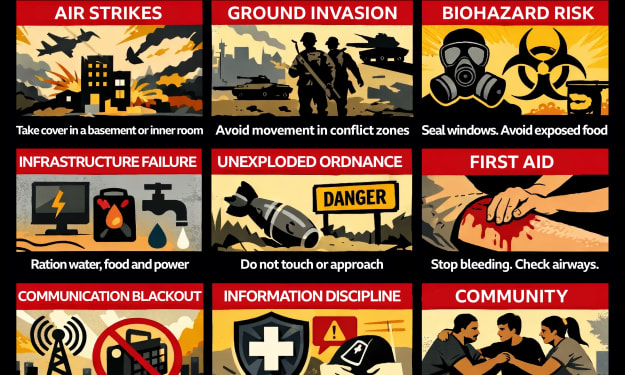
How to survive an attack by a world superpower. Content Warning.
This article provides practical measures for civilians facing severe, multi-domain attacks which might include: Sustained aerial bombardment Ground force incursions Naval or amphibious operations Release of biological or toxic agents Psychological and information warfare Extended disruption of society and infrastructure
By Addison Alder15 days ago in The Swamp
The Protection-of-Innocence Reciprocity Doctrine. AI-Generated.
Core Moral Premise The highest duty of any legitimate social order is the protection of innocent life. Innocent life has absolute moral primacy. Any system that systematically insulates predators, tolerates predatory asymmetry, rewards hypocrisy, or allows aggressors to retain insulation has inverted its purpose and forfeited legitimacy. Truth, justice, reciprocity, humility, mercy, forgiveness, and vertical accountability are structural necessities rather than optional virtues. Vertical accountability means recognition of and submission to a moral law higher than oneself. Authority must flow toward those who most consistently demonstrate sustained competence in moral and epistemic discipline. This competence is shown through observable conduct and trajectory over time, not through doctrinal label, tribal identity, credential alone, or self-profession.
By Peter Thwing - Host of the FST Podcast16 days ago in The Swamp
Russia-Ukraine Talks Live: ‘Difficult’ Negotiations End, More Planned. AI-Generated.
Negotiations between Russia and Ukraine concluded after what both sides described as “difficult but necessary” discussions, with officials confirming that further talks are planned in the coming days. The latest round of diplomacy comes amid continued fighting along multiple фронts and mounting international pressure to find a path toward de-escalation. Delegations met at a neutral venue under tight security, with mediators from regional partners facilitating the dialogue. While no breakthrough agreement was announced, negotiators said the talks helped clarify positions on key issues including ceasefire arrangements, humanitarian corridors, and prisoner exchanges. Cautious Statements From Both Sides Ukrainian representatives said discussions were tense and marked by sharp disagreements, particularly over territorial questions and security guarantees. A senior Ukrainian official described the meeting as “a step forward in communication, though not yet in compromise.” “The talks were difficult, but they were necessary,” the official said. “We made clear our red lines and our expectations for any future settlement.” Russian negotiators echoed the description, acknowledging that the dialogue exposed deep divisions but insisting that diplomacy remains preferable to prolonged confrontation. “There is no simple solution,” one Russian delegate stated. “However, continued dialogue is the only way to address the concerns of both sides.” Key Topics on the Table According to sources familiar with the negotiations, the agenda focused on three main areas: Ceasefire mechanisms to reduce active hostilities in selected regions. Humanitarian access, including safe passage for civilians and aid deliveries. Confidence-building measures, such as expanded prisoner swaps and the protection of critical infrastructure. While neither side committed to a full ceasefire, there were indications that limited pauses in fighting could be explored to allow humanitarian operations. International organizations monitoring the situation welcomed any effort to reduce civilian suffering, calling the talks a “modest but meaningful development.” International Reaction Western governments and regional allies reacted cautiously to news of the talks. European officials urged both parties to remain engaged and warned that a collapse in diplomacy could worsen instability across the continent. Diplomats stressed that the success of future rounds would depend on tangible steps rather than statements. “Dialogue is important, but actions will determine whether progress is real,” said one European envoy involved in indirect mediation efforts. The United Nations reiterated its call for restraint and respect for international humanitarian law, noting that millions of civilians remain affected by the conflict. Aid agencies have reported severe shortages of food, medicine, and shelter in several contested areas. Challenges Ahead Analysts say the negotiations face significant obstacles. The gap between Russian and Ukrainian demands remains wide, especially regarding territorial control and long-term security arrangements. Trust is also limited, with both sides accusing each other of violating previous informal agreements. “Each round of talks is as much about testing intentions as it is about resolving issues,” said a regional security expert. “These discussions are fragile and could stall quickly if military developments overshadow diplomatic efforts.” Despite the challenges, observers argue that the continuation of talks itself is a positive sign. It suggests that neither side has fully abandoned the prospect of a negotiated outcome, even as battlefield dynamics remain volatile. Next Steps Officials confirmed that additional meetings are being scheduled, possibly with expanded participation from international mediators. Technical working groups are expected to address humanitarian concerns and logistical issues before political negotiations resume. Ukrainian leaders have emphasized that any agreement must preserve national sovereignty and ensure long-term security. Russian officials, meanwhile, maintain that their strategic objectives must be reflected in any future settlement. Conclusion The latest round of Russia-Ukraine talks ended without a breakthrough but with a shared acknowledgment that dialogue must continue. Labeling the negotiations as “difficult,” both sides signaled a willingness to meet again, offering a cautious glimmer of diplomatic engagement amid ongoing conflict. Whether these discussions lead to meaningful progress remains uncertain. For now, the talks represent a fragile channel of communication in a war that continues to reshape regional politics and global security. As preparations begin for the next round, international observers will be watching closely for signs that words can translate into action.
By Fiaz Ahmed 17 days ago in The Swamp
Uber to Invest Over $100 Million to Develop Autonomous Vehicle Charging Hubs. AI-Generated.
Ride-hailing giant Uber announced plans to invest more than $100 million in the development of specialized charging hubs designed to support autonomous vehicles (AVs), marking a major step toward building the infrastructure needed for large-scale deployment of self-driving fleets. The initiative reflects Uber’s renewed push to integrate autonomous technology into its core business while addressing one of the biggest barriers to commercialization: reliable and efficient charging networks. The new hubs will be strategically located in major urban markets across the United States and Europe, according to company officials. These facilities will feature high-capacity fast chargers, automated vehicle parking systems, and software that coordinates charging schedules with fleet operations. Uber said the goal is to minimize downtime for autonomous vehicles and maximize availability during peak demand hours. Building the Backbone of Autonomous Mobility Uber executives described the project as a long-term infrastructure investment that will enable the company to scale its autonomous ambitions without relying entirely on third-party charging providers. While traditional electric vehicle charging stations are expanding rapidly, Uber believes autonomous fleets require dedicated facilities that can operate without human drivers. “These hubs are designed specifically for autonomous vehicles,” a senior Uber executive said. “They will allow vehicles to arrive, recharge, and return to service with minimal human intervention, creating a seamless loop between mobility and energy.” The company said each hub will be equipped with advanced monitoring systems to track battery health, charging performance, and vehicle readiness in real time. Artificial intelligence will be used to predict energy demand and allocate charging slots efficiently across the fleet. Partnerships and Technology Integration Uber is expected to work with multiple technology partners, including energy providers and autonomous vehicle developers, to ensure compatibility across different vehicle platforms. The charging hubs will be modular, allowing upgrades as battery and charging technologies evolve. Industry analysts view the move as a signal that Uber is preparing for a future in which autonomous vehicles make up a significant share of its rides. The company has previously partnered with AV developers for pilot programs in several cities, but scaling those efforts has been limited by infrastructure constraints. “Charging is the bottleneck for autonomous fleets,” said a transportation technology analyst. “Uber’s investment suggests it wants to control that bottleneck rather than depend on external networks.” Economic and Environmental Impact Uber estimates that the charging hub project will create thousands of construction and engineering jobs over the next five years. The company also emphasized the environmental benefits, noting that centralized charging facilities can be powered partly by renewable energy sources such as solar and wind. By supporting fully electric autonomous vehicles, Uber aims to reduce carbon emissions from urban transportation and align with its broader climate commitments. Company officials said the hubs will be designed to integrate with local power grids and include energy storage systems to reduce strain during peak usage. Regulatory and Urban Challenges Despite the optimism, the initiative faces regulatory hurdles. Zoning approvals, safety standards, and coordination with city governments will be essential before construction can begin in many locations. Urban planners have raised concerns about land use and traffic congestion around large charging hubs, particularly in dense city centers. Uber said it is already in discussions with municipal authorities to identify suitable sites, including underused parking structures and former industrial zones. The company argues that centralized hubs could reduce the need for curbside charging and help cities manage the growth of electric and autonomous vehicles more effectively. Strategic Significance The investment comes as competition intensifies in the autonomous mobility sector. Several automakers and technology firms are racing to build their own networks of charging and service facilities for self-driving vehicles. Uber’s decision to develop its own infrastructure suggests it wants greater control over operations and costs as autonomous services expand. While the company did not provide a detailed timeline, executives said the first charging hubs could become operational within two years, with broader deployment planned by the end of the decade. Conclusion Uber’s plan to invest over $100 million in autonomous vehicle charging hubs represents a significant bet on the future of driverless mobility. By creating purpose-built infrastructure, the company hopes to overcome one of the key challenges facing autonomous fleets and position itself at the center of next-generation urban transportation. If successful, the project could reshape how autonomous vehicles are powered and managed, turning charging hubs into critical nodes of tomorrow’s mobility networks.
By Fiaz Ahmed 17 days ago in The Swamp