technology
Talking tech; debates about regulating technology, privacy laws, piracy, and the pitfalls of AI.
They Pulled Roman Ships from This Italian Lake After 2,000 Years and Lost Them Again in a WWII Fire. AI-Generated.
Introduction: A Discovery That Ended in Disaster History is full of extraordinary discoveries, but few stories are as bitterstersweet as that of the Roman ships recovered from Lake Nemi in Italy. After lying hidden underwater for nearly 2,000 years, two massive Roman vessels were finally raised in the 1930s—only to be tragically destroyed during World War II.
By Sajida Sikandar28 days ago in The Swamp
Astronomers Detect Seven‑Hour Space Signal — Scientists May Finally Understand What It Was. AI-Generated.
In a discovery that has left astronomers both stunned and excited, scientists recently detected a signal from deep space that lasted an incredible seven hours. This is not just any ordinary blip in the universe—it's potentially the longest gamma-ray burst ever recorded. Researchers are now working hard to understand what could have caused this unprecedented cosmic event.
By Ayesha Lashari28 days ago in The Swamp
Astronomers Detected a Strong Signal from Space Lasting Seven Hours. Now They May Have Worked Out What It Was. AI-Generated.
Introduction: A Signal That Wouldn’t Stop In the vast silence of space, signals from distant objects usually appear as brief flashes — milliseconds of light or radio waves that vanish almost as soon as they arrive. That is why astronomers were stunned when a powerful signal detected by radio telescopes persisted for nearly seven continuous hours.
By Sajida Sikandar28 days ago in The Swamp
The World of Work, Welfare, and Retirement is Outdated.
In 2026, we are still stuck in a 1950s mentality of the idea of work. When it comes to welfare, we are also stuck in that mentality and also when it comes to retirement. Let me make it clear, I have nothing against work or people working. I am not for no one working at all, whatever your trade or profession is. However, when it comes to work, we are stuck in a very old -fashioned way of looking at work. Unless you are on a high-salary job, for most of us, we go to a mundane job while earning mundane wages. Work has become more stressful, where we are told we have to work not only to keep the lights on, but also to put food on the table. But that's not the only thing ads say we must possess the latest car, the latest electronic gadget, we must live in a certain neighbourhood. We work our backsides off to maintain a materialistic lifestyle, and for what? With retirement rising, some of us may never get to enjoy our twilight years.
By Nicholas Bishop29 days ago in The Swamp
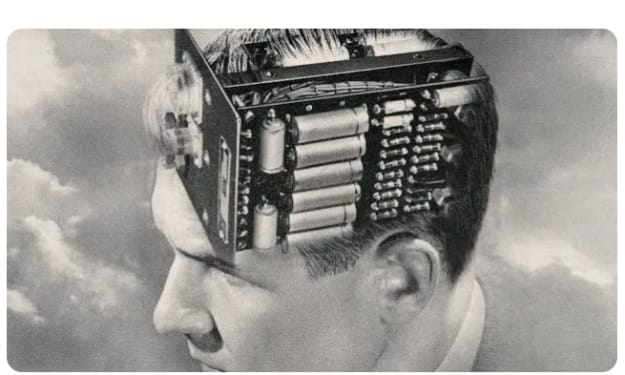
The Case for Using Your Brain — Even If AI Can Think for You. AI-Generated.
We are living in a moment when thinking itself feels optional. Artificial intelligence can write essays, summarize books, generate business plans, diagnose illnesses, and even simulate emotional conversations. With a few taps or prompts, answers appear instantly—clean, confident, and often convincing. The temptation is obvious: why struggle mentally when a machine can do the work faster and better? But this convenience raises a deeper question, one that goes beyond productivity or efficiency: What happens to us when we stop using our own minds? This is the case for continuing to think—even when AI can think for you. AI Is Powerful, But It Is Not Conscious Artificial intelligence is impressive, but it is important to understand what it actually does. AI does not think in the human sense. It does not: experience doubt feel curiosity wrestle with moral conflict or understand meaning Instead, it predicts. It processes patterns from massive datasets and produces statistically likely responses. That’s incredibly useful—but it’s not wisdom, judgment, or understanding. When humans outsource thinking entirely, they risk confusing output with insight. Thinking Is More Than Problem-Solving Human thinking is not just about getting answers. It is about: forming identity developing values learning from mistakes and discovering meaning Struggling with a problem changes the brain. Wrestling with an idea builds mental resilience. Questioning assumptions sharpens judgment. AI can deliver conclusions, but it cannot replace the process that shapes who we are. When we skip that process, we may gain speed—but lose depth. The Comfort Trap: When Convenience Becomes Dependence Every major technological leap has promised freedom—and delivered dependence. GPS weakened our sense of direction calculators reduced mental arithmetic social media shortened attention spans AI risks doing the same to thinking itself. If we always rely on machines to: decide what to write suggest what to think summarize what to believe then our cognitive muscles weaken. Just like physical muscles, unused mental abilities don’t disappear overnight—but they do atrophy. Critical Thinking Is the First Casualty One of the most dangerous side effects of over-reliance on AI is the erosion of critical thinking. AI systems: can be confidently wrong reflect biases in their training data cannot verify truth in real time If users stop questioning outputs, they stop evaluating sources, context, and intent. In a world already flooded with misinformation, surrendering critical judgment is not a neutral act—it’s a risky one. Creativity Comes From Friction, Not Ease Some argue that AI enhances creativity. And in many ways, it does. But creativity does not emerge from smoothness alone. It comes from: frustration uncertainty experimentation failure A poem written instantly may look creative—but it lacks the internal struggle that gives art emotional weight. When humans create, they bring memory, emotion, contradiction, and lived experience. AI can imitate style—but it cannot suffer, hope, or care. True creativity requires a mind engaged, not bypassed. Ethics Cannot Be Automated AI can recommend actions. It cannot decide what is right. Ethical judgment depends on: empathy cultural understanding moral responsibility accountability When humans delegate decision-making to algorithms—especially in areas like justice, healthcare, or governance—they risk removing human responsibility from human consequences. Using your brain means asking: Should we do this? not just Can we do this? No machine can answer that for us. Thinking Builds Agency To think is to take ownership of your life. When you think for yourself, you: choose rather than react understand rather than follow participate rather than consume AI can assist agency—but it cannot replace it. A society that stops thinking becomes easier to manipulate, easier to divide, and easier to control. Independent thought is not just personal—it is political. Education in the Age of AI: A Turning Point Schools and universities now face a choice. They can: treat AI as a shortcut or use it as a tool to enhance deeper thinking The danger is not students using AI—it’s students never learning how to think without it. Education should focus less on memorization and more on: reasoning synthesis questioning ethical reflection AI should support thinking, not replace it. The Joy of Thinking Is Underrated There is something deeply human about thinking. The quiet satisfaction of: solving a problem understanding a difficult idea changing your mind after reflection These experiences build confidence and self-respect. When everything is done for us, we may feel efficient—but also strangely empty. Thinking gives life texture. Using AI Without Losing Yourself This is not an argument against AI. AI is a powerful tool. Used wisely, it can: expand knowledge spark ideas reduce repetitive labor The goal is balance. Use AI to: assist research explore perspectives check assumptions But keep the final judgment human. Let AI inform you—but not replace you. Conclusion: Thinking Is an Act of Resistance In an age where machines can generate answers instantly, choosing to think is a radical act. It is slower. It is harder. It is imperfect. But it is how humans grow. The case for using your brain—even if AI can think for you—is simple: Because thinking is not just about answers. It’s about being human.
By Zahid Hussain29 days ago in The Swamp