
The Economic Crisis of the Iran War Could Get Very Bad, Very Fast
Escalating conflict disrupts energy markets, global growth, and inflation, with risks of a deep economic shock if the Iran war continues.

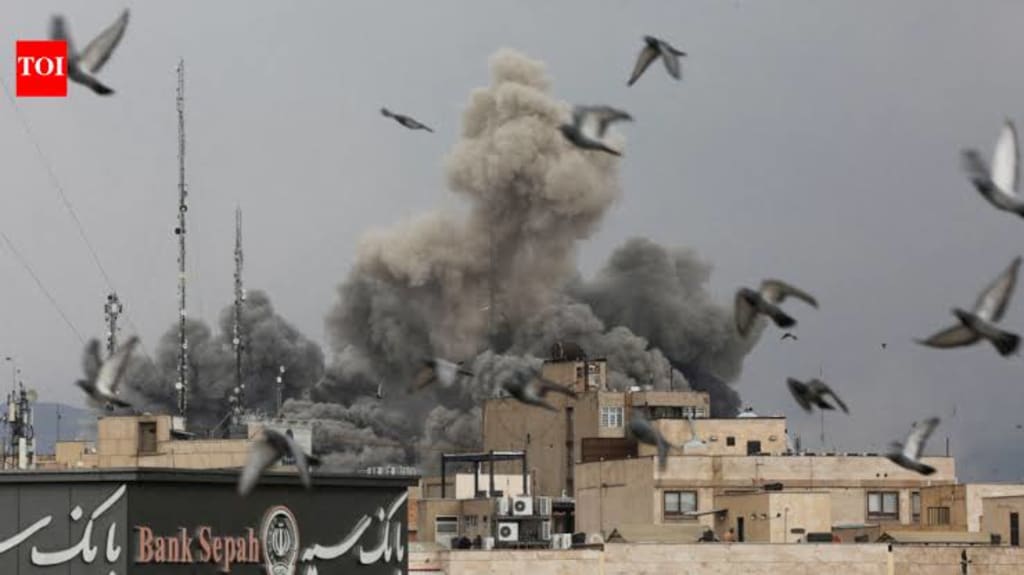
As the war involving the United States, Israel, and Iran intensifies, economists and market analysts warn that the global economic fallout could be steep, deep and fast‑moving. What began as a military confrontation in late February 2026 has already rippled through oil, gas, financial markets and supply chains — and if the conflict persists, the consequences could quickly worsen.
Energy Shock: Oil Prices Near Record Levels
One of the most immediate economic effects of the conflict is on energy markets. Oil prices have surged sharply in recent days amid fears of supply disruptions. On March 6, 2026, Brent crude crude — the international benchmark — climbed above $90 per barrel, marking one of the largest weekly gains since the COVID‑19 pandemic, driven by concerns over production and export routes in the Middle East.
The strategic Strait of Hormuz, a narrow maritime chokepoint through which roughly 20 per cent of the world’s crude oil and LNG supplies flow, has been particularly affected. Reports indicate that activity there has slowed dramatically as shipping companies avoid the area due to the risk of missiles and drones, raising the specter of an effective closure if hostilities worsen.
These developments have led traders to price in a “geopolitical risk premium,” pushing energy futures higher and contributing to market volatility. Goldman Sachs analysts say that risks of sustained disruption could boost oil prices substantially higher — potentially above $100 per barrel if instability persists — with knock‑on effects for inflation and economic activity.
Inflation, Growth and Consumer Costs
Higher energy prices typically feed directly into inflation. Fuel is a core cost component for transportation, manufacturing and households; when gasoline and gas prices rise, it often triggers broader price increases in goods and services. Analysts warn that continued escalation of the conflict could push inflation higher at a time when many central banks are already grappling with moderately elevated price pressures.
Europe is particularly vulnerable. With reduced Russian pipeline imports since 2022, European economies have become more dependent on seaborne LNG and oil passing through strategic Middle Eastern routes. Disruptions to these supplies could force countries to compete for limited cargoes, driving up prices and reducing growth projections. Oxford Economics forecasts that energy market shocks from the conflict could dent eurozone GDP and force inflation above policymakers’ targets if they persist.
In emerging markets like Türkiye, the impact could be even more pronounced. Analysts there suggest that sustained high energy prices could push consumer inflation toward 30‑40 per cent — levels that would dramatically weaken purchasing power and currency stability.
Global Supply Chains and Market Volatility
Beyond energy, global supply chains are already feeling strain. Logistics firms have suspended bookings to ports in the Persian Gulf, and freight rates have risen noticeably as shipping routes become less reliable. Disruptions to maritime trade not only affect oil but also other commodities that move through the region, adding further inflationary pressures.
Financial markets have also responded. In recent sessions, stock indices in Europe and Asia have slid as investors reassess risk and seek safe‑haven assets like gold and U.S. Treasury bonds. Volatility in equity markets can dampen investment sentiment and slow corporate hiring and expansion — factors that influence broader economic growth forecasts.
Household Impact: From Pump Prices to Heating Bills
At the consumer level, the effects are tangible. Already, fuel prices have begun creeping higher in many countries, with motorists in several regions facing noticeable increases at the pump. In the UK, for example, rising crude oil costs have nearly doubled heating fuel prices for millions of households — a stark reminder of how geopolitical shocks translate into everyday costs for families.
Higher energy and transport costs can also squeeze household budgets, leading to reduced discretionary spending — which in turn can slow sectors like retail and services that rely on consumer demand.
Downside Risks: Prolonged Conflict and Stagflation
Most economic projections hinge on the duration of the conflict. A short‑lived flare‑up might cause a temporary spike in prices and market volatility, but a prolonged confrontation — particularly one that expands beyond current theaters — carries the risk of deeper economic dislocation.
Economists warn that if the conflict drags on, the global economy could face stagflation: the toxic combination of slowing growth and rising inflation. This scenario would limit central banks’ ability to respond effectively, as raising interest rates to combat inflation could further suppress economic activity.
In such a scenario, the world could experience slower growth, higher energy costs, diminished consumer confidence, and heightened financial market volatility — creating a cycle of economic strain that feeds back into politics, public sentiment, and fiscal policy decisions.
Conclusion
The economic crisis triggered by the Iran war has already begun to ripple across global markets. Rising energy prices, logistical disruptions, and increased inflationary pressures are only the first signs of a broader economic risk. If the conflict persists or expands, the impacts could soon reach far beyond the Middle East — affecting fuel bills, investment decisions, growth forecasts and the everyday economic reality of millions worldwide.
About the Creator
Fiaz Ahmed
I am Fiaz Ahmed. I am a passionate writer. I love covering trending topics and breaking news. With a sharp eye for what’s happening around the world, and crafts timely and engaging stories that keep readers informed and updated.
Keep reading
More stories from Fiaz Ahmed and writers in The Swamp and other communities.
King Charles invited to 150th anniversary Test
King Charles III has been officially invited to attend a landmark cricket match between Australia and England set to mark the 150th anniversary of the first Test match ever played, Cricket Australia announced this week. The invitation underscores the deep cultural and historical ties between the United Kingdom and Australia and highlights the significance of the sport in both nations. The match — scheduled for 11–15 March 2027 at the iconic Melbourne Cricket Ground (MCG) — will be a one‑off special Test fixture celebrating the inception of Test cricket in 1877, when Australia and England first contested what is now recognised as the oldest format of international cricket. While Buckingham Palace has not yet confirmed whether King Charles has accepted the invitation, Cricket Australia chief executive Todd Greenberg said the board hopes the King’s presence will enhance the celebratory atmosphere and honour the long‑standing rivalry between the two cricketing nations. Greenberg told Australia’s Channel 7 that organizers want the match to “celebrate the combat between England and Australia but more broadly celebrate Test cricket and the beauty of Test cricket.” A Historic Occasion Test cricket began at the MCG in March 1877, when an Australian side captained by Dave Gregory faced James Lillywhite’s England XI in a two‑innings match that set the foundation for what would become the pinnacle format of the sport. Today’s anniversary Test aims to honour that legacy with a modern spectacle that blends tradition with broad public appeal. The 150th‑anniversary match also carries symbolic weight because of a historical precedent: Queen Elizabeth II attended the fifth day of the Centenary Test in 1977, held at the same ground to mark 100 years since the first clash. Cricket Australia is now inviting every living captain from both countries — men’s and women’s teams alike — and surviving players who featured in that centenary event. At the time, the 1977 match was a grand celebration of cricket heritage, drawing passionate crowds and bringing together generations of cricket enthusiasts. The organizers hope the 2027 fixture will evoke similar enthusiasm and appreciation for the sport’s history and evolution. Cricket and Commonwealth Ties Cricket’s status as more than a sport — but a cultural bridge between nations — is reflected in the invitation extended to King Charles as head of state. Although Australia is an independent nation, it remains part of the Commonwealth of Nations, with enduring constitutional links to the British monarchy. Whether or not the King attends, the gesture signals respect for cricket’s shared heritage and the diplomatic dimension of sporting events. Many long‑time fans and historians view Test cricket as a living legacy of British sporting influence around the world. Over the decades, rivalries like The Ashes have captured the imagination of millions, with decades of competitive lore and tradition adding emotional depth to every England–Australia encounter. The anniversary Test, while not part of the regular Ashes cycle, taps into this rich narrative as a standalone celebration. Debate Over Format and Pitch The March 2027 match is expected to be played as a day‑night Test — a departure from the classic all‑day format that has historically defined the longest form of the game. While this has sparked discussion among traditionalists and cricket purists about preserving old‑school conditions, officials argue that staging it under lights could attract larger live and television audiences, particularly in regions where evening viewing peaks. England’s men’s team, which recently endured a challenging Ashes series in Australia, is planning a warm‑up fixture ahead of the anniversary Test. They are expected to arrive after a two‑Test tour of Bangladesh in February 2027, ensuring that both sides are in competitive form for what promises to be a marquee sporting event. Royal Engagement and Sporting Diplomacy Cricket Australia’s invitation to King Charles follows his active engagement in Commonwealth affairs and public life. While Buckingham Palace has remained measured in its public responses, the possibility of the King attending the game highlights sport’s role as a form of soft diplomacy and cultural connection. Should the monarch accept, it would reprise a tradition of royal connection to high‑profile sporting moments and reinforce the symbolic link between monarchy and national celebration. Whether at the MCG stands or presiding from a dignitary box, King Charles’s presence would add a regal dimension to a once‑in‑a‑lifetime cricket match — one that honors a century and a half of sporting history, shared cultural roots, and friendly rivalry.
By Fiaz Ahmed 3 days ago in The Swamp
Parallel Protests
I haven't written for quite some time, but I have A LOT of thoughts about yesterday's protest rally against our government's involvement and complicity in America's war on Iran, on the harbourside of my home city Bristol, and I need to put them somewhere. My gorgeous girlfriend is always a loving and listening ear and sharing it all with her will always be a healthy and happy way of processing the mental and emotional weight, but getting it straight in my brain to share means writing it all down in straight lines, so, here we are and thanks for being here.
By Steph Cole6 days ago in The Swamp


Comments
There are no comments for this story
Be the first to respond and start the conversation.