
To Fight Iran’s Drones, U.S. Taps Ukraine’s Hard-Earned Knowledge
With Iranian drone attacks proving costly and persistent, the United States is turning to Ukraine’s battlefield expertise — including interceptor drones and combat‑tested tactics — to defend U.S. forces and allies in the Middle East.

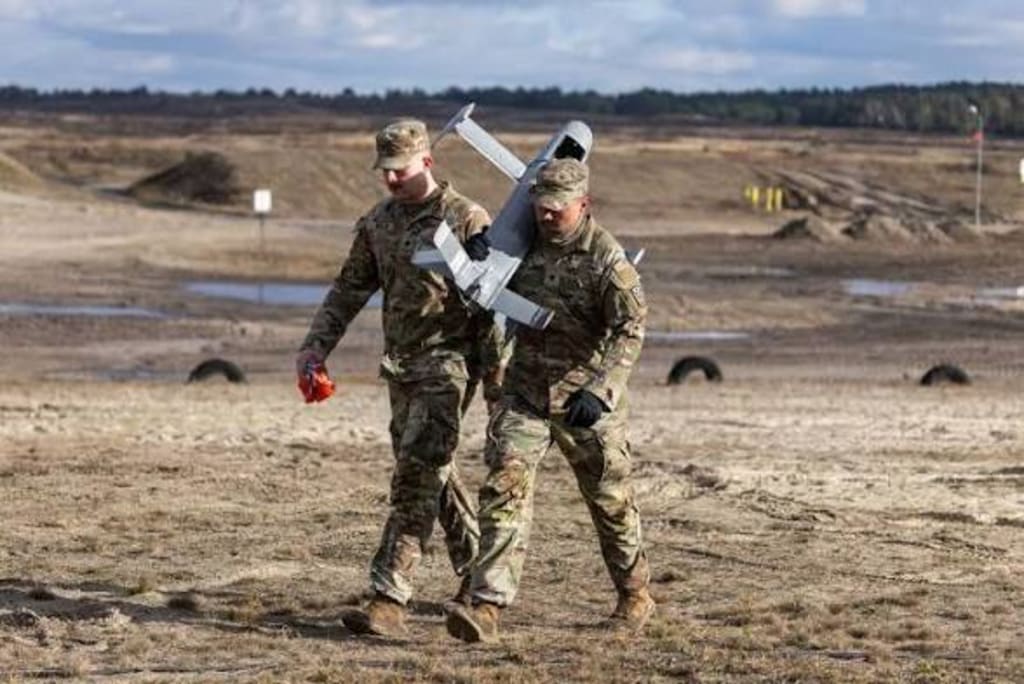
As clusters of cheap, one‑way attack drones launched by Iran hammer U.S. and allied positions across the Middle East, Washington is increasingly turning to battle‑tested expertise developed on the battlefields of Ukraine to counter the threat. Multiple governments — including the United States and Gulf partners — are now seeking Kyiv’s experience in defeating Iranian‑designed Shahed drones, a pincer move that underscores how lessons from Europe’s longest war are shaping the new front in the Middle East.
Iran’s drones, often inexpensive and difficult for traditional air‑defence systems to track, have been used extensively against U.S. forces in the Gulf region since late February 2026. The swarms have forced U.S. commanders to reconsider conventional approaches — such as firing costly Patriot missiles — and look for low‑cost, flexible counter‑drone strategies that have been refined by Ukraine’s military over years of fighting Russian forces.
Battle‑Hardened Expertise in Demand
Ukraine has become a leader in counter‑drone warfare through its long experience battling Shahed‑type unmanned aerial vehicles — the same models now pummelling targets in the Middle East. Ukrainian President Volodymyr Zelenskyy confirmed that the United States formally requested Kyiv’s assistance in defending against these threats, and that Ukrainian experts and equipment are being dispatched to the region to help protect U.S. bases and allied forces.
Beyond personnel, Ukraine is exporting interceptor drones and specialised technology designed to detect, track and destroy enemy UAVs flying at low altitudes, a niche capability developed during its four‑year conflict with Russia. Sources say that Kyiv plans to send military instructors to the Middle East and that Ukrainian interceptor systems — including drones proven in combat — could be deployed alongside Gulf allies’ defences.
The United States and other governments face significant challenges using high‑end systems like Patriot missiles against drone swarms: each intercept can cost millions of dollars, far more than the relatively cheap Iranian-produced drones they target. Ukraine’s approach emphasises cost‑effective, layered defences including interceptor aircraft, small autonomous systems, acoustic sensors and electronic warfare tools — techniques now attracting attention far beyond the European theatre.
Strategic Shifts After Initial Resistance
Reports indicate Ukraine offered its drone‑defence expertise and technology to the Pentagon months before Israel and the United States initiated major strikes on Iran — offers that were initially overlooked but are now seeing renewed interest as the drone threat grows. Analysts describe this dynamic as a tactical reversal, with U.S. planners acknowledging the value of Ukraine’s “hard‑earned” knowledge on how to defeat massed Shahed attacks.
Part of the Pentagon’s response includes visits to Ukrainian forces by U.S. counter‑drone specialists, who studied Ukrainian tactics, techniques and procedures (TTPs) for countering unmanned threats. This preparatory work preceded joint U.S.–Israeli operations and signals deeper military cooperation in the evolving fight against drones.
Broadening Global Cooperation
Ukraine’s potential role isn’t limited to the U.S. alone; several Gulf states, including the United Arab Emirates, Qatar, Jordan, Kuwait and Bahrain, have also approached Kyiv for help. Zelenskyy has positioned Ukraine’s experience as a resource for allies grappling with Iranian drone swarms while ensuring such cooperation does not undermine Ukraine’s own defence needs.
This cooperation comes at a moment when the nature of conflict is changing: swarms of low‑cost drones now pose widespread challenges that strain high‑end air defence systems and raise questions about how modern militaries defend against attritional UAV campaigns. The Middle East conflict — like Ukraine’s fight against Russian‑backed forces — demonstrates that drones have become central to contemporary warfare beyond conventional battlefields.
Implications for U.S. and Allied Defence Policy
U.S. reliance on Ukraine’s counter‑drone experience reflects broader strategic adjustments. With Iranian drones proving resilient against traditional interception methods, the U.S. and partners are now incorporating lessons from Ukraine’s experience to adapt defensive postures rapidly. That includes evaluating next‑generation interceptor technologies, AI‑driven autonomous drones and layered detection networks that can handle the scale and unpredictability of drone swarms.
The unfolding collaboration highlights how military innovation fostered in one theatre can influence combat operations elsewhere. As the United States and its allies confront the dual threats of missiles and drones from Iran, Ukraine’s hard‑won expertise may play an increasingly central role in shaping effective, affordable defences — and in redefining how modern air defence is conducted.
About the Creator
Fiaz Ahmed
I am Fiaz Ahmed. I am a passionate writer. I love covering trending topics and breaking news. With a sharp eye for what’s happening around the world, and crafts timely and engaging stories that keep readers informed and updated.
Keep reading
More stories from Fiaz Ahmed and writers in The Swamp and other communities.
US military to send Marines and more warships to Middle East, reports say
The United States is moving additional Marines and warships into the Middle East amid the intensifying conflict with Iran, military officials and multiple media reports say. The deployment reflects growing concern in Washington over Iranian attacks on strategic waterways and the possibility of further escalation in the region. According to US defence sources cited by ABC News and other outlets, a Marine expeditionary unit (MEU) carrying around 2,200 – 2,500 Marines has been ordered to deploy to the Middle East aboard a group of amphibious warships. The movement comes as Iranian missile and drone strikes disrupt shipping and threaten key global oil routes. Troop and Naval Reinforcements Underway The amphibious ready group — typically composed of several warships and a Marine expeditionary unit — will operate alongside the existing US naval presence in the region. One of the ships, the USS Tripoli, is said to be sailing from its home base in Japan toward the Middle East with its embarked Marine contingent. The deployment order was approved by US Defense Secretary Pete Hegseth following a request from US Central Command (CENTCOM), the military command responsible for operations in the Middle East. Officials told reporters that the forces could be used for a range of missions, from force protection and rapid response to potential evacuations or defence operations, depending on how the conflict unfolds Though the exact composition of the warship group has not been fully disclosed, Pentagon movements suggest it could include three amphibious vessels — typically transport ships capable of carrying Marines, equipment, and aircraft — forming a mobile crisis‑response force. Why Reinforcements Are Being Sent The deployment comes as Iran’s attacks on shipping in the Strait of Hormuz, a crucial chokepoint for global energy supplies, have effectively closed parts of the waterway, contributing to higher oil prices and international concern. Tehran’s missile and drone operations have also targeted vessels and military assets belonging to regional states and allied forces. US officials have described the reinforcement as a show of deterrence and security assurance, aimed at protecting American personnel and interests in a highly volatile environment. The Marines’ presence, along with additional warships, also provides Washington with flexible options in the event of further escalation or threats against US facilities and allies. Analysts say such deployments — while not necessarily signalling an imminent ground invasion — underscore the depth of US commitment to counter Iranian military pressure and secure key maritime routes. The amphibious ready group’s mobility and organic aviation capabilities mean it can support a wide range of missions without requiring fixed bases ashore. Regional and International Context These reports of reinforcements align with broader developments in the Middle East military landscape. The US has maintained an expanded naval presence since late 2025, with aircraft carrier strike groups, destroyers and supporting vessels operating in the Persian Gulf, Arabian Sea and Red Sea in response to threats from Iran and allied militias. President Donald Trump’s administration has also authorised significant air and naval strikes against Iranian targets, describing them as necessary to counter Tehran’s interference with commercial shipping and attacks on regional partners. Meanwhile, Iran has threatened further measures against oil infrastructure linked to the US and its allies if its access to strategic waterways continues to be contested. Potential Implications Sending Marines and warships to the Middle East during an active conflict carries operational and political implications. Domestically, such moves are likely to draw scrutiny from Congress and the public amid ongoing debate over US military involvement abroad. Internationally, the bolstered presence highlights how Washington is positioning itself not just as a combatant but as a security guarantor for global energy routes and allied defence commitments. Despite the lack of an official Pentagon announcement, the deployment reported by US media reflects the reality of an expanding American military footprint as tensions with Iran show no sign of abating. As the situation continues to evolve, further shifts in US force posture and strategic objectives are likely to be watched closely by allies and adversaries alike.
By Fiaz Ahmed about 9 hours ago in The Swamp
The Forsyth House Fire
Since 1851, Forsyth House has stood on the corner of Union Street and Gordon Street in the heart of Glasgow. Its iconic, or was... because on Sunday 8th of March, 2026, a fire broke out in a small, seemingly un-named shop in the building and tore all that history down. As I write, the rubble is still unsettled and the street is still blocked off. Central Station is quiet on the upper level, and around 30 small businesses have quite literally gone up in smoke.
By S. A. Crawforda day ago in The Swamp


Comments
There are no comments for this story
Be the first to respond and start the conversation.