
US military to send Marines and more warships to Middle East, reports say
The US is deploying thousands of Marines and additional warships to the Middle East to reinforce security and deter further Iranian attacks on shipping and regional targets.

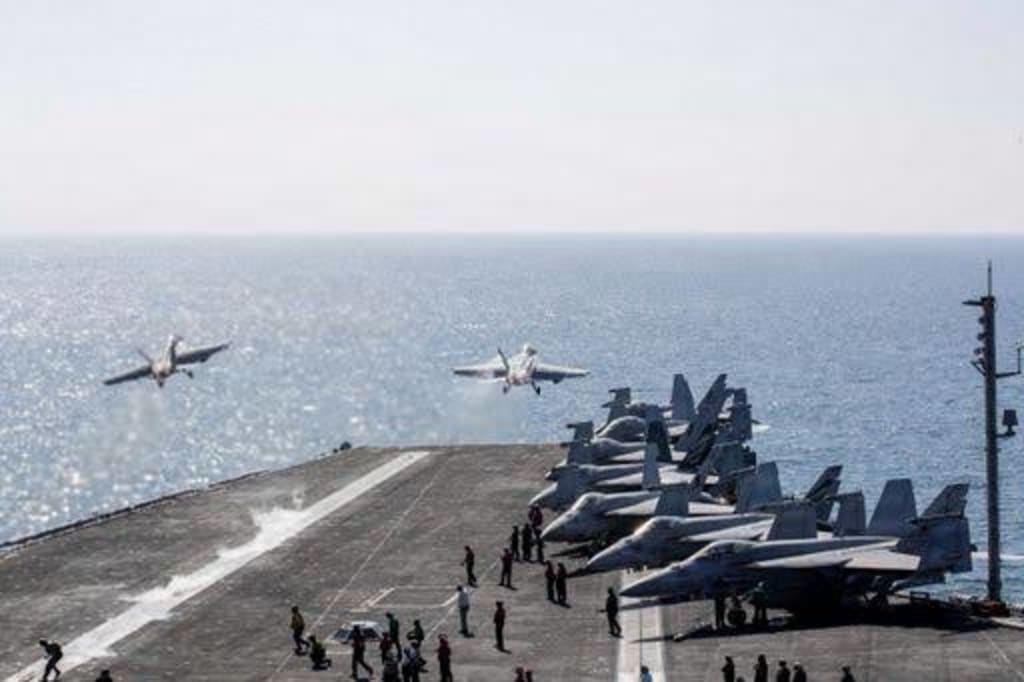
The United States is moving additional Marines and warships into the Middle East amid the intensifying conflict with Iran, military officials and multiple media reports say. The deployment reflects growing concern in Washington over Iranian attacks on strategic waterways and the possibility of further escalation in the region.
According to US defence sources cited by ABC News and other outlets, a Marine expeditionary unit (MEU) carrying around 2,200 – 2,500 Marines has been ordered to deploy to the Middle East aboard a group of amphibious warships. The movement comes as Iranian missile and drone strikes disrupt shipping and threaten key global oil routes.
Troop and Naval Reinforcements Underway
The amphibious ready group — typically composed of several warships and a Marine expeditionary unit — will operate alongside the existing US naval presence in the region. One of the ships, the USS Tripoli, is said to be sailing from its home base in Japan toward the Middle East with its embarked Marine contingent.
The deployment order was approved by US Defense Secretary Pete Hegseth following a request from US Central Command (CENTCOM), the military command responsible for operations in the Middle East. Officials told reporters that the forces could be used for a range of missions, from force protection and rapid response to potential evacuations or defence operations, depending on how the conflict unfolds
Though the exact composition of the warship group has not been fully disclosed, Pentagon movements suggest it could include three amphibious vessels — typically transport ships capable of carrying Marines, equipment, and aircraft — forming a mobile crisis‑response force.
Why Reinforcements Are Being Sent
The deployment comes as Iran’s attacks on shipping in the Strait of Hormuz, a crucial chokepoint for global energy supplies, have effectively closed parts of the waterway, contributing to higher oil prices and international concern. Tehran’s missile and drone operations have also targeted vessels and military assets belonging to regional states and allied forces.
US officials have described the reinforcement as a show of deterrence and security assurance, aimed at protecting American personnel and interests in a highly volatile environment. The Marines’ presence, along with additional warships, also provides Washington with flexible options in the event of further escalation or threats against US facilities and allies.
Analysts say such deployments — while not necessarily signalling an imminent ground invasion — underscore the depth of US commitment to counter Iranian military pressure and secure key maritime routes. The amphibious ready group’s mobility and organic aviation capabilities mean it can support a wide range of missions without requiring fixed bases ashore.
Regional and International Context
These reports of reinforcements align with broader developments in the Middle East military landscape. The US has maintained an expanded naval presence since late 2025, with aircraft carrier strike groups, destroyers and supporting vessels operating in the Persian Gulf, Arabian Sea and Red Sea in response to threats from Iran and allied militias.
President Donald Trump’s administration has also authorised significant air and naval strikes against Iranian targets, describing them as necessary to counter Tehran’s interference with commercial shipping and attacks on regional partners. Meanwhile, Iran has threatened further measures against oil infrastructure linked to the US and its allies if its access to strategic waterways continues to be contested.
Potential Implications
Sending Marines and warships to the Middle East during an active conflict carries operational and political implications. Domestically, such moves are likely to draw scrutiny from Congress and the public amid ongoing debate over US military involvement abroad. Internationally, the bolstered presence highlights how Washington is positioning itself not just as a combatant but as a security guarantor for global energy routes and allied defence commitments.
Despite the lack of an official Pentagon announcement, the deployment reported by US media reflects the reality of an expanding American military footprint as tensions with Iran show no sign of abating. As the situation continues to evolve, further shifts in US force posture and strategic objectives are likely to be watched closely by allies and adversaries alike.
About the Creator
Fiaz Ahmed
I am Fiaz Ahmed. I am a passionate writer. I love covering trending topics and breaking news. With a sharp eye for what’s happening around the world, and crafts timely and engaging stories that keep readers informed and updated.
Keep reading
More stories from Fiaz Ahmed and writers in The Swamp and other communities.
War Stirs Mixed Feelings for the Only Iranian‑American Democrat in Congress
WASHINGTON D.C. — As the United States’ military conflict with Iran continues to deepen, Yassamin Ansari, the first Iranian‑American Democrat in Congress, finds herself facing profound personal and political tensions over the war — embodying a complicated blend of heritage, principle and constitutional concern. Ansari, whose parents fled Iran’s Islamic Republic before settling in the United States, has long been critical of Tehran’s theocratic government and supportive of democratic change inside Iran. But unlike many hawkish voices in Washington, she has voiced deep ambivalence about the US‑led campaign against Iran — particularly President Donald Trump’s decision to attack without explicit congressional authorization. In public remarks and official statements, Ansari has made clear that while she opposes the Iranian regime’s abuses and believes in supporting the aspirations of Iranian people, she is equally concerned about the legality and consequences of the US military approach. In a statement released after the strikes began in late February 2026, Ansari argued that the Constitution vests the power to declare war in Congress — a power she said Trump circumvented in launching military action. She described the escalation as “illegal” and “dangerous,” stressing that American troops and innocent lives are at stake without a clear strategic plan presented to Congress or the American people. Her position reflects a broader unease among many Democrats who are wary of another prolonged Middle Eastern war — a war they argue lacks a clearly defined endgame and could destabilise the region even further. In Congress, lawmakers from both parties have expressed mixed feelings about the war, with some veterans and experienced legislators calling for caution and oversight, and others warning against repeating the mistakes of past conflicts such as Iraq and Afghanistan. Ansari’s view also highlights divisions within the Iranian‑American community itself. While many oppose Tehran’s authoritarian regime and support efforts to curb its nuclear ambitions, others disagree on the means and consequences of US military involvement. Some Iranian Americans have expressed hope that external pressure might hasten internal reforms, while others fear that war could worsen the humanitarian situation and strengthen hardliners on both sides. Despite her criticism of Trump’s military action, Ansari has emphasised that she does not condone the Iranian regime’s history of repression. In her statement, she acknowledged the brutality of the government in Tehran, noting that it has long persecuted political dissidents and violated human rights. But she argues that focusing solely on military responses without parallel efforts for diplomacy and democratic empowerment may not lead to the outcomes many Iranian Americans hope for. Her stance underscores a nuanced approach: oppose authoritarian rule in Iran, but also challenge unilateral executive military action — especially when it sidesteps Congress. Ansari has said she supports a bipartisan War Powers Resolution to reaffirm Congress’s constitutional role in decisions about war and peace, seeking to balance national security concerns with legal process and accountability. The war has already tested political solidarity in Washington. A recent House vote to limit further US strikes against Iran narrowly failed, highlighting sharp partisan splits and mixed attitudes even within the same political party. Several House Democrats, including Ansari, emphasised that decisions of such gravity should involve full congressional debate and not rest solely with the White House. Public opinion in the US appears to mirror these Congressional complexities: recent polls indicate a broad opposition to the war and strong resistance to deploying American ground troops, with significant majorities against expanded military involvement. On the world stage, the conflict has already had wide‑ranging effects, disrupting global energy markets and intensifying security concerns in multiple regions. But for Ansari, the struggle is also intensely personal: she must reconcile her aspirations for a freer, democratic Iran with her constitutional oath to protect American interests and uphold the rule of law. In doing so, she represents a unique voice in Congress — one shaped by both heritage and civic responsibility. As the conflict unfolds and debates continue over its legality, objectives and consequences, Ansari’s nuanced position keeps alive questions about the balance between moral support for oppressed peoples abroad and the constitutional boundaries of American military engagement.
By Fiaz Ahmed about 11 hours ago in The Swamp
The Forsyth House Fire
Since 1851, Forsyth House has stood on the corner of Union Street and Gordon Street in the heart of Glasgow. Its iconic, or was... because on Sunday 8th of March, 2026, a fire broke out in a small, seemingly un-named shop in the building and tore all that history down. As I write, the rubble is still unsettled and the street is still blocked off. Central Station is quiet on the upper level, and around 30 small businesses have quite literally gone up in smoke.
By S. A. Crawforda day ago in The Swamp


Comments
There are no comments for this story
Be the first to respond and start the conversation.