
War Stirs Mixed Feelings for the Only Iranian‑American Democrat in Congress
Representative Yassamin Ansari navigates personal ties to Iran and constitutional concerns as the US war with Iran unfolds.

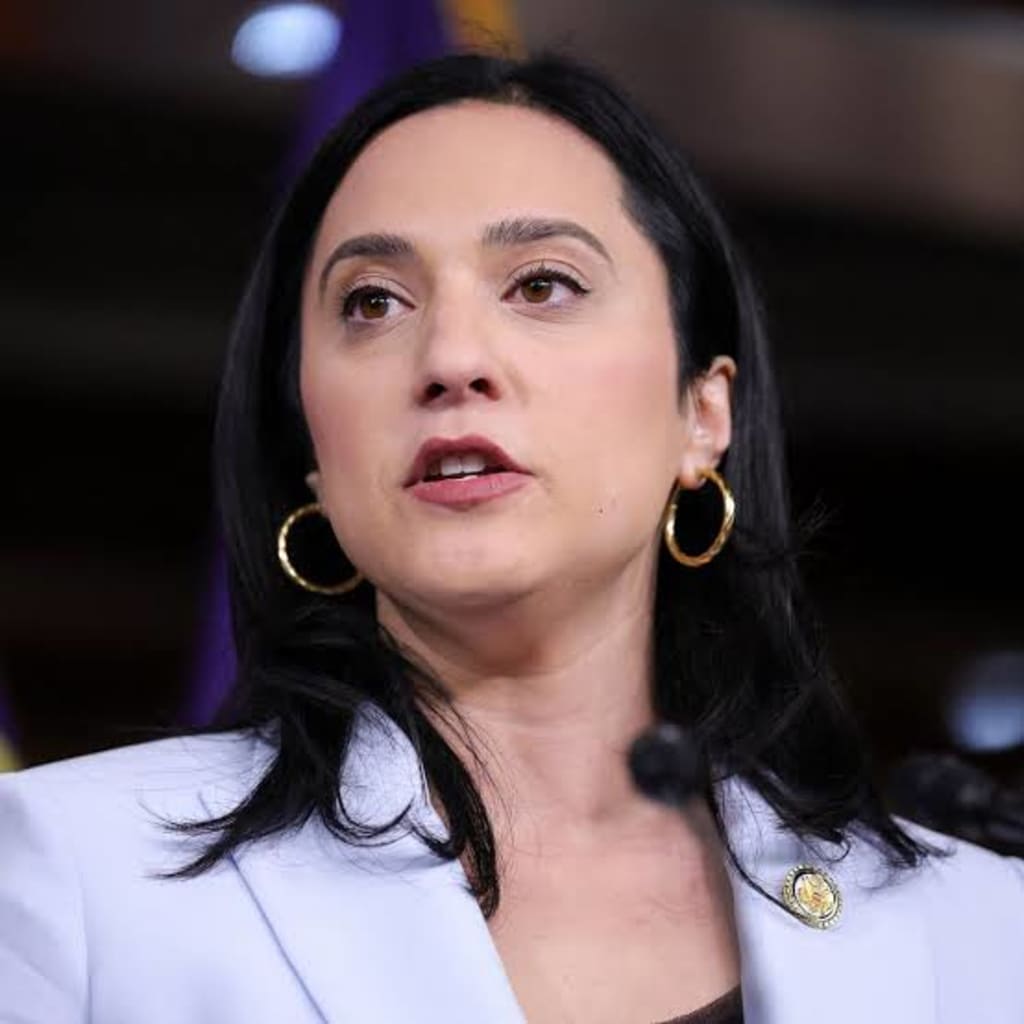
WASHINGTON D.C. — As the United States’ military conflict with Iran continues to deepen, Yassamin Ansari, the first Iranian‑American Democrat in Congress, finds herself facing profound personal and political tensions over the war — embodying a complicated blend of heritage, principle and constitutional concern.
Ansari, whose parents fled Iran’s Islamic Republic before settling in the United States, has long been critical of Tehran’s theocratic government and supportive of democratic change inside Iran. But unlike many hawkish voices in Washington, she has voiced deep ambivalence about the US‑led campaign against Iran — particularly President Donald Trump’s decision to attack without explicit congressional authorization.
In public remarks and official statements, Ansari has made clear that while she opposes the Iranian regime’s abuses and believes in supporting the aspirations of Iranian people, she is equally concerned about the legality and consequences of the US military approach. In a statement released after the strikes began in late February 2026, Ansari argued that the Constitution vests the power to declare war in Congress — a power she said Trump circumvented in launching military action. She described the escalation as “illegal” and “dangerous,” stressing that American troops and innocent lives are at stake without a clear strategic plan presented to Congress or the American people.
Her position reflects a broader unease among many Democrats who are wary of another prolonged Middle Eastern war — a war they argue lacks a clearly defined endgame and could destabilise the region even further. In Congress, lawmakers from both parties have expressed mixed feelings about the war, with some veterans and experienced legislators calling for caution and oversight, and others warning against repeating the mistakes of past conflicts such as Iraq and Afghanistan.
Ansari’s view also highlights divisions within the Iranian‑American community itself. While many oppose Tehran’s authoritarian regime and support efforts to curb its nuclear ambitions, others disagree on the means and consequences of US military involvement. Some Iranian Americans have expressed hope that external pressure might hasten internal reforms, while others fear that war could worsen the humanitarian situation and strengthen hardliners on both sides.
Despite her criticism of Trump’s military action, Ansari has emphasised that she does not condone the Iranian regime’s history of repression. In her statement, she acknowledged the brutality of the government in Tehran, noting that it has long persecuted political dissidents and violated human rights. But she argues that focusing solely on military responses without parallel efforts for diplomacy and democratic empowerment may not lead to the outcomes many Iranian Americans hope for.
Her stance underscores a nuanced approach: oppose authoritarian rule in Iran, but also challenge unilateral executive military action — especially when it sidesteps Congress. Ansari has said she supports a bipartisan War Powers Resolution to reaffirm Congress’s constitutional role in decisions about war and peace, seeking to balance national security concerns with legal process and accountability.
The war has already tested political solidarity in Washington. A recent House vote to limit further US strikes against Iran narrowly failed, highlighting sharp partisan splits and mixed attitudes even within the same political party. Several House Democrats, including Ansari, emphasised that decisions of such gravity should involve full congressional debate and not rest solely with the White House.
Public opinion in the US appears to mirror these Congressional complexities: recent polls indicate a broad opposition to the war and strong resistance to deploying American ground troops, with significant majorities against expanded military involvement.
On the world stage, the conflict has already had wide‑ranging effects, disrupting global energy markets and intensifying security concerns in multiple regions. But for Ansari, the struggle is also intensely personal: she must reconcile her aspirations for a freer, democratic Iran with her constitutional oath to protect American interests and uphold the rule of law. In doing so, she represents a unique voice in Congress — one shaped by both heritage and civic responsibility.
As the conflict unfolds and debates continue over its legality, objectives and consequences, Ansari’s nuanced position keeps alive questions about the balance between moral support for oppressed peoples abroad and the constitutional boundaries of American military engagement.
About the Creator
Fiaz Ahmed
I am Fiaz Ahmed. I am a passionate writer. I love covering trending topics and breaking news. With a sharp eye for what’s happening around the world, and crafts timely and engaging stories that keep readers informed and updated.
Keep reading
More stories from Fiaz Ahmed and writers in The Swamp and other communities.
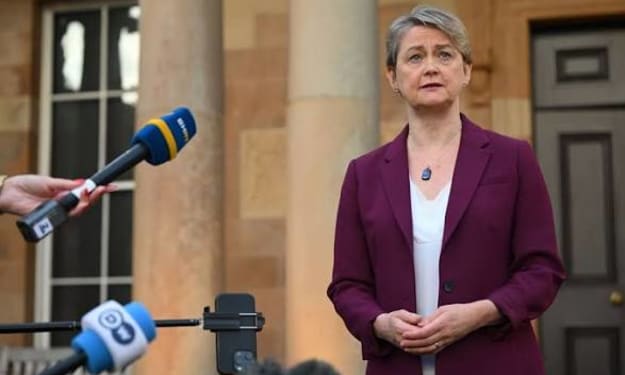
Foreign secretary Yvette Cooper: ‘Making decisions based on what the US do or say doesn’t feel like sensible foreign policy’
UK Foreign Secretary Yvette Cooper has made a candid defence of Britain’s independence in international affairs, saying the government will not simply follow the United States’ lead — even amid global crises such as the escalating conflict in the Middle East. Cooper’s comments come amid heightened tensions following US and Israeli military operations against Iran, in which the UK has taken a more cautious diplomatic approach than its transatlantic ally. In a major policy intervention, the foreign secretary emphasised that Britain will put its own national interests and values first, rather than making decisions solely on the basis of what Washington says or does. Addressing media scrutiny and criticism from some quarters — including from US President Donald Trump and former British prime minister Tony Blair — Cooper stressed that foreign policy should be rooted in British judgment and legal principles, not reactionary alignment with allies. Background: UK–US tensions over Iran conflict The comments reflect an ongoing row between London and Washington over the UK’s role in the conflict sparked by US and Israeli strikes on Iran. The Labour government led by Prime Minister Keir Starmer opted not to participate directly in early military strikes, choosing instead to emphasise de‑escalation and adherence to international law. President Trump publicly criticised the UK’s reluctance to join the initial assault, accusing British leaders of delayed and insufficient support. But Cooper has firmly rejected the idea that Britain should act as a “junior partner” in American interventions, arguing that such an approach would undermine the country’s strategic autonomy. In a BBC interview, she said it was legitimate for the US president to prioritise US national interests, but that the UK government’s job was to decide for itself what serves the British national interest — not simply to echo decisions made in Washington. Rejecting unconditional support Cooper explicitly dismissed suggestions that Britain should have automatically backed US action on Iran “from day one” — a position advanced by Blair and echoed by some conservative politicians. Instead, she framed her government’s foreign policy direction as one that avoids “outsourcing” decisions to other governments. She made similar remarks in response to Blair’s comments at a private event, where the former prime minister argued the UK should have more robustly supported US military efforts. Cooper said such instinctive alignment is not in the UK’s national interest and warned against unquestioning foreign policy. This stance signals an assertive shift in how Britain approaches security alliances. While the UK remains committed to transatlantic cooperation and membership of NATO, Cooper’s remarks underline a more independent foreign policy posture that evaluates policy on its own merits rather than through the prism of US leadershing Domestic political context Within British politics, Cooper’s position has won mixed responses. Supporters argue that prioritising national interest and caution in engaging in foreign conflicts demonstrates prudent leadership, particularly given the complex legal and ethical implications of the Iran crisis. Critics, including several senior figures in the Conservative Party and some commentators, liken it to a retreat from historical alliances, arguing that close consultation with the US remains vital for global security. The debate touches on a deeper tension within UK foreign policy: whether London should primarily act in concert with longstanding allies, especially the United States, or adopt an approach that emphasises strategic independence and multilateral diplomacy. Looking ahead Cooper’s comments come at a moment when UK foreign policy is under intense scrutiny. The Middle East conflict shows no sign of quick resolution, and Britain’s decisions — from arms transfers to diplomatic engagement — will be watched by allies and adversaries alike. By asserting that decisions should not be shaped solely by US influence, Cooper is signalling a foreign policy philosophy that seeks to balance global partnerships with Britain’s own strategic judgment — a stance likely to shape diplomatic debates for months to come.
By Fiaz Ahmed about 6 hours ago in The Swamp
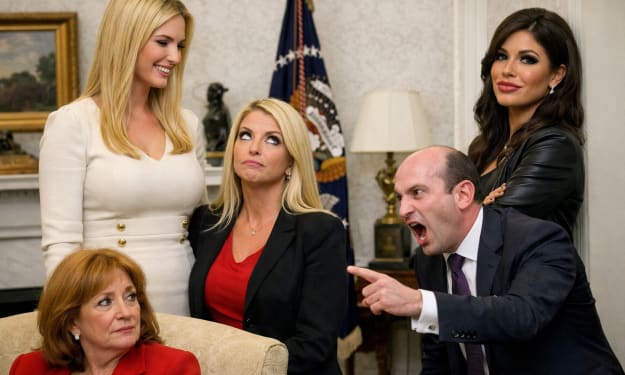
A Gathering of Evil Bosses
“I’m the queen of chin jutting while I smooth my hair, attacking, insulting, and deflecting to protect my appointer.” “Oh, please, Blondi, my hair is curled, highlighted, and longer than yours. I feature television commercials telling immigrants that we will give them a free plane ride home, and if they voluntarily turn themselves in, they will be allowed to legally apply for re-entry. It runs everywhere, and I look good in it! You can’t compete because of your blond hair. Mine is nicer, and my lips are prettier than yours.”
By Andrea Corwin 24 days ago in The Swamp
US and Allies Clash with Russia and China Over Iran’s Nuclear Program
A Deepening Global Divide Over Nuclear Security A dramatic diplomatic confrontation has emerged on the global stage as the United States and its Western allies clash with Russia and China over Iran’s nuclear program. The dispute has unfolded at the United Nations and in international diplomacy, highlighting growing divisions among the world’s most powerful nations over how to address Iran’s expanding nuclear activities.
By Jameel Jamali2 days ago in The Swamp


Comments
There are no comments for this story
Be the first to respond and start the conversation.