
U.S. sending USS Tripoli, thousands of Marines to Middle East
Washington ramps up military presence with amphibious assault ship and thousands of Marines amid Iran tensions. USS Tripoli deployment signals U.S. readiness to respond to escalating conflict in the Middle East. Marines and naval assets move closer to Persian Gulf as regional hostilities intensify. The U.S. strengthens deterrence posture while emphasizing rapid response capability. Deployment underscores strategic focus on protecting shipping lanes and regional stability.

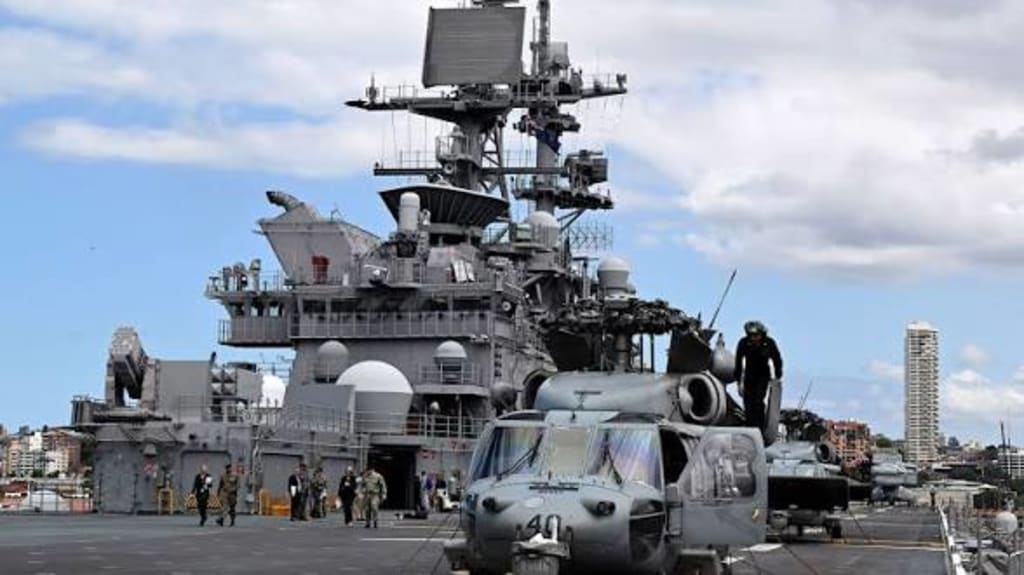
The United States is significantly increasing its military footprint in the Middle East by deploying the amphibious assault ship USS Tripoli (LHA‑7) along with its embarked Marine Expeditionary Unit (MEU) and thousands of Marines to the region, according to senior defence officials. The movement — seen as a key component of Washington’s response to the ongoing conflict involving Iran — underscores mounting concerns over regional security and the protection of strategic waterways.
The Pentagon’s decision to send the USS Tripoli and its Marine contingent comes as tensions remain high following a suite of military engagements between the U.S., its allies, and Iranian forces. Washington’s announcement included only limited details, but officials confirmed the deployment is designed to enhance the American military’s ability to conduct a broad range of operations — from deterrence to potential combat missions.
A Major Amphibious Force on the Move
The USS Tripoli is an America‑class amphibious assault ship capable of carrying a full Marine Expeditionary Unit, aircraft, and a complement of helicopters and jets. These vessels are designed to project power ashore, support air operations from the sea, and operate as floating bases for U.S. forces.
In this deployment, the ship is accompanied by a substantial Marine contingent — potentially numbering several thousand — which typically includes infantry, reconnaissance, aviation assets, and logistical support units. The exact number of Marines and supporting vessels has varied in reporting, but defence sources describe this as one of the largest Marine deployments to the Middle East in recent years.
This deployment marks a clear escalation in the U.S. posture in the Middle East, following recent strikes and counterstrikes that have embroiled the region in a broader conflict dynamic involving Iran, Israel, the United States, and allied states.
What the Deployment Signals
Officials have framed the move as a strategic reinforcement — aimed at deterring further aggression, reassuring partners, and preserving the security of critical maritime routes such as the Strait of Hormuz. The strait, a vital chokepoint for global oil exports, has been a focal point of recent tensions, with Iranian forces repeatedly threatening or attempting to disrupt commercial shipping.
“The USS Tripoli and its Marines give us a flexible and powerful platform in the region,” one senior U.S. official told reporters. “Whether it’s crisis response, humanitarian support, or direct combat support, this force enhances our ability to respond quickly to evolving threats.”
The deployment also places U.S. forces closer to theatres of potential confrontation, giving Washington more options if the conflict continues to widen. Marines from the 31st Marine Expeditionary Unit — a force known for its mobility, versatility, and rapid reaction capacity — are expected to be central to these efforts.
Regional and Global Reactions
Regional governments and defence analysts have reacted to the news with a mix of concern and strategic calculation. Gulf states, many of which have been navigating a delicate balance between economic interests and political alignments, will be closely watching how this expanded American presence affects security in the Red Sea, Persian Gulf, and surrounding waters.
European allies have generally supported increased deterrence measures, though they have also urged diplomatic channels to remain open and emphasized the need to avoid a broader escalation.
In Tehran, Iranian officials have made no immediate, formal response to the USS Tripoli deployment, but state media commentary has framed such moves as part of what it describes as Western “military adventurism” that risks destabilizing the region further.
Implications for the Iran Conflict
The United States’ decision to send a high‑profile naval asset and its Marines reflects the growing complexity of the conflict involving Iran. Initially sparked by escalating hostilities and a series of engagements between Iranian forces and U.S. or allied units, the conflict has now drawn in multiple theatres of operation and opened questions about the wider aims of U.S. strategy.
Pentagon leaders have emphasized that this deployment is meant to support existing operations rather than signal a broader offensive, but some analysts see it as evidence that Washington is prepared to expand its military footprint if needed.
If tensions further increase, the presence of the USS Tripoli — equipped with hundreds of Marines and a variety of aircraft — could be leveraged for more direct involvement in regional security or stability missions, including protecting shipping lanes or deterring hostile action by state and non‑state actors.
Broader Strategic Context
Amphibious assault ships like the USS Tripoli are key elements of the U.S. Navy’s expeditionary capabilities. Built to support a wide range of missions — from combat power projection to humanitarian assistance — these ships and their Marine units have been integral to U.S. military responses in crises around the world.
Their deployment now underscores continuing uncertainty about the trajectory of the Iran conflict and the U.S.’s determination to maintain a robust presence. It also highlights how rapidly evolving battlefield and geopolitical conditions are prompting Washington to adjust its force posture in real time.
As the USS Tripoli and its accompanying Marine forces make their way toward the Middle East, governments, analysts, and global markets will be watching closely — not just for what this means in military terms, but for how it might shape diplomacy, energy security, and regional stability in the weeks and months ahead.
About the Creator
Fiaz Ahmed
I am Fiaz Ahmed. I am a passionate writer. I love covering trending topics and breaking news. With a sharp eye for what’s happening around the world, and crafts timely and engaging stories that keep readers informed and updated.
Keep reading
More stories from Fiaz Ahmed and writers in The Swamp and other communities.
Yemeni Ports Face Shipping Fee Hike Amid Iran Conflict
As geopolitical tensions spike in the Middle East with the ongoing 2026 Iran conflict, maritime trade routes near Yemen are seeing increasing disruption — and that disruption is now hitting ports in Yemen with higher charges that threaten already fragile economic lifelines. Yemen’s strategic location at the entrance to the Red Sea and Bab el‑Mandeb Strait has traditionally made its harbors vital for regional trade, but the intensifying conflict has introduced new economic barriers for shipping companies. In recent weeks, ports such as Aden, Hudaydah, and Mukalla have reportedly begun imposing significantly higher fees on vessels — including war‑risk surcharges and additional handling costs — reflecting the rising danger and insurance premiums associated with navigating nearby waters. The moves come as carriers face escalating costs and security concerns amid broader instability linked to the conflict involving the United States, Iran, and regional militias. A War‑Driven Spike in Shipping Costs The Lebanon–Israel conflict of 2026 and related military actions have fed into broader Middle East tensions, with strategic waterways like the Strait of Hormuz and Bab el‑Mandeb Strait becoming areas of heightened risk. Insurers have responded by raising war‑risk premiums on vessels operating in these regions, and shipping lines have passed these costs on in the form of increased port fees and route surcharges. Economists say such charges are not arbitrary. Shipping companies consider insurance premiums, the risk of damage or seizure, and additional security requirements when deciding fees for port entry. As conflict uncertainty grows, so too does the burden on commercial operators. The result: higher costs for importing and exporting goods through Yemen’s ports — a serious concern for a country already struggling with economic hardship after years of civil war. These added expenses are then passed down the supply chain, with experts warning that they could further increase the prices of imported essentials such as food and fuel for Yemeni consumers already facing steep inflation and shortages. Security Threats Near Maritime Routes The shipping fee increases are part of a wider picture of disruption in global trade caused by conflict. Yemen’s Red Sea corridor has been the scene of repeated attacks by Iran‑aligned Houthi forces on commercial vessels, prompting many carriers to avoid traditional routes altogether. This rerouting often lengthens journeys and adds fuel and time costs, which in turn raise overall freight charges. Meanwhile, threats from militant groups and the ongoing risk of missile or drone strikes on shipping have kept insurers on edge. With insufficient naval protection in some segments of the route, carriers must now factor prolonged voyages and security contingencies into their logistics planning, further inflating operational costs that ultimately filter into port fee increases at hubs like Aden and Hudaydah. Maritime analysts note that these war‑linked premium charges can sometimes add a sizeable portion of total cost — in extreme cases reaching hundreds of dollars per container. These surcharges are calculated to offset potential losses and coverage gaps in high‑risk zones, leaving exporters and importers to shoulder the financial burden through elevated fees. Impact on Yemen’s Economy and Trade For Yemen’s struggling economy, the fee hikes pose a severe challenge. The country relies heavily on imports for basic commodities, and shipping costs are a significant portion of the final price of goods. Local traders warn that rising port charges could worsen food insecurity and delay the delivery of humanitarian supplies — a concern echoed by international observers. In addition, Yemen’s ports compete with alternative hubs in the region that may be perceived as safer or more cost‑effective. If carriers increasingly opt to avoid Yemeni harbors in favor of ports in Oman, Djibouti, or Saudi Arabia due to lower insurance and fee structures, Yemen could see a further decline in maritime activity — with direct implications for jobs and revenue at a time when economic opportunities are scarce. Broader Supply Chain and Global Trade Effects The situation at Yemen’s ports reflects a broader pattern in the shipping industry, where conflict‑driven disruptions have ripple effects across worldwide supply chains. From the temporary closure of major chokepoints like the Strait of Hormuz to emergency surcharges introduced by carriers such as Maersk to manage elevated fuel and insurance costs, the Middle East conflict has contributed to surging freight rates and logistical realignments. Economists say that such upheavals not only affect local economies in conflict zones but also reverberate in global markets — influencing commodity prices, rerouting trade flows, and prompting firms to reassess risk management strategies for maritime operations. Looking Ahead With no immediate end to the conflict in sight, experts warn that Yemen’s port fee increases may be just the beginning of a longer phase of economic strain driven by geopolitical instability. For Yemenis and international merchants alike, navigating the economic fallout of higher shipping costs will require coordinated efforts — from enhanced maritime security to diplomatic pressure to protect essential trade routes. As regional and global powers continue to respond to the broader Iran‑linked conflict, maritime stakeholders are bracing for ongoing volatility that could reshape trade dynamics for years to come.
By Fiaz Ahmed a day ago in The Swamp
The Forsyth House Fire
Since 1851, Forsyth House has stood on the corner of Union Street and Gordon Street in the heart of Glasgow. Its iconic, or was... because on Sunday 8th of March, 2026, a fire broke out in a small, seemingly un-named shop in the building and tore all that history down. As I write, the rubble is still unsettled and the street is still blocked off. Central Station is quiet on the upper level, and around 30 small businesses have quite literally gone up in smoke.
By S. A. Crawford2 days ago in The Swamp
TUS NUA - ch 53
TUS NUA – ch 53 New Beginnings – Mia and Midnight (*)(*)(*) Finola knew Ali’s brother-in-law needed to put his mind at rest. She fed her arm through his and led him outside. “We’ll sit here. If you like, I can put a block around us so our conversation will be private.”
By Margaret Brennan7 days ago in Fiction




Comments
There are no comments for this story
Be the first to respond and start the conversation.