
Automotive Lighting Market Size and Forecast 2025–2033
Smart Lighting Systems and Electric Vehicles Accelerate Growth Across the Global Automotive Industry

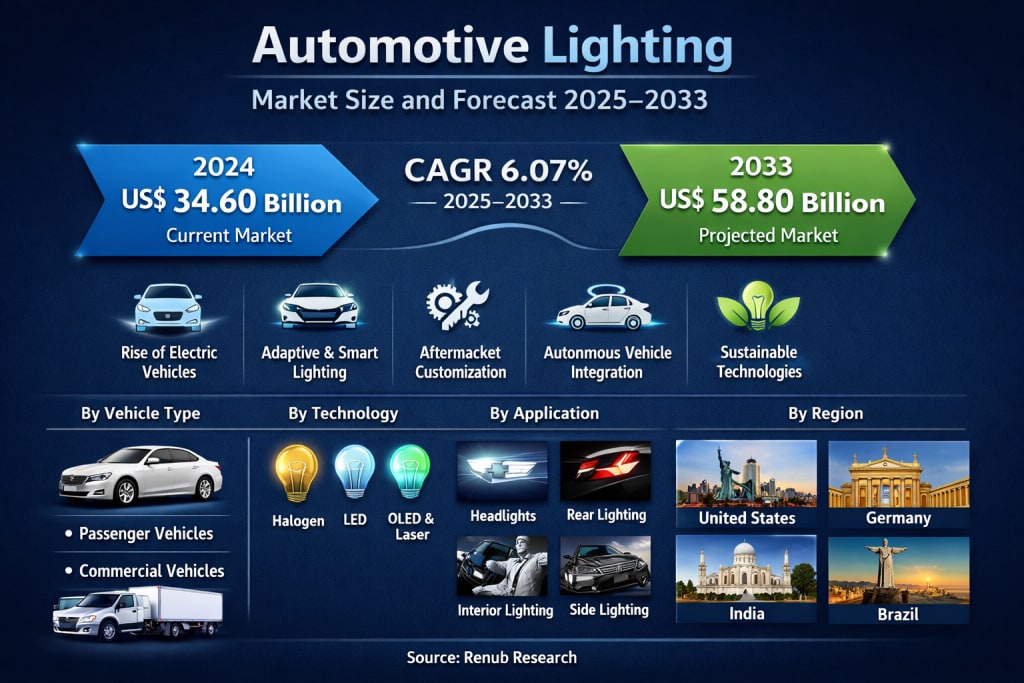
The global automotive industry is undergoing a significant transformation driven by electrification, digitalization, and enhanced safety technologies. One critical component supporting this transformation is automotive lighting, a system that plays an essential role in vehicle visibility, communication, safety, and aesthetics. From simple halogen headlamps in traditional vehicles to advanced adaptive LED and laser lighting systems in modern electric vehicles, automotive lighting technology has evolved dramatically.
According to Renub Research, the Automotive Lighting Market is projected to reach US$ 58.80 billion by 2033, rising from US$ 34.60 billion in 2024, expanding at a compound annual growth rate (CAGR) of 6.07% between 2025 and 2033. The steady expansion of the market is fueled by several factors, including increasing demand for energy-efficient lighting technologies, rapid innovation in LED and adaptive lighting systems, and rising global vehicle production.
As the automotive sector transitions toward intelligent mobility and electrified vehicles, lighting systems are becoming more advanced, integrated, and essential than ever before.
Automotive Lighting Market Overview
Automotive lighting refers to the system of lighting components integrated into vehicles to enhance road visibility, improve safety, and support vehicle design aesthetics. These lighting systems include headlights, taillights, brake lights, fog lights, indicators, daytime running lights (DRLs), interior lighting, and various specialty lighting components.
The primary objective of automotive lighting is to ensure driver visibility in low-light or challenging weather conditions while allowing vehicles to communicate important signals to other road users. Headlights illuminate the road ahead, enabling drivers to identify obstacles and navigate safely. Meanwhile, rear lighting elements such as taillights and brake lights alert drivers behind the vehicle, helping reduce the risk of collisions.
Interior lighting systems also contribute significantly to the vehicle experience. Dashboard lights, cabin lighting, and ambient illumination improve passenger comfort and make it easier to access controls or locate objects in the dark. In modern vehicles, lighting has also become a design element that enhances the vehicle’s overall appearance and brand identity.
Advanced technologies such as adaptive headlights, matrix LED systems, and intelligent lighting controls are now transforming how lighting systems interact with the environment. These innovations allow lights to automatically adjust brightness and beam direction based on traffic conditions, weather, and road curvature.
As vehicles become increasingly intelligent, automotive lighting is evolving from a basic functional component to a critical safety and communication technology.
Key Opportunities in the Automotive Lighting Market
Rise of Electric Vehicles
The rapid growth of electric vehicles (EVs) is creating new opportunities in automotive lighting design and innovation. EV manufacturers often prioritize futuristic aesthetics and energy efficiency, leading to the adoption of sleek lighting signatures, dynamic LED strips, and customizable lighting features.
Electric vehicles frequently incorporate animated turn signals, thin LED light bars, and distinctive lighting patterns that help brands differentiate their models. Because EVs are designed to maximize energy efficiency, lightweight and low-power lighting systems are increasingly preferred.
As global EV adoption accelerates, automotive lighting manufacturers have the opportunity to develop customized lighting solutions specifically optimized for electric mobility platforms.
Increased Demand for Adaptive and Smart Lighting Systems
Advanced driver assistance systems (ADAS) and safety technologies are fueling demand for adaptive lighting solutions. Systems such as Adaptive Driving Beam (ADB) and matrix LED headlights automatically adjust the light pattern based on surrounding traffic conditions.
These intelligent lighting systems can dim specific areas of the beam to prevent dazzling other drivers while still maintaining maximum illumination elsewhere. They also adjust brightness and beam direction based on weather conditions, road curvature, and vehicle speed.
Future smart lighting technologies may even support vehicle-to-vehicle (V2V) communication, projecting signals or symbols onto the road to indicate driver intentions. This integration of lighting with digital vehicle systems represents one of the most promising developments in automotive safety.
Aftermarket Customization and Personalization
The automotive aftermarket is another rapidly growing segment for lighting products. Many vehicle owners are increasingly interested in customizing their cars through upgraded lighting systems.
Popular aftermarket lighting upgrades include:
LED conversion kits
RGB interior ambient lighting
Smartphone-controlled lighting systems
Decorative undercarriage lighting
Custom headlamp and taillight designs
These products allow drivers to personalize their vehicles while improving visibility and functionality. As vehicle personalization trends grow globally, suppliers offering easy-to-install modular lighting solutions are well positioned to capture a significant share of this expanding market.
Integration with Autonomous Vehicle Systems
Autonomous and semi-autonomous vehicles require new communication methods with pedestrians and other road users. Lighting systems are expected to play a crucial role in this interaction.
Future vehicles may use external lighting displays to communicate information such as:
When the vehicle is operating in autonomous mode
When it intends to yield to pedestrians
Warning signals for nearby cyclists or vehicles
Inside the vehicle, intelligent lighting may also adjust cabin brightness and color temperature depending on whether the driver is actively controlling the vehicle or the autonomous system is engaged.
The combination of artificial intelligence, user experience design, and advanced lighting technologies is expected to define the next generation of automotive lighting systems.
Emergence of Sustainable Lighting Technologies
Sustainability and environmental responsibility are increasingly shaping automotive manufacturing. Lighting technologies are no exception.
LEDs have already become the industry standard due to their long lifespan, high efficiency, and reduced energy consumption compared to traditional halogen lighting. However, emerging technologies such as OLED (Organic Light Emitting Diodes) and laser lighting systems promise even greater efficiency and design flexibility.
Automotive manufacturers are also exploring recyclable materials and environmentally friendly production processes to align lighting technologies with global carbon reduction initiatives.
These innovations present a major opportunity for companies focusing on sustainable automotive technologies.
Growth Drivers in the Automotive Lighting Market
Increasing Demand for Energy-Efficient Lighting
Energy-efficient lighting technologies are rapidly replacing traditional halogen systems in modern vehicles. LEDs offer numerous advantages including longer service life, improved illumination, lower power consumption, and compact design flexibility.
As environmental regulations tighten worldwide and manufacturers strive to reduce vehicle emissions, LED lighting solutions are expected to dominate automotive lighting systems in the coming years.
In May 2024, Nichia, one of the world's leading LED manufacturers, opened the Nichia Automotive Innovation Center in Aachen, Germany, further strengthening research and development efforts in advanced automotive lighting technologies.
Rising Automotive Production and Sales
Growth in global vehicle production is another key factor driving demand for automotive lighting systems. Increasing urbanization, rising disposable income, and expanding transportation infrastructure are contributing to higher vehicle ownership rates across many regions.
Although global automotive sales experienced a slight slowdown in early 2024, industry reports estimate that vehicle sales will reach approximately 91.4 million units globally, representing continued growth compared to previous years.
As automakers introduce new models featuring advanced lighting designs and technologies, demand for automotive lighting components continues to rise.
Growing Focus on Vehicle Safety and Design
Vehicle safety remains a top priority for both regulators and consumers. Advanced lighting systems play a crucial role in improving road safety by enhancing visibility and enabling better communication between drivers.
Technologies such as matrix LED headlights, adaptive beams, and laser lighting systems significantly improve nighttime driving conditions and reduce accident risks.
At the same time, lighting systems have become a major styling element for modern vehicles. Distinctive lighting signatures help manufacturers strengthen brand identity and attract consumers seeking premium vehicle designs.
Challenges in the Automotive Lighting Market
High Initial Costs of Advanced Lighting Systems
While advanced lighting technologies offer superior performance, they often involve higher initial costs compared to traditional halogen systems. This price difference can limit adoption in budget vehicles and cost-sensitive markets.
Manufacturers must continue innovating to reduce production costs while maintaining performance advantages.
Supply Chain Disruptions
Global supply chain challenges have affected many sectors within the automotive industry, including lighting manufacturers. Shortages of semiconductor components, raw materials, and electronic parts have increased production costs and caused delays in product deliveries.
Ensuring stable supply chains will remain a key challenge for automotive lighting companies in the coming years.
Automotive Passenger Vehicle Lighting Market
Passenger vehicles represent the largest segment of the automotive lighting market. Growing consumer demand for advanced safety features and stylish vehicle designs is driving the adoption of innovative lighting technologies.
In April 2024, ams OSRAM partnered with DOMINANT Opto Technologies, a Malaysian LED manufacturer, to enhance automotive ambient lighting technologies, highlighting the growing focus on interior lighting innovation.
Electric and autonomous vehicles are also expected to accelerate demand for next-generation lighting systems within passenger vehicles.
Automotive Rear Lighting Market
Rear lighting components such as brake lights, taillights, and turn indicators play a vital role in road safety. The adoption of LED and OLED technology in rear lighting systems has improved both design flexibility and energy efficiency.
In December 2024, FORVIA HELLA introduced a unique rear wing lighting concept that integrates a rear combination lamp with an aerodynamic spoiler design, demonstrating how lighting innovations are shaping vehicle aesthetics.
Automotive Interior Lighting Market
Interior lighting has evolved beyond basic illumination to become a key element of vehicle comfort and luxury. Modern vehicles increasingly feature ambient lighting systems with customizable color settings, often integrated with infotainment systems.
These lighting systems help create a premium cabin experience while improving usability and visibility.
Automotive Halogen Lighting Market
Despite the rapid growth of LED technology, halogen lighting remains widely used in entry-level and budget vehicles due to its affordability and simple replacement process.
However, the long-term trend indicates a gradual decline in halogen usage as manufacturers shift toward more energy-efficient lighting alternatives.
OEM Automotive Lighting Market
Original Equipment Manufacturers (OEMs) dominate the automotive lighting market by supplying integrated lighting systems directly to vehicle manufacturers.
Close collaboration between lighting suppliers and automakers allows for customized lighting solutions tailored to specific vehicle designs and technologies.
OEMs are heavily investing in research and development to keep pace with rapidly evolving automotive technologies.
Regional Insights
United States
The United States automotive lighting market is driven by the growing popularity of electric vehicles, strong consumer demand for advanced safety features, and strict regulatory standards. Companies in the region are investing heavily in research and partnerships to develop next-generation lighting technologies.
Germany
Germany remains a global hub for automotive innovation, supported by the presence of leading automakers and technology companies. The country's strong emphasis on safety, sustainability, and engineering excellence continues to drive advancements in automotive lighting systems.
India
India’s automotive lighting market is expanding rapidly due to rising vehicle production and increasing awareness about road safety. Government initiatives promoting electric mobility and stricter safety regulations are expected to support market growth in the coming years.
Brazil
Brazil’s automotive industry is growing steadily, with increasing demand for modern vehicles equipped with advanced lighting technologies. The expansion of electric vehicle production facilities is also supporting market development.
Saudi Arabia
Saudi Arabia’s automotive sector is benefiting from infrastructure development and economic diversification efforts. Growing vehicle ownership and increasing adoption of premium vehicles are driving demand for advanced lighting technologies in the region.
Competitive Landscape and Innovation
The automotive lighting industry continues to witness strong innovation and product development. Companies are introducing advanced lighting systems that combine software, sensors, and digital technologies.
For example, Marelli plans to showcase innovative lighting technologies at Auto Shanghai 2025, including near-field projection lighting and OLED pixel rear lamps designed to enhance smart mobility.
Similarly, ams OSRAM introduced the EVIYOS HD 25 intelligent multipixel LED system, enabling dynamic adaptive headlight operation with image projection capabilities.
New production facilities are also expanding the industry’s manufacturing capacity. In October 2024, Neolite ZKW opened a new sustainable automotive lighting facility in Pune, India, demonstrating the industry’s commitment to environmentally responsible manufacturing.
Final Thoughts
The automotive lighting market is entering a new era defined by smart technologies, electrification, and advanced vehicle design. Lighting systems are no longer limited to basic illumination but are evolving into intelligent communication and safety tools integrated with modern vehicle architectures.
As electric vehicles, autonomous technologies, and advanced driver assistance systems continue to reshape the automotive industry, demand for innovative lighting solutions will grow significantly.
With strong technological advancements and increasing global vehicle production, the automotive lighting market is set to experience steady expansion, reaching US$ 58.80 billion by 2033.
In the years ahead, automotive lighting will not only illuminate the road—it will help define the future of mobility itself.
About the Creator
Sakshi Sharma
Content Writer with 7+ years of experience crafting SEO-driven blogs, web copy & research reports. Skilled in creating engaging, audience-focused content across diverse industries.
Keep reading
More stories from Sakshi Sharma and writers in Trader and other communities.
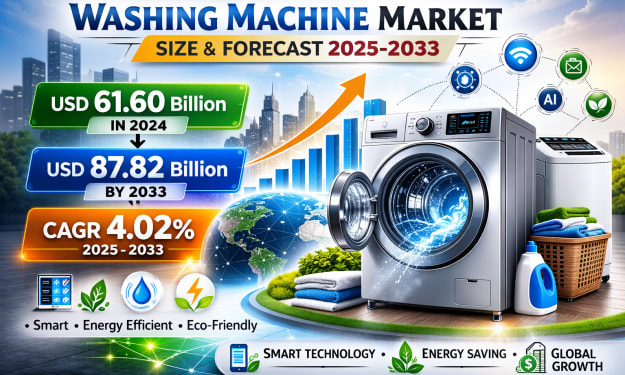
Washing Machine Market Size and Forecast 2025–2033: Smart Technology and Rising Urbanization Transform the Global Laundry Appliance Industry
Introduction The global washing machine market is undergoing significant transformation as technological advancements, urbanization, and changing consumer lifestyles reshape the home appliance industry. According to industry analysis, the global washing machine market was valued at USD 61.60 billion in 2024 and is projected to grow to USD 87.82 billion by 2033, registering a compound annual growth rate (CAGR) of 4.02% between 2025 and 2033.
By Sakshi Sharmaabout 12 hours ago in Trader
Australia Fertilizer Market Growth, Forecast, and Strategic Insights 2034
Fertilizers play a crucial role in modern agriculture by supplying essential nutrients that enhance crop productivity and soil health. In Australia, where agriculture remains a cornerstone of the national economy, fertilizers are widely used to maintain soil fertility and support the cultivation of grains, oilseeds, fruits, vegetables, and other crops.
By Rashi Sharma3 days ago in Trader



Comments
There are no comments for this story
Be the first to respond and start the conversation.