Latest Stories
Most recently published stories in Unbalanced.
John Jay Enters Passing Lanes in 71-62 Win
Scroll down for photos On Friday January 9, John Jay welcomed Hen Hud to the high school for some Friday night basketball and kicked off the festivities by taking an early 8-3. But the scoreboard wasn’t as telling as the style of play.
By Rich Monettiabout a month ago in Unbalanced
Return of the Empire: The Patriots return to glory
A rebuild isn't supposed to be this quick. Once Tom Brady left the New England Patriots after the 2019 season, New England was expected to need some time to find it's way back to relevence. Sure seasons of Cam Newton, Brian Hoyer, Mac Jones and Bailey Zappe were hard to stomach.
By Ben Hercikabout a month ago in Unbalanced
The Parade of Nations Is an Olympic Highlight. Italy Says, Let’s Have 4.. AI-Generated.
The Parade of Nations has long been one of the most beloved moments of every Olympic opening ceremony: athletes marching behind their national flags, waving to the world and officially launching the Games. For the Milan-Cortina Winter Olympics, Italy is preparing to rethink that tradition in an ambitious way. Instead of one parade, organizers plan to stage four separate parades across different host cities, reflecting the unique multi-venue structure of the 2026 Games. Italy’s proposal aims to celebrate the geographic and cultural diversity of the country while easing logistical pressures created by hosting events across northern Italy. The Winter Olympics will be split between Milan, Cortina d’Ampezzo, Verona, and Val di Fiemme, with competitions spread over hundreds of kilometers. Officials say a single massive opening ceremony no longer fits the reality of a decentralized Games. A New Format for a Classic Tradition The Parade of Nations typically takes place inside one stadium, with athletes from more than 90 countries marching together. For Milan-Cortina, organizers envision four synchronized ceremonies, each featuring a portion of the participating delegations. The events will be linked through live broadcasts and digital displays, creating what planners describe as “one opening ceremony in four chapters.” Each city will host a segment of the parade that highlights its regional identity. Milan’s ceremony is expected to focus on modern design and innovation, Cortina will emphasize alpine heritage, Verona will draw on its Roman and Renaissance history, and Val di Fiemme will showcase winter sports culture. “The Olympics are no longer confined to a single arena,” said one official involved in planning. “Our concept mirrors the reality of these Games — spread across regions but united in spirit.” Reducing Athlete Fatigue A key motivation behind the plan is athlete welfare. In past Olympics, competitors often waited hours to march in freezing temperatures or sit through lengthy ceremonies. Some athletes skipped the parade entirely to rest for upcoming events. With four ceremonies closer to competition venues, organizers hope athletes will be able to participate without long travel times or late-night schedules. Delegations will be assigned to the ceremony nearest their event locations. “This is a practical solution to a modern problem,” said a sports logistics expert in Rome. “Athletes want to experience the opening ceremony, but they also need sleep and recovery. Splitting the parade could improve both.” A Technical Challenge The proposal presents major technical hurdles. Broadcasting four ceremonies simultaneously will require precise coordination, advanced satellite links, and unified timing. Viewers worldwide must still feel they are watching one single global event rather than four separate shows. Italian broadcasters are reportedly working with international partners to ensure smooth transitions between cities, with shared music, countdowns, and symbolic moments such as the raising of the Olympic flag and the lighting of a central Olympic flame. There is also debate about whether the Olympic cauldron should be lit in one location or in four. Some designers are considering a main flame in Milan, accompanied by three smaller flames in the other cities. Mixed Reactions from the Olympic Community The International Olympic Committee (IOC) has welcomed the idea cautiously. Officials say they support innovation but stress that the unity of the Games must remain visible. “The Parade of Nations is a symbol of global togetherness,” said one IOC representative. “Any change must preserve that meaning.” Athletes have expressed curiosity and optimism. “It could be amazing to march in a place that reflects where you’re competing,” said an Italian alpine skier. “It makes the ceremony more personal.” However, some critics worry that splitting the parade may weaken the emotional impact of seeing all nations together in one space. The traditional image of a packed stadium filled with athletes from every corner of the world is considered iconic. “There is power in physical togetherness,” said a former Olympic organizer. “Four parades risk turning one powerful moment into several smaller ones.” Part of a Broader Olympic Shift The plan reflects a broader shift in how the Olympics are organized. Rising costs and public opposition to mega-stadium construction have pushed the IOC toward regional hosting models. Milan-Cortina is the first Winter Games to be formally designed as a multi-city event from the start. Italy’s experiment could shape future Olympics. If successful, it may encourage other host nations to rethink centralized ceremonies and explore regional participation. Environmental considerations also play a role. Fewer long-distance transfers of athletes and spectators could reduce the Games’ carbon footprint, a priority for both Italy and the IOC. Cultural Showcase on a National Scale Beyond logistics, Italy sees the four-parade format as a chance to present a richer cultural story. Each city will contribute music, architecture, and historical themes, offering a broader picture of Italian identity than a single stadium ceremony could provide. From Milan’s fashion and design legacy to Cortina’s alpine glamour, the ceremonies are expected to combine tradition with modern spectacle. A High-Risk, High-Reward Idea The success of the plan will depend on flawless execution. A fragmented ceremony could confuse audiences, but a well-coordinated event could redefine how the world experiences the Olympics. Italy’s gamble reflects a growing belief that the Games must evolve to remain relevant and sustainable. By transforming one of the Olympics’ most cherished traditions, the country hopes to show that unity does not require a single location — only a shared moment. Whether four parades will feel like one global celebration remains to be seen. But Italy’s bold approach has already ensured that the Parade of Nations will once again be one of the most closely watched elements of the Olympic opening ceremony.
By Fiaz Ahmed about a month ago in Unbalanced
Somers Can’t Hold Onto Early Lead in Loss to Rye
Scroll Down for Photos After jumping out to a 33-12 lead, Somers looked like they were coming away with an easy home win versus Rye. But the Garnets refused to leave town without a fight, and at 33-30, the match rested on TJ Mauro.
By Rich Monettiabout a month ago in Unbalanced
Compare and Contrast: 2026 MLB Wild Card Predictions
Spring Training is just around the corner, which I'm looking forward to. In this story, I'll be comparing my picks to clinch Wild Card berths in 2026 to what Fangraphs has predicted. Please note that Fangraphs odds for each team to clinch a Wild Card or division title berth changes daily. The percentages of what Fangraphs with, as far as who will punch their tickets to the Postseason is our sole focus for this story. I'll compare and contrast to Fangraphs division title predictions will be highlighted in the next story. Let's get this show on the road. We're only going to highlight our top six teams.
By Mark Wesley Pritchard about a month ago in Unbalanced
Cruising the Atlantic Division
The Colorado Avalanche's long seven-game homestand started well, but ended very rocky (no pun intended). We dominated our first two games, but the next five were very messy. The Avs lost four of our last five games in the homestand, but again, because a loss isn't a loss in regular season hockey, it's actually a 1-2-2 stretch in our last five games, which is only one game under "NHL .500" in that time. That's how fortunate and spoiled we are this year; even our lulls aren't truly lulls.
By Clyde E. Dawkinsabout a month ago in Unbalanced
When Recovery Becomes a Violation
When Paul George was asked how he managed to recover from one of the most devastating injuries an NBA player can suffer, his answer was refreshingly honest. Speaking about the long road back and offering advice to teammates dealing with similar physical wear and tear — including Joel Embiid — George said plainly that “drugs helped me” during his recovery.
By Logan M. Snyderabout a month ago in Unbalanced
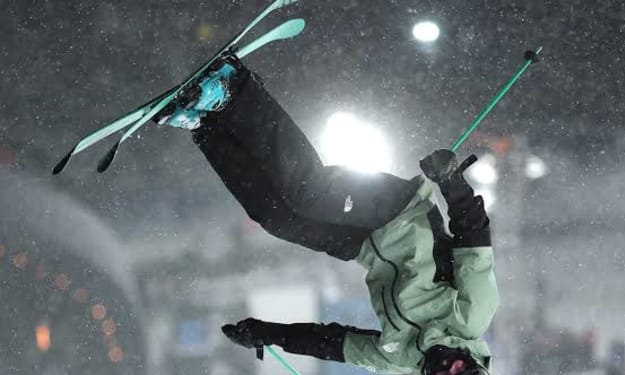
Australia’s Youngest Winter Olympian Indra Brown: ‘I Just Love the Feeling of Flying’. AI-Generated.
When Indra Brown launched off the icy ramp at her first Olympic training run, she felt something few teenagers ever experience: the sensation of defying gravity on the world’s biggest sporting stage. At just 15 years old, Brown became Australia’s youngest-ever Winter Olympian, a milestone that reflects not only extraordinary talent but also an uncommon maturity and dedication. “I just love the feeling of flying,” Brown said in a recent interview. “When you’re in the air, everything else disappears. It’s just you and the moment.” Brown competes in freestyle skiing, a discipline that demands fearless precision, explosive strength, and technical finesse. Her journey from a curious child on the slopes to an Olympic athlete has been shaped by early passion, family support, and relentless training in a sport still growing in Australia. From Local Slopes to Global Stage Born and raised in Victoria, Brown was introduced to skiing almost as soon as she could walk. Family holidays to alpine regions sparked her interest, but it wasn’t long before casual skiing turned into structured training. By the age of nine, she was already competing in junior freestyle events, showing a natural aptitude for aerial tricks and jumps. Coaches quickly noticed her balance and spatial awareness. “She had an instinct for movement in the air,” said one of her early trainers. “That’s something you can’t really teach.” Australia is not traditionally known for producing Winter Olympic athletes at scale, but recent investment in snow sports programs has helped young talents like Brown access elite coaching and facilities. Much of her development took place overseas, particularly in North America and Europe, where she trained alongside more experienced competitors. “It was intimidating at first,” Brown admitted. “Everyone was older and stronger. But I learned so much just by watching and trying to keep up.” Balancing School and Sport Behind the glamour of Olympic competition lies a demanding daily routine. Brown balances schoolwork with hours of physical conditioning, technical drills, and travel. Her education has shifted to a flexible learning program to accommodate training camps and international competitions. “There are days when I train in the morning and study on planes or in hotel rooms,” she said. “It’s not easy, but I really enjoy learning and I don’t want to give that up.” Her parents have played a critical role in helping her manage pressure and expectations. They insist on maintaining structure and normalcy, ensuring she remains connected to friends and family despite her growing public profile. “She’s still a teenager,” her mother said. “We want her to enjoy this experience, not feel like everything depends on results.” The Mental Challenge of Flight Freestyle skiing is as much a mental test as a physical one. Athletes launch themselves into the air at high speed, performing spins and flips that leave little margin for error. For a 15-year-old, managing fear is part of the learning process. Brown admits she still feels nervous before big jumps. “If you’re not scared at all, something’s wrong,” she laughed. “But I trust my training. Once I’m in the air, it feels natural.” Sports psychologists working with young Olympians emphasize the importance of emotional resilience. They focus on visualization techniques, breathing exercises, and routines that help athletes stay grounded amid intense competition. “Indra has shown remarkable composure,” said a team official. “She listens, adapts, and learns quickly. That’s rare at her age.” Representing a New Generation Brown’s Olympic appearance has already made her a role model for young athletes across Australia. Social media has amplified her story, inspiring children who might not have considered winter sports a realistic path. “I get messages from kids saying they want to ski like me,” Brown said. “That’s really cool. I hope they just have fun with it first.” She is careful not to frame her success as the end goal but as part of a longer journey. Her immediate focus is improving technique and gaining experience rather than chasing medals. “I’m here to learn,” she said. “If I do my best run, I’m happy.” Looking Ahead While the Olympics mark a historic moment in her career, Brown sees them as the beginning rather than the peak. Her long-term ambitions include competing in multiple Olympic cycles and helping raise the profile of freestyle skiing in Australia. “I want to keep pushing myself and see what I can do,” she said. “There’s so much more to learn.” Coaches caution against rushing development. Physical growth, injury prevention, and emotional well-being remain priorities. “We want her to have a long career,” said her head coach. “Not burn out too early.” More Than Medals What sets Brown apart is not just her age or her technical ability, but her joy in the sport. She speaks about skiing with enthusiasm rather than pressure, framing competition as an opportunity rather than a burden. “When I jump, it feels like freedom,” she said. “That’s why I love it.” In a sporting world often defined by results and rankings, Indra Brown’s story stands out as one of curiosity, courage, and youthful wonder. As Australia’s youngest Winter Olympian, she represents both the future of her sport and the timeless thrill of pushing boundaries. Whether she finishes on the podium or not, her message is simple and powerful: sometimes success is not about winning, but about daring to fly.
By Fiaz Ahmed about a month ago in Unbalanced