Fred Bradford
Bio
Philosophy, for me, is not just an intellectual pursuit but a way to continuously grow, question, and connect with others on a deeper level. By reflecting on ideas we challenge how we see the world and our place in it.
Stories (184)
Filter by community
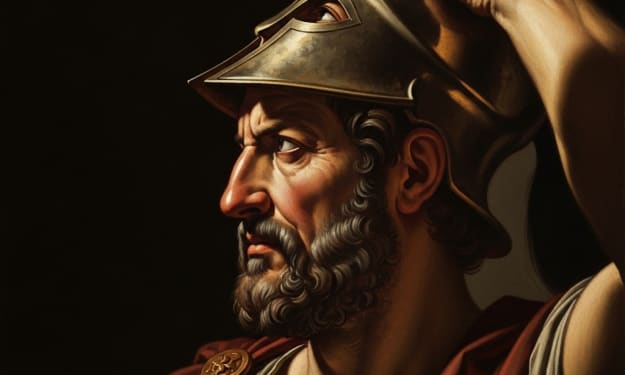
Pericles — Power Through Culture
When people think of power, they often imagine armies, borders, and conquest. Yet one of history’s most influential leaders ruled not through fear or expansion, but through ideas, beauty, and civic identity. Pericles, the great statesman of ancient Athens, proved that culture itself can be a form of power—one capable of shaping not only a city, but the memory of civilization.
By Fred Bradfordabout a month ago in History
Hannibal Barca: Tactical Genius Beyond Politics
History often favors the victors, but strategy remembers the exceptional. Few commanders embody this truth more clearly than Hannibal Barca. Though he ultimately lost the Second Punic War, Hannibal remains one of the most studied military minds of all time. His genius did not lie in ruling empires or shaping laws, but in something purer and rarer—battlefield intelligence unchained by politics. Hannibal was not a builder of states. He was a master of movement, deception, and human psychology.
By Fred Bradfordabout a month ago in History
Julius Caesar: Strategy and Charisma
History has produced many brilliant commanders and countless ambitious politicians, but few individuals have fused strategy and charisma as completely as Julius Caesar. Others ruled through fear, tradition, or divine claims. Caesar ruled through belief. Men followed him not merely because he commanded armies, but because he convinced them—emotionally, psychologically, and symbolically—that his success was their destiny.
By Fred Bradfordabout a month ago in History
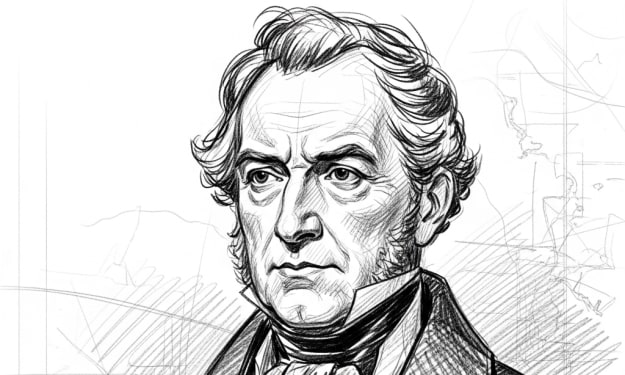
Metternich: The Architect of Stability
Klemens von Metternich stood almost alone in defending an unfashionable idea: stability. While others chased glory, ideology, or national destiny, Metternich pursued something far less dramatic but far more difficult—peace that lasts. He was not a conqueror, nor a visionary prophet. He was an architect, quietly designing a political structure strong enough to restrain chaos.
By Fred Bradfordabout a month ago in Art
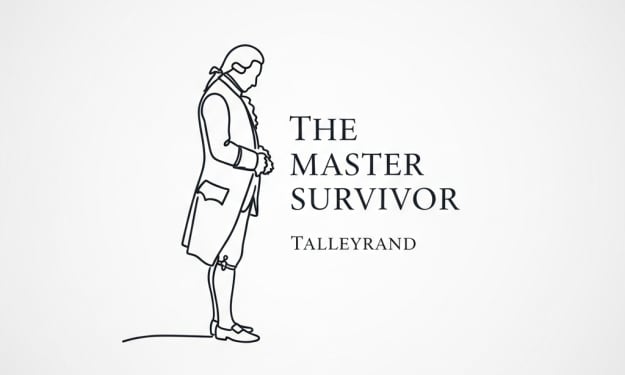
Talleyrand: The Master Survivor
Few figures in history embody strategic survival as perfectly as Charles-Maurice de Talleyrand-Périgord. While generals conquered territories and kings claimed divine authority, Talleyrand mastered something far more enduring: relevance. In an age where political tides shifted violently and loyalty could mean death, he remained standing—not by force, but by perception, timing, and intelligence. He did not dominate history. He outlasted it.
By Fred Bradfordabout a month ago in History
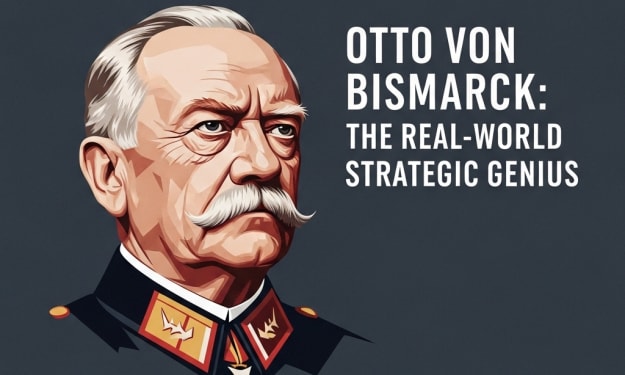
Otto von Bismarck: The Real-World Strategic Genius
History remembers many great thinkers of power, but few figures mastered it as completely in practice as Otto von Bismarck. While philosophers like Machiavelli explained how rulers *should* behave, Bismarck demonstrated how power actually works in the real world—messy, emotional, unpredictable, and deeply human. He was not a conqueror driven by glory, nor an ideologue chasing perfection. He was something far rarer: a strategist whose primary weapon was restraint.
By Fred Bradfordabout a month ago in History
The Best Philosophy in the World Is the One You Can Live
Ask ten philosophers what the best philosophy in the world is, and you will receive at least ten different answers—possibly delivered with footnotes, counterarguments, and mild contempt for the other nine. This disagreement is not a flaw of philosophy; it is its essence. Philosophy was never meant to be a universal prescription handed down like a rulebook. It exists to help human beings live better lives. By that standard, the best philosophy in the world is not the most elegant or complex—it is the one that can be lived.
By Fred Bradford2 months ago in Art
The Method That Turns Action Into Accuracy
For most of our lives, we are taught a simple rule for success: Ready, Aim, Fire. Prepare carefully. Plan extensively. Wait until the target is perfectly clear—then act. On paper, this sounds wise and responsible. In reality, it often leads to hesitation, overthinking, and missed opportunities.
By Fred Bradford2 months ago in FYI
Why Nietzsche Belongs in 2026
As the world moves toward 2026, it does not feel like a calm progression into the future—it feels like a collision. Rapid technological acceleration, cultural fragmentation, economic uncertainty, and a deep crisis of meaning define the modern condition. Traditional authorities are distrusted, ideologies compete aggressively, and individuals feel both empowered and exhausted by choice. In such a landscape, Friedrich Nietzsche’s philosophy emerges not as a comfortable guide, but as a necessary one. Unsettling, demanding, and brutally honest, Nietzsche may offer the most fitting philosophical framework for the year ahead.
By Fred Bradford2 months ago in Art
What's Next If Changing Does Not Work?
We are taught a simple formula for progress: if something isn’t working, change it. The advice sounds practical, empowering, and modern. Change jobs, change habits, change strategies, change relationships. Movement is framed as growth, and stagnation as failure. But life has a way of complicating this neat equation. Sometimes we change everything—our methods, our mindset, even ourselves—and still nothing works. When change fails, what comes next?
By Fred Bradford2 months ago in Motivation
The Philosophy of a Tyrant
The tyrant is not merely a villain of history books or a caricatured despot shouting orders from a throne. He is, more disturbingly, a philosopher in action—one whose ideas are etched not on paper but on people. Tyranny is sustained not only by weapons and fear, but by a coherent, if deeply flawed, worldview. To understand tyranny is to confront a philosophy that values power over truth, order over justice, and control over meaning.
By Fred Bradford2 months ago in FYI
Stop Saying Affirmations Wrong
Affirmations have become a cornerstone of personal development, but few people realize that how you phrase your words determines whether your mind grows stronger or stays resistant. At the heart of every affirmation practice lie two powerful but distinct tools: confirmations and declarations. They may sound similar, yet they operate in completely different psychological spaces. When you understand the difference, your affirmations stop feeling like empty sentences and start functioning like mental rewiring.
By Fred Bradford3 months ago in FYI