Latest Stories
Most recently published stories on Vocal.
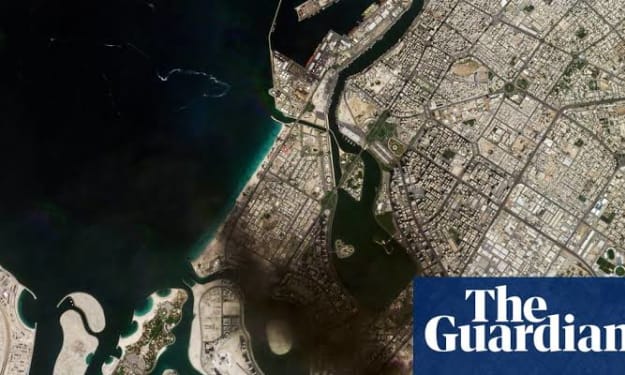
How Escalating Iran Conflict Is Driving Up Oil and Gas Prices – A Visual Guide. AI-Generated.
The ongoing conflict in the Middle East, particularly the confrontation between Iran and a coalition involving the United States and Israel, has triggered significant disruptions in global energy markets. As geopolitical tensions rise, investors, traders, and policymakers are watching closely how supply fears are translating into rising oil and gas prices around the world. 1. Conflict and Supply Risk: The Strait of Hormuz Effect A central factor in today’s energy price surge is the Strait of Hormuz, a narrow waterway between Iran and Oman that serves as a key global oil and gas transit point. Roughly one-fifth of the world’s crude oil and a significant share of liquefied natural gas (LNG) flows through this chokepoint. Even the fear of disruption in this region can add a “risk premium” to energy prices, pushing benchmarks higher. In recent weeks, attacks on regional infrastructure — including reported assaults on vessels and energy facilities — have led many shippers to avoid the strait, effectively slowing or halting cargo movements. Insurers have raised premiums, and some carriers have suspended routes through the region, adding to concerns about the reliability of oil and gas supplies. 2. Immediate Market Reaction: Crude Oil Spikes The most visible impact of the conflict has been sharp increases in crude oil prices. Benchmark prices such as Brent crude and West Texas Intermediate (WTI) have climbed dramatically as traders price in potential supply disruptions and geopolitical risk. Markets often react not only to actual outages but also to anticipation of disruption, which itself can drive prices upward. In early March 2026, Brent crude surged more than 10% to around $80 per barrel, while U.S. crude benchmarks also posted significant gains. Analysts warn that if the conflict continues to extend or if the Strait of Hormuz is effectively blocked, crude prices could climb to $90–$100 per barrel or higher. 3. Gas Prices and Regional Impacts Oil is not the only commodity affected. Natural gas markets have experienced volatility as well. In Europe, gas prices spiked as shipments were disrupted and critical LNG production — particularly from major exporters such as Qatar — was temporarily halted amid safety concerns. A meeting of EU gas supply officials was convened to assess these risks. These price increases have real implications for households and industries. Higher oil and gas costs feed into broader inflationary pressures, raising the cost of transportation, electricity, and manufacturing — and ultimately affecting consumer prices across multiple sectors. 4. Global Economic Consequences Rising energy prices put upward pressure on global inflation. Economists note that even a sustained rise of $10 per barrel in oil prices can have a meaningful impact on inflation and economic growth, particularly in energy-importing regions. Central banks — already grappling with post-pandemic recovery and other macroeconomic challenges — face difficult choices as energy cost pressures persist. Energy price surges also influence currency markets, consumer sentiment, and investment decisions. In regions highly dependent on imported fuel, the cost increases can erode purchasing power and slow economic activity. In contrast, major oil exporters could benefit from higher price environments, boosting revenue even if production levels remain steady. 5. Long-Term Considerations and Market Volatility While short-term price spikes garner headlines, longer-term trends and geopolitical risks shape the broader energy outlook. Prolonged conflict could lead to sustained disruption of Middle Eastern supply chains, tightening global markets further. Energy analysts emphasize that modern commodity markets are sensitive not only to physical shortages but also to perceived risk. Even if the conflict de-escalates, the memory of disrupted supplies may keep a risk premium embedded in prices, meaning that oil and gas costs could remain elevated compared with pre-conflict levels. This volatility underscores the interconnected nature of global energy markets and how geopolitical flashpoints can ripple through economies worldwide. Conclusion The escalating Iran conflict has driven up oil and gas prices through a combination of supply disruption risk, fear of chokepoint closures, and shifts in market sentiment. While the supply fundamentals may technically remain intact, geopolitical uncertainty alone can send energy prices sharply higher. As traders and policymakers navigate this environment, consumers around the world may feel the effects at the pump, in home heating costs, and across broader economic activity.
By Fiaz Ahmed 5 minutes ago in The Swamp
Who is your "Person"?
It's important to recognize that you cannot go through life as easily on your own. My name is Elizabeth and I'm a survivor of child abuse and horrific trauma. Healing from trauma is not a quick fix and recognizing that it will take time, is part of the struggle.
By Elizabeth Woods8 minutes ago in Psyche
Rafale: India prepares a second major Rafale M carrier jet contract. AI-Generated.
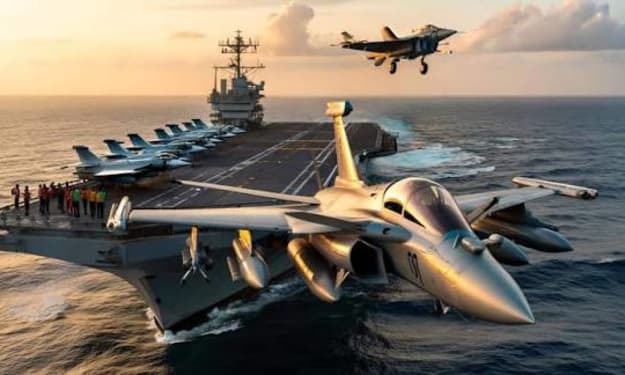
India is gearing up for yet another significant step in its growing partnership with Dassault Aviation by preparing a follow-on contract to expand its fleet of Rafale M carrier-based fighter jets. This potential new agreement comes on the heels of India’s landmark acquisition of 26 Rafale Marine aircraft — the first export order for the naval version of the French multirole fighter — and underscores New Delhi’s ambition to modernize its naval air power as it faces evolving security challenges in the Indian Ocean region. In April 2025, India and France concluded a major intergovernmental agreement for 26 Rafale M jets, consisting of 22 single-seat and four two-seat aircraft, valued at roughly ₹63,000 crore (about $7.5 billion) and slated for delivery starting in 2028. These jets are intended to operate from India’s indigenous aircraft carrier INS Vikrant as well as the Soviet-origin INS Vikramaditya, replacing ageing MiG-29K platforms. Now, barely a year after that deal was signed, New Delhi is laying the groundwork for an additional contract that could substantially increase its inventory of Rafale M fighters. Reports and defence sources indicate that India’s Navy has identified a requirement for more carrier-capable Rafale Marine jets to complement the existing order, potentially bringing the total number of Rafale Ms in Indian service to well over 50 aircraft. This prospective contract is part of a broader strategy to ensure India’s maritime dominance in the Indian Ocean — a region of increasing geostrategic importance due to rising Chinese naval activity, contested sea lanes, and ongoing competition with other regional powers. The addition of more Rafale M aircraft would enhance the Indian Navy’s strike, reconnaissance, and air defence capabilities, enabling more robust carrier air wing operations for extended periods at sea. The expanded Rafale M fleet would be expected to feature the latest F4 standard upgrades, including advanced avionics, reinforced structures, improved weapons integration, and enhanced sensor fusion designed to boost survivability and lethality in multi-domain operations. The F4 standard also improves interoperability with allied forces, a key consideration given India’s increased cooperation with Western and Indo-Pacific partners. From a tactical perspective, carrier-borne aircraft like the Rafale M are critical for projecting power beyond a nation’s shores. They provide significant flexibility during maritime air defence missions, strike operations, fleet escort duties, and humanitarian assistance and disaster relief tasks. India’s Navy has placed emphasis on building a credible carrier strike capability as part of its overall force structure modernization, and these additional aircraft would play a central role in achieving that objective. While official details about the second Rafale M contract — including the number of jets, monetary value, and timeline — have not been confirmed publicly, industry analysts believe negotiations between New Delhi and Paris are in advanced stages. A formal contract announcement could be linked to high-level diplomatic engagements, defence dialogues, or visits by senior officials from both countries. In addition to the direct tactical benefits, this emerging contract has broader strategic implications. It signals India’s continued reliance on French aerospace technology in its quest to modernize its armed forces, even as New Delhi explores indigenous production and global partnerships for future combat aircraft. Past discussions have highlighted India’s desire for deeper technology transfer and local industrial participation — although France has historically been cautious about sharing sensitive source code and core intellectual property. Economically, the expanded Rafale M deal could also involve a wide network of Indian suppliers and aerospace firms under India’s “Make in India” initiative. This would not only support local industry but also build up technical expertise and sustainment infrastructure for high-end military aircraft. Some commentators suggest that a significant portion of future jets could eventually be assembled or serviced domestically with French technical collaboration. The potential new contract for additional Rafale M fighters illustrates how defence procurement is evolving into a long-term partnership between India and France. It builds on the foundation of previous deals — including orders for 36 Rafale jets for the Indian Air Force and the initial 26 naval Rafale Ms — and reinforces the importance of enduring military-industrial ties between the two democracies. As India prepares to finalize this second contract, it is clear that carrier aviation remains a cornerstone of its military strategy. The expanded Rafale M fleet will significantly enhance the Indian Navy’s operational reach, contributing to deterrence and stability in the wider Indian Ocean region. Whether at sea or anchored at home ports, the aircraft are poised to become a defining feature of India’s naval aviation for decades to come.
By Fiaz Ahmed 18 minutes ago in The Swamp
Starmer Faces Dilemma After Drone Hits British Base in Cyprus. AI-Generated.
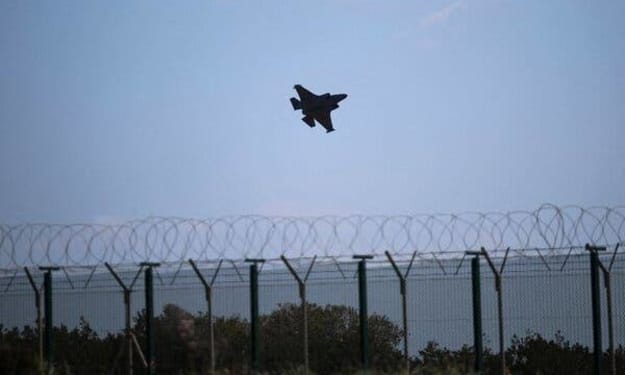
British Prime Minister Keir Starmer is confronting a fraught political and diplomatic challenge after a hostile drone strike struck a United Kingdom military base in Cyprus, drawing international attention and raising questions about Britain’s role and response amid heightened tensions in the Middle East. The incident has tested both the UK’s defence posture and Starmer’s leadership at home, as officials and opposition politicians debate how to balance national security, diplomatic restraint, and global commitments. The attack occurred late last week at one of the UK’s sovereign base areas in Cyprus, long a strategic hub for British operations across the region. The base hosts signals intelligence facilities, logistics units supporting operations in the Middle East and Eastern Mediterranean, and serves as a key staging point for humanitarian and military missions. According to defence sources, the drone caused structural damage but no casualties, highlighting both the vulnerability of overseas facilities and the ability of small unmanned systems to penetrate otherwise secure perimeters. Early investigations suggest the drone strike was deliberate rather than accidental, prompting immediate concern in London and among NATO allies. While no group has formally claimed responsibility, officials suspect actors aligned with Iranian proxy forces in the broader regional conflict may be involved. Such groups have increased their operations in recent months, targeting Western and allied military assets in retaliation for allied strikes against Iranian interests further east. Starmer’s government has publicly condemned the attack, emphasizing that the UK will defend its personnel and interests. “We will not tolerate attacks on our forces or bases overseas,” a Downing Street spokesperson said, underscoring Britain’s resolve. However, Starmer’s response has been measured, avoiding retaliatory rhetoric that might escalate the situation. That cautious stance reflects the broader dilemma confronting the prime minister: how to respond firmly to aggression without drawing the UK deeper into a widening conflict. With British troops still supporting NATO missions and humanitarian operations in volatile regions, a heavy-handed response could risk escalation and entangle London in a broader confrontation. Opposition figures have seized on the incident to criticise the government’s defence strategy. Some Conservative MPs and defence analysts argue that the UK must send a stronger message of deterrence, potentially through joint military exercises with allies or sanctions targeting those believed responsible. Others, however, warn that such steps could be counterproductive, risking retaliation against British forces and citizens abroad. Foreign policy experts stress that the UK’s options are constrained by geography and alliances. Cyprus’s proximity to the Middle East places British bases within range of various actors, especially unmanned systems that are increasingly prevalent in modern warfare. While drones offer tactical advantages to militant groups, they also complicate defence planning, making fixed installations more vulnerable despite traditional perimeter security. In this context, Starmer’s government is exploring both defensive and diplomatic responses. Defence officials have accelerated efforts to harden UK facilities overseas, incorporating advanced counter-drone technologies and improved surveillance measures. These include electronic jamming systems, radar tracking networks, and rapid response teams capable of intercepting small unmanned aerial vehicles before they can strike. On the diplomatic front, London has urged United Nations and regional partners to condemn the attack and support investigations into its origin. British diplomats in the region are engaging with counterparts in Cyprus, Greece, and broader EU networks to coordinate messaging and reinforce commitments to de-escalation. Starmer’s dilemma is further complicated by domestic politics. Labour traditionally positions itself as cautious on military engagement, favouring diplomatic solutions where possible. Yet public opinion in the UK remains sensitive to perceived threats against British personnel. A response seen as too tentative could erode confidence in the government’s ability to protect national interests. Media coverage has reflected this tension, with commentators debating whether the attack should lead to a recalibration of British defence policy. Some argue that the UK must invest more heavily in autonomous defence systems and cyber capabilities to counter asymmetric threats like drones. Others caution against policies that could entwine Britain in conflicts fought primarily by larger powers with direct stakes in the region. For now, Starmer appears to be steering a careful course — condemning the strike, strengthening defensive measures, and seeking international support while avoiding actions that might provoke a broader confrontation. The coming weeks will likely see intensified debate in Westminster over the UK’s strategic priorities and how best to safeguard its forces abroad. As investigations continue and the international community weighs in, the Cyprus drone strike will remain a critical test of Starmer’s leadership and Britain’s role in a turbulent global security environment. The challenge will be finding a balance between deterrence and diplomacy as the UK navigates one of the most complex foreign policy dilemmas of the year.
By Fiaz Ahmed 22 minutes ago in The Swamp
REEEEEEEEE!
I'm on a low road right now. There are a literal million things to do and not one of them worth my time. I would rather sit in place and burn but the orbit takes me on its inevitable route 'round the center; and I a center in my own right, around which others orbit, and so on and so forth, ad infinitum, ad nauseum.
By C. Rommial Butler28 minutes ago in Poets
20 Tested and Proven Longevity Hacks
Many people can avoid certain health problems simply with shifting their choices. They buy the supplements, read the articles, and watch the documentaries about Blue Zones and nod along like they learned something. Then they go back to poor sleeping habits, eating garbage, sitting for ten hours, and wondering why their energy is destroyed by 2pm.
By Destiny S. Harris28 minutes ago in Longevity
Ukraine war: German parts make their way into Russian drones. AI-Generated.
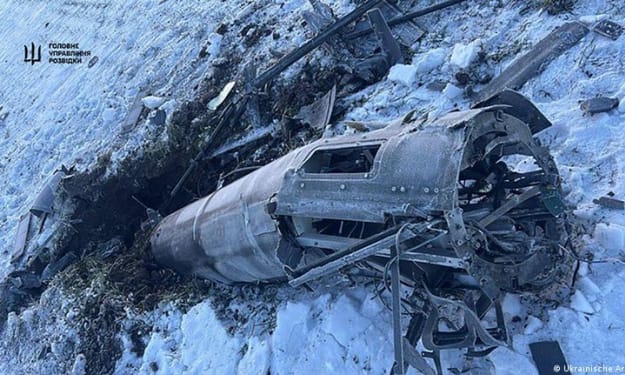
Investigators examining wreckage from Russian drones used in the war in Ukraine have found electronic components traced back to Germany, raising new concerns about how Western-made technology continues to reach Moscow’s weapons programs despite sweeping sanctions. The discoveries underscore the complexity of enforcing export controls in a globalized electronics market and the challenges European governments face in preventing sensitive dual-use goods from being diverted to military purposes. Since the start of Russia’s full-scale invasion of Ukraine in 2022, Western nations have imposed strict restrictions on the export of advanced technologies to Russia. These measures were designed to cut off access to components critical for weapons manufacturing, including microchips, navigation systems, and communications equipment. Yet forensic analysis of downed drones has repeatedly shown that parts produced in Europe, the United States, and Asia still appear inside Russian military hardware. According to Ukrainian officials and independent researchers, several Russian-made drones recovered from the battlefield contained power regulators, microcontrollers, and signal-processing units produced by German manufacturers. While these components are widely used in civilian industries such as automotive electronics and industrial automation, they can also be repurposed for military applications, particularly in unmanned aerial systems. Germany has been among Ukraine’s strongest supporters in Europe, providing air defense systems, armored vehicles, and financial aid. At the same time, Berlin has tightened export rules and expanded its list of restricted technologies. The presence of German parts in Russian drones has therefore triggered political scrutiny and demands for stronger oversight. Officials in Berlin stress that there is no evidence German companies deliberately supplied Russia’s military. Instead, they point to complex supply chains that often involve intermediaries in third countries. Components legally exported to firms in Asia or the Middle East can be resold multiple times before ultimately reaching Russia through gray or black markets. In many cases, the original manufacturer has little visibility over the final destination of its products. Experts say this highlights a central weakness in sanctions enforcement: modern electronics are small, cheap, and widely available. A single drone may contain dozens of parts sourced from different countries, making it difficult to trace responsibility. “Sanctions were never designed to stop every resistor or chip,” one European trade analyst noted. “They are meant to raise the cost and slow production, not eliminate it entirely.” For Ukraine, the findings are deeply troubling. Russian drones have become a key tool in the conflict, used for reconnaissance, targeting, and long-range strikes against infrastructure. Shahed-type drones and domestically produced variants have been deployed in large numbers, often overwhelming air defenses through sheer volume. Even basic commercial components can significantly enhance their reliability and accuracy. Ukrainian authorities have urged the European Union to introduce tighter controls on so-called dual-use goods—items that can serve both civilian and military purposes. They also want harsher penalties for companies that fail to conduct proper due diligence on buyers and distributors. Some lawmakers in Kyiv have proposed the creation of a centralized database to track recovered components and identify recurring supply routes. Within the European Union, the issue has reignited debate over how to close loopholes in sanctions regimes. Several member states have called for more cooperation with countries outside Europe to monitor re-exports. Germany, in particular, is reviewing its export licensing system and considering new rules that would require companies to verify the end users of sensitive electronics more rigorously. Meanwhile, Russia continues to adapt. With limited access to high-end Western technology, its defense industry has shifted toward using commercially available components that are easier to acquire. Analysts believe this strategy has allowed Moscow to maintain drone production despite sanctions, though at the cost of lower performance and higher failure rates. For Germany, the revelations pose both a political and moral dilemma. As one of Ukraine’s main backers, Berlin wants to ensure its industrial output is not indirectly fueling the very weapons used against Ukrainian cities. Government officials have promised investigations and closer coordination with manufacturers, while urging international partners to strengthen controls across borders. The appearance of German parts in Russian drones serves as a stark reminder that modern warfare is deeply entangled with global trade networks. Even as sanctions aim to isolate Russia’s military sector, the realities of interconnected supply chains make complete separation nearly impossible. The challenge for Europe now is to reduce these leakages as much as possible—before more civilian technology is transformed into tools of war.
By Fiaz Ahmed 29 minutes ago in The Swamp