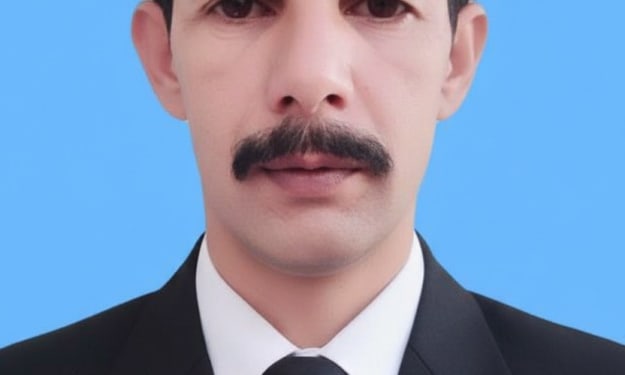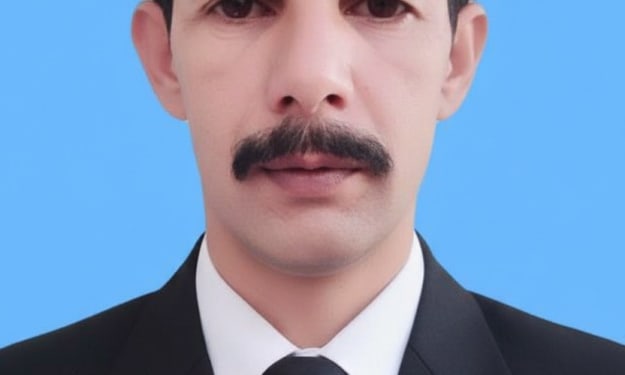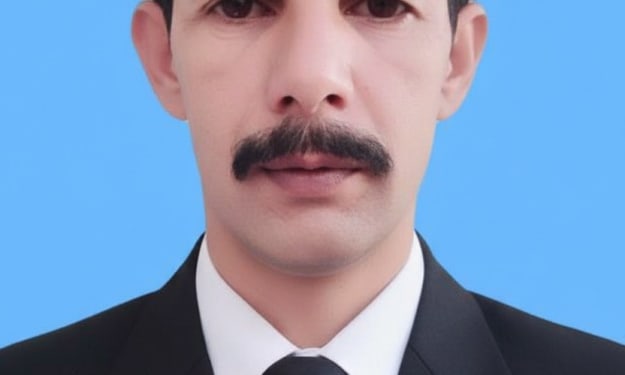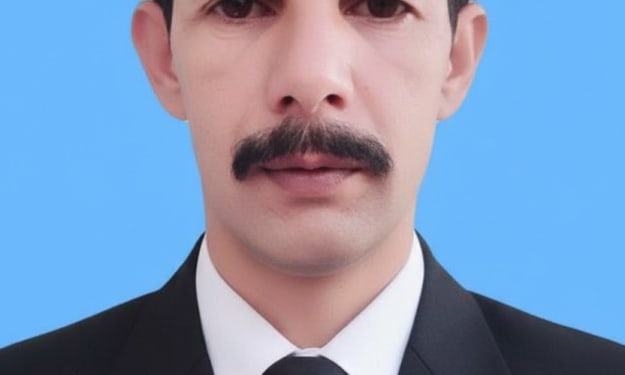
Malik Sarfraz Hussain Awan
Bio
Journalist Malik Sarfraz Hussain Awan: Social Guardian & Humanitarian. Dedicated to truth and justice, he explores complex social issues and historical narratives to bring clarity. Aiming to bridge the gap between information and empathy.
Stories (14)
Filter by community
Modern Global Colonialism and the Echoes of the Ancient Provincial System: Is the World Still Under the Influence of a New Empire?. AI-Generated.
Special Investigation Report Malik Sarfaraz Hussain Awan, Journalist, Social Guardian Humanitarian: In the in-depth study of world political history and the changing context of international relations, it is clear as day that the ancient principles of the struggle for supremacy and dominance between states, which were prevalent centuries ago during the era of the Roman, Greek and Mongol empires, are still in force today in a new and modern form. If we turn the pages of ancient history, it is found that there were only two basic methods used to occupy any conquered territory. The first method was to directly make the territory a regular part of one's empire and establish its own provincial structure there and appoint its own governor and administration and take all the powers over to the center. In the other case, if a country accepted submission without military conflict, the local rulers there were maintained in their positions, but with the strict condition that they would be bound to obey every order received from the emperor and their status would be that of a mere puppet or representative. If we look closely at world politics in today's modern era, this second principle is clearly at work, where the global status of the United States has become that of a superpower that controls the majority of countries on the world map through their local rulers for its own political and military purposes. Political analysts believe that many countries in the world are apparently called sovereign and independent states, but the fabric of their foreign and domestic policies is linked to Washington's interests, and their rulers often make decisions that are approved by the chambers of world powers. Under this system, countries that try to achieve their true independence or form an independent economic and defense bloc that conflicts with American interests are tried to be derailed in various ways. History is full of incidents where American intelligence agencies intervened and overthrew popularly elected governments, or forced these countries to their knees through economic sanctions and diplomatic isolation. In Latin America, From the intervention of the CIA to the Middle East and South Asia, there are dozens of such evidences where either direct military invasions were carried out or political change was brought about by using the internal military structures of these same countries in order to install pawns there who remain loyal to the American empire. At present, on the world stage, Russia, Iran, China and North Korea are some of the prominent countries that have refused to accept this global domination and have maintained their own separate identity. The example of Iran is very important in this regard because the Iranian leadership has refused to bow down despite the economic war and all kinds of global pressure that have been going on for the past several decades and has not traded its self-determination. This is why all the attention of the United States and its peers is focused on weakening Iran because it is setting an example of a state that is determined to survive without external dictates. On the other hand, Russia and China have jointly laid the foundation for a multipolar world order that is challenging the unipolar American hegemony, while North Korea has continued to develop its defense capabilities despite all the sanctions. Through self-sufficiency, it has proven that it will not compromise on its security at any cost. If we examine the situation in the Islamic world, it is a bitter truth that under a specific global policy, the Muslim countries of the Middle East have been entangled in a web of mutual wars and contradictions from which it is becoming increasingly difficult to escape. The growing differences between Muslim countries are in fact a continuation of the same divide and rule policy, the aim of which is to paralyze their collective strength. When the United States had to withdraw from Afghanistan after a twenty-year-long war, it indirectly put the security complexities of the region on Pakistan's shoulders in order to reduce its economic and human losses. The kind of security challenges and new wave of terrorism that Pakistan is facing today are a manifestation of this change. Moreover, in order to maintain its influence in the region, the United States has made such defense agreements between Pakistan and Saudi Arabia, the effects of which can be very far-reaching. Foreign affairs experts believe that one of the objectives of these agreements is to If there is a direct conflict between Iran and Saudi Arabia in the future or if American installations on Saudi soil are threatened, Pakistan could be confronted by Iran on the basis of these agreements. This situation is very sensitive for a country with nuclear power like Pakistan because on one side is the brotherly Islamic country of Iran and on the other side are economic constraints and defense promises. Pakistan's economic situation has reached a point where it is completely breathing on loans from the International Monetary Fund (IMF). Economic experts say that if the IMF program is closed, Pakistan's economy is in danger of suffocating, and this is the economic constraint that takes away the true independence of any country when a country becomes economically dependent on another.If it is, its foreign policy decisions are not independent, but rather they become beholden to the lending institutions and the powers behind them. History is witness that economic slavery always proves to be a precursor to political slavery, and in the present era, the debt trap is doing the same thing that weapons of war did in ancient times. Now, world politics stands at a crossroads where on one side is the old model of American imperialism that wants to run the entire world through its states and governors, and on the other side are those countries that yearn to break free from this domination and live with their own pride and self-restraint. This is a very difficult time for the Muslim world because on the one hand there is the dream of Islamic unity, and on the other hand there is the bitter ground realities and the quagmire of mutual conflicts in which they have been sunk. Now it remains to be seen whether the United States will be able to maintain its grip on the world stage on a permanent basis or will other countries of the world find the courage to raise their voices against this domination like Iran, Russia and China and create a new and just global structure. Will the Muslim Ummah be able to put aside its contradictions and create a bloc that emerges as a player on the world stage instead of a pawn, or will they continue to be used against their own brothers, tied in economic and defense chains? These are the fundamental questions that today's intellectuals and journalists need to seriously consider, because the future map will be set on the basis of the decisions that today's leadership will make. If the countries of the world do not raise their voices for their true freedom and independence, history will remember them as mere unknown provinces of a great empire that had no authority or dignity of their own. Finally, an opinion. If you also agree with my research and analysis and have understood this, then take care of yourself.
By Malik Sarfraz Hussain Awan3 days ago in Journal
War clouds in the Middle East — US, Israel and Iran face to face. AI-Generated.
oman: (special report)journalist malik sarfraz hussain awan. The Middle East is once again in the grip of severe military tension, where after joint air and missile attacks by the US and Israel on important military and strategic targets inside Iran, Iran retaliated vigorously, targeting not only Israel but also US military installations in the Gulf region. According to the initial military briefing, the Israel Defense Forces and the United States Armed Forces attacked various cities in Iran, including the capital Tehran, the industrial and defense center Isfahan, Qom, Kermanshah and other sensitive locations. According to the Israeli position, this operation was carried out to limit Iran’s growing missile and drone capabilities, while US officials called it a preemptive measure to defend their allies and stabilize the region. According to Iranian media, some military installations were damaged in the attacks and a few personnel were killed and injured, but the full damage estimate is still underway. Iran responded immediately by launching ballistic missiles and drones towards Israel through the Islamic Revolutionary Guard Corps and also attempted to target US bases in the Gulf countries. According to reports, alarm sirens were sounded and air defense systems were activated near the Al-Udeid Air Base in Qatar, the US Navy Fifth Fleet headquarters in Bahrain, and some military installations in Kuwait and the United Arab Emirates. Several missiles were claimed to have been destroyed in the air, while reports of limited material damage were also received. Israel said its defense system was largely effective, but explosions were heard in a few places. Iran has warned that if its territory is attacked again, the response will be more severe and widespread. The most immediate and significant impact of this military exchange was on the airspace of the entire region, where Iran completely closed its airspace and suspended all international and domestic flights. Israel also temporarily closed its airspace and stopped civilian flights as a precautionary measure. Iraq has been warned of becoming a potential missile passageway. Due to the fear, it immediately closed its airspace and dozens of flights were canceled. Jordan closed its airspace for a few hours as a precaution and later allowed limited flights. Qatar increased air surveillance, suspended some routes and issued special instructions to pilots. Bahrain announced restrictions on air traffic in view of the security situation. Kuwait diverted several international flights. The United Arab Emirates tightened surveillance in its northern airspace and instructed many aircraft to take alternative routes. Saudi Arabia did not announce a complete closure, but it imposed additional surveillance in the eastern sector and temporarily suspended some flights. Lebanon and Syria also issued alerts, while Turkey increased security measures in its eastern airspace. As a result of these extensive closures, flights from Europe to the Gulf and Asia had to take longer routes, which increased fuel costs and travel times. International airlines made urgent changes to schedules and canceled or postponed several flights, keeping in mind the safety of passengers. This extraordinary closure has practically turned the region into a military zone where defense systems are active 24 hours a day and radars are on full alert. Security is on high alert on the ground as well. An emergency has been declared in hospitals and civil defense agencies are mobilized. Oil prices fluctuated in global markets while investors adopted a cautious attitude. Activities on the diplomatic front have intensified and the United Nations Security Council has called an emergency meeting and appealed to the parties for an immediate ceasefire, restraint and diplomatic negotiations. In the Security Council meeting, some countries expressed concern over unilateral military actions, while others questioned Iran's missile program and regional role. The statement issued after the meeting said that the continuation of tensions in the region could pose a serious threat to global peace and security and that all relevant parties should abide by international law and the UN Charter. The UN Secretary-General also stressed that the civilian population and civilian aviation should be protected at all costs. Experts say that if these clashes are not limited, Lebanon, Syria, Iraq and the Gulf states could also be directly or indirectly involved in the conflict. According to military analysts, the two sides are currently sending each other messages through limited but symbolic use of force. However, in the event of any miscalculation or additional attacks, the situation could quickly turn into a full-scale war. The biggest question in the current situation is whether behind-the-scenes diplomatic efforts will succeed in reducing tensions or whether this crisis will take the form of a long and destructive regional conflict. The region is currently in a state of uncertainty, airspace closures remain partially in place, military preparations are increasing, and the eyes of the international community are focused on the next few days, which will determine the future of this crisis.
By Malik Sarfraz Hussain Awan3 days ago in Journal
Rawalakot: Decision to provide full state protection to 14-year-old victim girl in Shabu scandal . AI-Generated.
After serious concerns were raised by senior journalists, young lawyers and social and human rights groups in the case of a 14-year-old victim girl under protection under the Shabu scandal in Pakistani-administered Jammu and Kashmir, Poonch district, Rawalakot tehsil, Deputy Commissioner Poonch Syed Mumtaz Kazmi took immediate notice and issued instructions to the Social Welfare Department that the victim girl should not be handed over to any individual or influential element and that she should be provided with complete state, legal and psychological protection. According to sources, during a meeting with the Deputy Commissioner, a delegation of journalists informed him of the alleged pressure, interference of influential elements, and serious concerns regarding the safety and security of the girl, after which the district administration assured to take immediate and effective action. The minor girl is currently in the custody of the Child Protection Unit, however, there are reports that her real maternal uncle is trying to get her out of custody and is allegedly part of a criminal gang, who is accused of involving his close female relatives in illegal and immoral activities. These circumstances have made the girl's safety, peace of mind and future extremely delicate and complicated. It is being clarified that no application was filed by the maternal uncle in the matter, rather some circles created confusion by spreading false information. According to the latest reports, the real attempt is being made by the real maternal uncle, over which social and human rights circles have expressed serious concern. According to the background, the mother of the victim girl has been nominated in several cases in the past and an arrest was also made in one case recently. It is alleged that the girl was allegedly involved in illegal and immoral activities, while the father is saying that he does not recognize the girl. All these circumstances have made the situation very sensitive and complicated regarding the legal protection, security, education, psychological support and future of the minor. According to sources, the victim girl has also appealed to the higher authorities for immediate protection and some officers of the Social Welfare Office are under pressure, however, no official statement has been made in this regard. After the instructions of the Deputy Commissioner, it is expected that all kinds of protective measures will be taken while keeping the girl in state custody to ensure her safety, mental peace, education, housing and physical security. Public, social and welfare circles have demanded that a transparent, impartial and legal investigation be conducted into the matter and if the intervention of any individual or group is proven, strict legal action should be taken against them so that the future and human rights of the victim girl can be ensured. Along with this, the Chairman of the Welfare Organization Court, Chaudhry Akhtar Hussain, has also been appealed to provide shelter to the affected girl in his institution so that she can get all the opportunities for education, psychological support, residential security and human development in a safe environment. Moreover, local social workers and human rights activists are also playing an active role in the protection of the girl and they have demanded that immediate monitoring, joint teams of police and social welfare authorities be formed at the local level so that any illegal or harmful interference can be thwarted in a timely manner. Overall, this decision is being described as a very important milestone in the promotion of respect for human rights, legal protection of minors, state responsibility, social awareness and child welfare in the area and social circles, journalists and legal experts have called it not only welcome but also a guiding step for the future, so that in the future there is no lack of protection and enforcement of the law for any minor or vulnerable person and every girl has the right to education, development and living in accordance with human rights in a safe environment. special report by journalist malik sarfraz hussain awan
By Malik Sarfraz Hussain Awan6 days ago in Journal
Modi's important diplomatic mission in Israel, major progress expected on defense and strategic cooperation . AI-Generated.
Israel: Indian Prime Minister Narendra Modi is currently on an official visit to Israel where he has held high-level meetings with the Israeli leadership, however, no formal announcement of any major final agreement has been made so far. This visit has assumed extraordinary importance in the context of the changing geopolitical, political and security situation in the region, especially at a time when rapid changes are taking place in the defense and economic alignments in the Middle East. Narendra Modi held detailed and comprehensive discussions with the Israeli Prime Minister and other senior officials on important topics such as bilateral relations, defense and security cooperation, modern technology, counter-terrorism, development in the agricultural sector, water resource management, investment and promotion of mutual trade. According to sources, the talks in the defense sector remained at the forefront as India has become a major buyer of advanced defense equipment from Israel in recent years and talks are underway to further expand cooperation in drone technology, missile systems, advanced border surveillance equipment and other security technologies.
By Malik Sarfraz Hussain Awan6 days ago in Journal
Italy's big announcement for Pakistan: 10,500 skilled workers to be issued work permits . AI-Generated.
Rome: A significant development has emerged in high-level diplomatic relations between Pakistan and Italy, where after a detailed meeting between Federal Interior Minister Mohsin Naqvi and Italian Interior Minister Matteo Piantedosi in the Italian capital Rome, it was announced that Italy will issue work permits to a total of 10,500 Pakistani skilled workers to promote legal migration. This development is being seen as giving a new dimension to mutual trust, economic cooperation and security partnership between the two countries. In the meeting, detailed discussions were held on making internal security, prevention of illegal migration, human trafficking, counter-narcotics and counter-terrorism cooperation more effective between Pakistan and Italy and it was emphasized that legal and orderly exchange of manpower is in the interest of both countries.
By Malik Sarfraz Hussain Awan6 days ago in Journal
US aircraft carrier advances in the Mediterranean and increasing military activities in the region. AI-Generated.
The aircraft carrier entered the Mediterranean Sea with its entire strike group and is moving towards the Middle East after crossing the Strait of Gibraltar. The strike group includes modern fighter jets, anti-missile systems, guided missile destroyers and support ships, which are capable of immediate and vigorous action in any possible military situation. Defense analysts say that at a time when diplomatic tensions between the United States and Iran are rising, such a deployment is not just a coincidence but a clear strategic message.
By Malik Sarfraz Hussain Awan8 days ago in Journal
Pakistan airstrikes: Targeting border terror hideouts. AI-Generated.
Pakistan has launched an effective and large-scale operation against terrorist hideouts and camps along the Afghan border, with the aim of strengthening security in the border areas and reducing the risk of attacks by militant groups. According to Pakistani military and official sources, the operation was carried out based on intelligence and with precautionary measures so as not to harm civilians or irrelevant locations and to target key terrorist hideouts and leadership. A total of seven camps and hideouts were targeted in the operation, including alleged hideouts of Tehreek-e-Taliban Pakistan and some of its allies, as well as the Islamic State Khorasan, and these were the same locations from which suicide bombings and other terrorist attacks were carried out in Pakistan in recent days. For example, a suicide bombing in Bajaur district killed 11 security personnel and a girl and injured several people, in northwestern Khyber In another attack in Bannu, Pakhtunkhwa, two soldiers and seven militants were killed, while a civilian was killed and seven security personnel were injured in a drone attack on a tank. In this context, Pakistan summoned the Afghan charge d’affaires to the Foreign Office and lodged a strong protest and demanded that the Afghan interim government take immediate and effective action against terrorist groups present in its country, as Pakistan maintains that Afghan soil is being used for terrorist operations and attacks, and Pakistan made it clear that it reserves the right to take action at any appropriate place to ensure its security. According to local sources and media, the terrorist hideouts and their infrastructure were severely damaged after the airstrikes in Barmal district of Paktika and Khogyani district of Nangarhar, and the sounds of explosions were heard far and wide. However, Afghan authorities did not confirm the number of casualties or injuries, due to which it is not known how many militants were killed in the attacks or to what extent civilians were affected. According to a statement issued by Pakistan, this The operations were carried out on the basis of intelligence and are aimed at damaging the border strength of terrorist groups and reducing the chances of future attacks. Meanwhile, Pakistan has also called on the international community to put pressure on the Afghan government to eliminate terrorist hideouts and promote lasting peace and security in the border areas. The interim government of Afghanistan has not yet given any definitive or official response to this operation. In the current situation, this incident comes against the backdrop of an increase in terrorist incidents in the northwestern areas, including a suicide attack in Bajaur, other attacks in northwestern Khyber Pakhtunkhwa and a drone attack in Tank, which affected security forces and civilians and for which responsibility was attributed to the Tehreek-e-Taliban Pakistan. According to security sources, some Afghan citizens or extremist groups were also involved in training and contacts behind these attacks, which strengthened allegations of Pakistan's use of Afghan territory, while the Afghan interim government did not confirm this allegation. Tensions on the border between Pakistan and Afghanistan have been rising for the past several months and in recent years There have also been several border clashes, shelling and accusations, in which both countries accused each other of violating the ceasefire and diplomatic protests, negotiations and mediation efforts were made. However, there is still a need for negotiations for peace and order, mutual cooperation and a common strategy against terrorism in the region. This operation shows that the government and security forces of Pakistan give top priority to the safety of its people and the security of the country and will not back down from any action against terrorism. These operations are also a clear message to terrorists in the border areas that Pakistan will take all possible measures to protect its borders and people. The current situation and future reactions will also affect regional politics, security cooperation and international relations, and will also put pressure on the possibilities of negotiations and mediation between the two countries. Overall, this incident shows the government's commitment to Pakistan's ongoing efforts against terrorism, border security and the protection of the people, and Pakistan has made it clear that any dangerous activity in the border areas will not be tolerated. No terrorist operation or attack will be allowed, while in the future too, Pakistan's security forces will take all possible steps to protect their country and people. At the same time, it has also become clear that no terrorist group present in the border areas will be allowed to carry out any unjustified operation or attack, and Pakistan's border security forces will continue their measures to ensure the safety of the lives and property of the people. Continuous intelligence and surveillance will continue to identify and target the hideouts of terrorists, and every effort will be made to completely eliminate the possibility of terrorist groups operating from across the border. Through this operation, Pakistan also sent a message that no kind of terrorism or attack will be allowed in the future and the presence of terrorist groups in the border areas will be prevented. Overall, this situation is increasing in the region.The incident clearly highlights the dangers of terrorism and the responsibilities of security forces, and the government of Pakistan is determined to take all possible steps in this regard to ensure the safety of the people and the security of the country. Written by: Malik Sarfaraz Hussain Awan
By Malik Sarfraz Hussain Awan10 days ago in Journal
US-Iran Tensions: A Growing Threat to the Region and the Global Economy. AI-Generated.
The tensions between the US and Iran have now entered a very critical and serious phase, with negotiations on both sides remaining on the back burner, and yet military preparations and threats continue: The US-Iran nuclear talks are continuing with limited progress but no viable agreement has emerged, making the prospects for a diplomatic solution look bleak and tensions are rising; The US has significantly increased its military power in the Middle East, deploying several ships, fighter jets, and military capabilities, increasing the risk of a potential conflict in the region; US President Donald Trump has given Iran a deadline of 10 to 15 days to reach an agreement and has threatened limited military strikes in case of failure, after which the US Air Force has strengthened its military positions towards Iran; Iran is also reacting to the negotiations, some legal proposals and drafts of nuclear negotiations are being prepared, but Iran is insisting on maintaining its nuclear rights; on the other hand, global economic markets are also being affected, oil and gold prices have increased, which indicates the global economic effects of the tension; thus, the overall situation is tense, uncertain, and based on a mixture of military and diplomatic conflict on both sides, which is having an impact on regional security and the global economy. Furthermore, this tense situation has also worried the countries of the Gulf region, where an increase in behind-the-scenes contacts at the diplomatic level is being seen in order to prevent a possible conflict. According to international observers, if the negotiations fail completely, even a limited military clash could turn into a wider regional crisis, as the region has already become the center of various conflicts and security concerns. The United Nations and European powers are also closely monitoring the situation and are advising the parties to exercise restraint and adopt a diplomatic path, however, the facts on the ground show that both countries are busy strengthening their positions. Iran is repeating the position that it will not accept any compromise under pressure or threat, while the United States says that it reserves the right to take any possible steps to protect its interests and allies in the region. Due to this conflict, uncertainty is increasing in global markets, investors are adopting a cautious attitude and concerns about energy supplies are intensifying. Defense analysts believe that in the current situation, a single miscalculation or unexpected event can quickly worsen the situation, which is why keeping diplomatic channels open is considered essential. Overall, this crisis is not only a conflict between two countries, but its effects can spread to the entire Middle East, global trade, energy markets and international political balance, due to which this situation is being viewed with extraordinary seriousness around the world. This tug of war between the United States and Iran is no longer just a dispute between two countries, but has become a war of 'balance of power' centered on important passages such as the Strait of Hormuz. Defense experts believe that if limited military action is launched after the deadline given by the United States, Iran's 'metric warfare' capability in response could paralyze the global supply chain because Iran's drone program and ballistic missile technology are currently at a point where they have adopted a 'ready defensive position' to retaliate in the event of any direct attack. Similarly, the Gulf countries, which are geographically located on the brink of this conflict, are currently adopting a very cautious diplomacy path and the priority of these countries is to Economic stability is the preferred option over military, as any conflict could affect their grand development plans, which is why efforts by these states to activate back-channel diplomacy between Washington and Tehran have intensified in order to save the region from a war whose effects will not subside for decades. The wave of anxiety in the global energy markets is not limited to prices alone, but has become a major question mark over 'energy security'. If the conflict continues, crude oil prices could reach a level where the economies of developing countries will collapse and a new wave of global inflation will emerge. Therefore, defense analysts believe that in the current circumstances, a single miscalculation or unexpected event could rapidly worsen the situation. Therefore, keeping diplomatic channels open is considered essential because this crisis is not only a conflict between two countries, but its effects can spread to the entire Middle East, global trade, energy markets and international political balance. Due to this, this situation is being viewed with extraordinary seriousness around the world and the use of force is not a permanent solution to this problem, but the international community will have to play the role of a 'guarantor' and save the region sitting on this gunpowder pile. Written by: Malik Sarfaraz Hussain Awan
By Malik Sarfraz Hussain Awan10 days ago in Journal
Suicide Blast at Imambargah in Islamabad: Security Challenges, Government Position and Impact on National Security. AI-Generated.
Today, Friday, February 6, 2026, a severe suicide blast occurred immediately after Friday prayers in front of the main gate of Imambargah Khadijatul Kubra located in Tarlai area of the federal capital Islamabad, which not only raised serious questions about the security situation in the capital but also sent a wave of concern across the country. According to the initial and later updated official statements issued by the district administration, Islamabad Police and the Ministry of Interior, at least 31 people were martyred in this tragic incident while more than 169 worshippers were injured, many of whom are said to be in critical condition and it is feared that the number of martyrs may increase. Immediately after the explosion, the police completely sealed the area, Rescue 1122, Bomb Disposal Squad, Forensic Units and teams of intelligence agencies reached the spot and the process of collecting evidence was started. According to Islamabad Police, initial investigations have indicated that the attacker blew himself up when security personnel tried to stop him from entering the gate of the Imambargah. The initial police investigation statement said that the attacker may have links with extremist networks like Fitna al-Khawarij/TTP, but no organization has claimed responsibility yet. At the time of the incident, a large number of worshippers were present in the Imambargah due to Friday prayers, which increased the loss of life. The intensity of the explosion was so high that the windows of nearby buildings and vehicles were broken and panic spread in the area. The injured were immediately shifted to the Pakistan Institute of Medical Sciences (PIMS), Polyclinic and CDA Hospital, where an emergency was declared. According to doctors, many of the injured have been kept in special care due to neurological, orthopedic and burn injuries, while blood In view of the severe shortage of blood, hospitals have also appealed to the public for immediate blood donations. Islamabad Police and District Administration have confirmed that high alert has been imposed across the capital after the incident. Additional personnel have been deployed at sensitive locations, entry and exit points, religious gatherings and government facilities. According to a spokesperson for the Interior Ministry, three separate investigation teams have been formed, including Police Operations, Counter Terrorism Department (CTD), CIA and other enforcement agencies, which are jointly examining the nature of the incident, facilitators, network and possible security lapses. The spokesperson said that CCTV footage, DNA samples, mobile data and other forensic evidence are being carefully analyzed to identify the attacker. President Asif Ali Zardari, Prime Minister Muhammad Shahbaz Sharif, Interior Minister Mohsin Naqvi and other top government and political figures have strongly condemned the incident and termed it an attack on humanity, religious tolerance and national security. The state directed to provide the best medical facilities to the injured and provide immediate assistance to the families of the martyrs, while the Prime Minister made it clear that the zero tolerance policy against terrorism will continue and the responsible elements will be brought to justice. According to police and security sources, the martyrs and injured include civilians as well as some law enforcement officials who were performing security duties. The incident has once again sparked a debate on the security of religious places in the capital, intelligence sharing and the effectiveness of the counter-terrorism strategy. Government and security officials say that after the investigation is completed, all aspects of the incident will be brought to the public so that transparency is maintained and public confidence is restored. The government of Pakistan has appealed to citizens to avoid rumors, cooperate with law enforcement agencies and immediately report any suspicious activity, while the Islamabad Police has assured that more effective and strict security measures will be taken to prevent such incidents in the future so that the lives and property of citizens can be protected and The law and order situation in the capital remained stable. Written by: Malik Sarfaraz Hussain Awan
By Malik Sarfraz Hussain Awan25 days ago in Journal
US-Iran talks: A percentage assessment of the chances of success, failure and partial success. AI-Generated.
The high-level talks between the United States and Iran, held today in Muscat, the peaceful and beautiful capital of the Sultanate of Oman, are a very sensitive and historic stage in global diplomacy, where the eyes of the whole world are fixed on this table because these talks are not only for the relations between the two countries, but also for the Middle East and the entire international community to guarantee peace, security and economic stability. In the current delicate and complex geopolitical context, the increasing tension between the United States and Iran, economic sanctions, the risks of military conflict, and the balance of power in the region have ensured that a safe, neutral and credible place is needed for the talks, and the Sultanate of Oman, as always, has provided this platform under its historical traditions, high-level and impartial mediation policy, in which the Omani leadership not only highlighted its key role of hospitality but also implemented its consistent policy of finding a peaceful solution in the region. The calm atmosphere of Muscat and Omani mediation are extremely important in balancing the positions of the United States and Iran on Iran's nuclear program and economic sanctions. are playing a role, and analytically, this time, a clear “strategic flexibility” is expected from the US because Washington is preferring a de-escalation arrangement rather than a direct confrontation in the region, under which partial return of Iran’s frozen assets and some humanitarian relief of sanctions can be provided, while Iran is also showing potential flexibility to not exceed the 60% limit in uranium enrichment and limit international monitoring in view of public pressure, demands for economic improvement, and the internal policy of the new administration of President Masoud Pazishkian. As a result, the chances of success of the negotiations are appearing to be 60 to 70% in the current circumstances, because both countries have now run out of room to maintain the status quo, and in case of success, an interim deal is possible that will provide the basis for a permanent solution in the future. However, there are also risks of failure, because the internal political Pressure, regional adversaries, and the political demands of global power can affect it. Oman's foreign policy has always been based on goodwill, neutrality, and the promotion of world peace, which Sultan Qaboos bin Said established and the current Sultan Hisham bin Tariq has taken it to new heights, establishing the Sultanate of Oman as an exemplary diplomatic center on the global stage. Oman also played a key role in the process of the historic nuclear deal in 2013 and the same dedication to world peace remains today. Technical issues such as Iran's nuclear program, enrichment levels, cooperation with the International Atomic Energy Agency (IAEA), and complex issues of monitoring would not have been possible to resolve without Oman's mediation. These negotiations are also the focus of other powerful countries in the region, including Saudi Arabia, Israel, and the United Arab Emirates, where Saudi Arabia and the United Arab Emirates seek stability and see Oman's mediation in the wider interest of the region. While despite Israel's strategic concerns, the attention of the international community is focused on Muscat's peaceful corridors, the global politics of oil and Given the importance of the Strait of Hormuz, the success of these negotiations is essential for the entire world. Muscat's geographical importance and Oman's impartial mediation are like the backbone for the security of this waterway, the restoration of the global energy supply chain, and long-term stability in the region. The details of the delegations involved in the negotiations are also important; The US delegation is led by Brett McGurk, a highly experienced White House official and expert on Middle East affairs, and is accompanied by Acting Special Envoy Abram Paley. The Iranian delegation is led by Abbas Araghchi and Ali Bagheri Kani. All of these experienced diplomats are advancing the negotiations in light of global tensions, economic pressures, and security threats in the region. The impartial facilitation provided by Oman has been appreciated not only by Washington and Tehran, but also by the United Nations and the European Union. Oman has proven that it is not a country but a neutral and effective diplomatic institution for the international community that is capable of protecting human life and global security from threats. The success of the negotiations will provide solid support to Iran's economy and will also be a success in foreign policy for the United States, which will have a positive impact on the global energy market, investment opportunities, regional security, and international relations. There will be, while the failure of the negotiations could lead to military tension in the region, economic uncertainty, and global instability. In short, these negotiations held today in Muscat are not just talks between two countries, but the foundation of a new global diplomatic system, where wisdom, dialogue, and negotiations take precedence over the use of force. Oman's mediation has once again played its historic role in turning the tide of world history towards peace, and it is hoped that this process will provide new horizons of lasting peace, cooperation, and balance for the region and the international community. — Malik Sarfaraz Hussain Awan
By Malik Sarfraz Hussain Awan25 days ago in Journal
Vasco da Gama: The Founder of Barbarity and Colonial Terrorism in the Garb of Discovery . AI-Generated.
Vasco da Gama is often presented in the pages of history as a great adventurer and conqueror of the seas, but the reality is quite the opposite because his arrival was no less than a human disaster for the Indian subcontinent that changed the destiny of the region. He was actually a fanatical religious plunderer and colonialist whose heart was filled with the ancient hatred of the Crusades for Muslims and immense colonial arrogance for Indians. When he left Lisbon in 1497 on the orders of King Manuel I of Portugal, the red cross symbols on his ships reflected his intentions that this journey was not just for trade but to end the dominance of Christianity and the maritime trade monopoly of Muslims by force. He left traces of his brutality in the coastal cities of Mombasa and Malindi in Africa. After leaving, when he reached Calicut in May 1498, his behavior towards the local ruler, Raja Zamorin, was contrary to any diplomatic etiquette. His most shocking incident occurred during his second voyage in October 1502, when he stopped the ship 'Miri' in the Arabian Sea, which was returning from the Hajj pilgrimage from Mecca, with more than four hundred innocent passengers on board. In addition to respectable merchants, these passengers also included women and innocent children. When the Portuguese ships surrounded them, the captain and passengers of the ship handed over twenty-two thousand gold coins and valuable goods to Gama in exchange for their lives, but this savage man refused to spare their lives even after looting all the property and belongings. British historian R.S. Whiteway writes in his book "The Rise of Portuguese Power in India" that Gama ordered the ship's ammunition depot to be set on fire, during which The scenes were heartbreaking because mothers were holding their little children in their arms and showing them to the Portuguese soldiers that perhaps they would take pity on these innocents and save them. But Gama strictly ordered his gunners to shoot and kill any passenger who jumped into the sea. In this way, the ship continued to burn in the middle of the sea for four days, including the suffering people, until all 400 people were burned alive. Gama's brutality was not limited to Muslims, but he adopted inhumane tactics to intimidate the Hindu Raja of Calicut. When Raja Zamoran sent a respected and elderly Brahmin priest as an ambassador to Gama for negotiations, the brutal Portuguese arrested the old priest and cut off his lips and ears. Then he slaughtered a dog and sewed its ears on the priest's head and returned it with an insulting letter. Sent to the Raja, this incident is mentioned with pride by the Portuguese historian Gaspar Correa himself in his work "Lendas da Índia" which exposes the Portuguese mentality of that time. During the same voyage, Gama captured about eight hundred unarmed fishermen and small local traders on the coast of Calicut and cut off their hands, noses and ears and loaded them into a large boat and put dry leaves on top of it and set it on fire and pushed this burning boat towards the shore so that the people of the city would be terrified to see the severed limbs of their loved ones. He sent a message to the Raja to cook curry for himself from these severed human limbs. These are the gruesome historical facts that the Western narrative has always hidden in the beautiful words of "transition of civilization". Gama introduced a forced permit system called "Cartaz" for the first time in the peaceful trade of the Indian Ocean using cannons and guns, under which every ship was required to be given to the Portuguese. They had to pay extortion, otherwise they would be declared pirates and drowned. In this way, he strangled the independent economy of the subcontinent and laid the foundation for centuries of colonial plunder here. Renowned modern historians like Sanjay Subramaniam make it clear in his book "The Career and Legend of Vasco da Gama" that Gama was not just an adventurer but a violent person to the point of a psychopath who enjoyed playing Holi with the blood of innocents. The stories of his atrocities are also found in the writings of French historian Geneviève Bouchon and Indian researcher K.M. Panicker, which prove that Vasco da Gama's discovery actually brought a message of slavery, religious prejudice and economic destruction to South Asia. Unfortunately, the imprint of the colonial era still remains in our educational curriculum and Pakistan studies books, where Vasco da Gama is taught as a hero and a great man who discovered the way, while a criminal silence is maintained on the massacres committed by him. Due to this curricular gap, our The new generation is unable to recognize its real enemies and friends. It is time to make these historical truths part of the curriculum and force the international community to remove the statues of war criminals like Vasco da Gama from their squares, because these statues are a humiliation to humanity and a source of suffering to the souls of millions of innocent Indians and Muslims whose blood was shed by this brutal man just to obtain gold and spices. The story of Vasco da Gama is the story of a plunderer who stained the seas with blood and history will never forgive him until his true face is fully revealed to the world. And we, as independent journalists, pledge to continue to unmask the distorted faces of history so that future generations can distinguish between truth and falsehood and recognize our true national heroes. Research and writing: Journalist Malik Sarfaraz Hussain Awan
By Malik Sarfraz Hussain Awan26 days ago in Journal
US, Iran and China: A critical phase in the balance of power in the Middle East. AI-Generated.
The growing tension between the US and Iran in recent months has made the Middle East the center of attention of world powers, where military movements, diplomatic statements, economic relations and behind-the-scenes strategic activities are clearly reflecting a new balance of power. In the current situation, the US has deployed its aircraft carrier USS Abraham Lincoln and other naval assets near the region, which is apparently being described as a defensive measure to prepare for possible threats against Iran. However, military experts say that the purpose of this deployment is not only to send a message to Iran but also to assess the changing strategic realities in the region and the new balance of power between world powers, especially at a time when China has established a strong partnership with Iran not only on the economic but also on the diplomatic and technical levels. The 25-year Comprehensive Cooperation Agreement is considered a milestone in global politics, under which energy, infrastructure, trade, technology and possibly defense cooperation are being promoted. In the context of this agreement, the fact that China is buying a large part of Iran's oil despite US sanctions has also become the center of attention of global analysts, which is not only supporting Iran's economy but also meeting China's energy needs. This economic interdependence is a cause of concern for Washington because it appears to be weakening the US policy of pressure. In the same vein, China's key role in restoring diplomatic relations between Iran and Saudi Arabia three years ago is also a sign that Beijing is now emerging not just as an economic power but as an active diplomatic player, whose effects are being felt on the peace and stability of the Gulf region, international trade and global energy supply. According to defense experts, although the United States is still the largest power in the region in military terms, Iran has unconventional defense capabilities that can be used by any country. In the event of a potential conflict, American interests could be seriously harmed, including advanced drone technology, cruise missiles, coastal defense systems, suicide drones, and regional alliance networks. In addition, an important aspect of modern warfare is the superiority of surveillance and information in space, where Chinese and Russian military satellites are monitoring military activities in the region in real time, making it impossible to completely conceal the movements of American forces. This factor is changing the balance of power and reinforcing the cautious thinking found in Washington. Analysts say that the United States is well aware of the fact that in the event of a direct attack on Iran, the reaction will not be limited to Iran alone, but its effects could spread to the Gulf, the Arabian Sea, global energy markets, international trade, and sensitive waterways for energy transport. In particular, the security of a globally important route like the Strait of Hormuz is of exceptional importance to the global economy. That is why the United States should not close diplomatic channels while maintaining military pressure. While Iran is also trying to give the impression on the diplomatic front that it is not ready for aggression but for the protection of sovereignty, China's role is emerging as a balancing factor in this whole scenario because Beijing is not only strengthening its relations with Iran but is also linking stability in the region, trade, energy supply and global influence with its long-term interests. Overall, the current situation reflects that the world has entered a phase where military power alone is no longer decisive, but economic partnership, technology, diplomacy, information superiority, international cooperation and global strategy have become equally important. These are the factors that have brought the relations between the US, Iran and China to a delicate but decisive crossroads, where the consequences of any miscalculation can have far-reaching effects not only regionally but also globally. Therefore, in the current situation, only reporting on military preparedness and tensions is not enough, but its in-depth analysis, economic impacts, regional stability, It is important to understand the energy supply, defense capabilities, diplomatic relations and strategic strategies of global powers so that the impact of any potential crisis can be accurately assessed and the international community, countries in the region and relevant authorities can take timely measures. This report has been prepared based on this analytical approach and in-depth observations of the current situation. Written and Researched by Malik Sarfaraz Hussain Awan
By Malik Sarfraz Hussain Awanabout a month ago in Journal