Marcus Hedare
Bio
Hello, I am Marcus Hedare, host of The Metaphysical Emporium, a YouTube channel that talks about metaphysical, occult and esoteric topics.
https://linktr.ee/metaphysicalemporium
Stories (75)
Filter by community
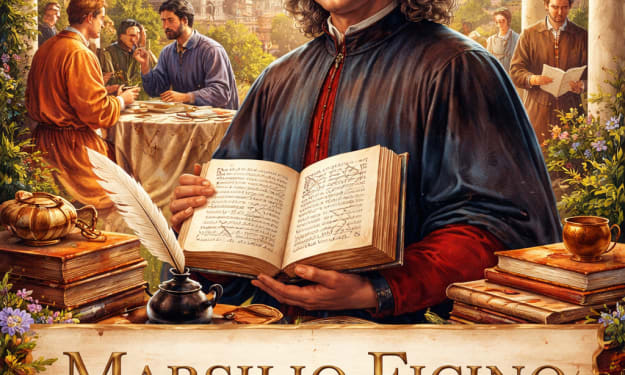
Marsilio Ficino. Content Warning.
Marsilio Ficino and the Renaissance Revival of Plato The Renaissance transformed the intellectual landscape of Europe through renewed engagement with classical antiquity. Greek and Roman manuscripts long absent from Western study returned to circulation through Byzantine scholars, monastic libraries, and new centers of learning in Italian city-states. Florence emerged as a leading center of cultural and philosophical renewal during the fifteenth century, where wealthy patrons supported scholarship, art, and literary production. Within such an atmosphere of rediscovery, the figure of Marsilio Ficino rose to prominence as one of the most influential interpreters of ancient philosophy.
By Marcus Hedareabout 4 hours ago in BookClub
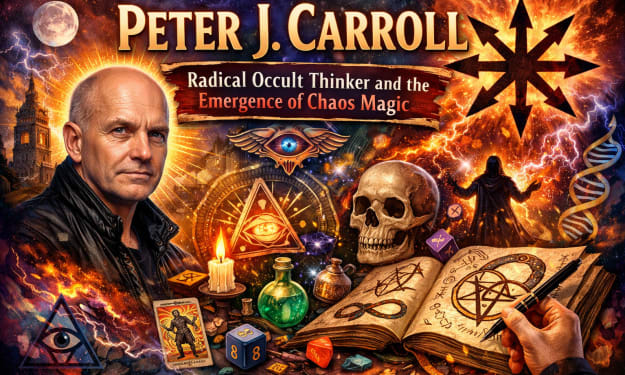
Peter J. Carroll . Content Warning.
The Emergence of Chaos Magic and the Influence of Peter J. Carroll The closing decades of the twentieth century witnessed a notable transformation within Western occult thought. Ceremonial traditions rooted in nineteenth century esoteric orders continued to influence magical practice, yet growing dissatisfaction with rigid doctrine encouraged new approaches. Within experimental occult circles in Britain and Europe, discussion increasingly focused on results, psychology, and personal experience rather than inherited authority. From that environment emerged chaos magic, a current that challenged long established assumptions about ritual, belief, and the nature of magical practice.
By Marcus Hedare2 days ago in BookClub
Julius Evola. Content Warning.
The Enigmatic Mind of Julius Evola Twentieth century intellectual history contains a number of figures whose writings continue to provoke debate long after the surrounding political and cultural conditions have faded into the past. Among the most unusual and controversial of these figures stands Julius Evola, an Italian thinker whose work moves across an extraordinary range of intellectual territory. Philosophical reflection, esoteric speculation, cultural criticism, political theory, and comparative religion appear side by side throughout a body of work that resists easy classification.
By Marcus Hedare4 days ago in BookClub
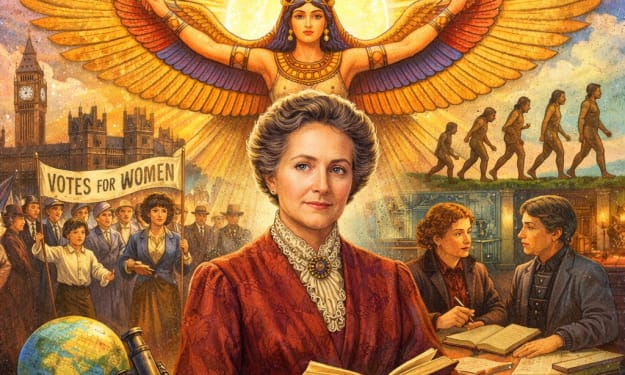
Frances Swiney. Content Warning.
Pioneer of Feminist Thought and Spiritual Reform The final decades of the nineteenth century and the early years of the twentieth century marked a period of profound transformation. Industrial expansion reshaped cities and economies, while scientific discoveries—from Darwinian evolution to advances in medicine—challenged traditional beliefs about human nature and the natural world. Political unrest, labor movements, and debates over social justice created an atmosphere in which long-standing institutions and hierarchies were called into question. Within this climate of change, societies across Europe and North America saw the rise of movements demanding reforms in education, workers’ rights, and political representation.
By Marcus Hedare4 days ago in BookClub
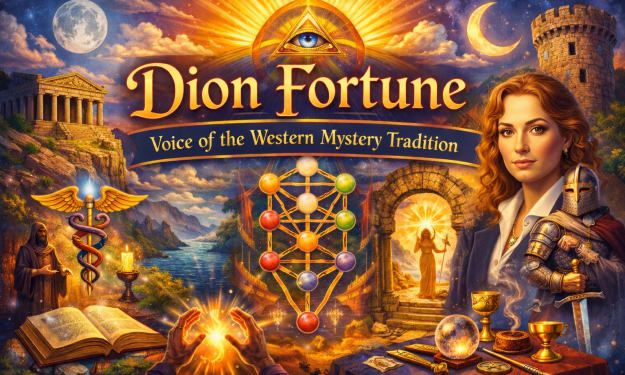
Dion Fortune. Content Warning.
A Voice Within the Occult Revival The early twentieth century witnessed a resurgence of interest in esoteric philosophy, ritual magic, and comparative mysticism across Britain and Europe. Within that climate of spiritual experimentation and intellectual crosscurrents, Dion Fortune emerged as one of the most articulate and disciplined exponents of the Western Mystery Tradition. Born Violet Mary Firth in 1890 in Llandudno, Wales, and later raised in England, Fortune brought together trained psychological insight, ceremonial practice, and a distinctly literary imagination at a time when occultism often struggled for intellectual credibility.
By Marcus Hedare5 days ago in BookClub
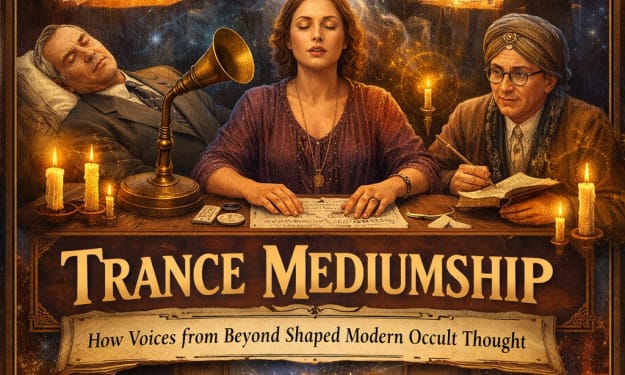
Trance Mediumship. Content Warning.
The Living Voice in Altered States Trance mediumship holds a distinctive place within Western esoteric tradition. Unlike intuitive divination or clairvoyant perception, trance mediumship is defined by an altered state of consciousness in which speech, posture, facial expression, and temperament appear to shift under the influence of a perceived external intelligence. Observers have documented changes in tone, vocabulary, accent, and manner. Adherents interpret these manifestations as communication from discarnate beings. Psychical researchers have examined the same phenomena through frameworks of dissociation, subconscious cognition, and culturally conditioned religious experience. Occult practitioners have regarded trance as a disciplined method for accessing unseen dimensions of reality.
By Marcus Hedare6 days ago in BookClub
The Theosophical Society. Content Warning.
A Convergence of Worlds: The Birth of the Theosophical Society Spiritual history during the nineteenth century reveals an era shaped by collision as much as by discovery. Industrial expansion transformed labor, cities, and social structures across Europe and North America. Railways, telegraphs, and mechanized production compressed distance and accelerated communication. Scientific advances challenged inherited cosmologies. Geological research extended the age of the Earth beyond biblical chronologies. Evolutionary theory, popularized by Charles Darwin, reframed humanity’s place in nature. Astronomy expanded the scale of the universe. Chemistry and physics advanced material explanations for phenomena once attributed to divine agency. Established religious institutions confronted growing skepticism among intellectual circles and the rising middle class.
By Marcus Hedare23 days ago in BookClub
Neoplatonism: Ancient Ideas Shaping Modern Minds. Content Warning.
Neoplatonism and the Architecture of Reality Neoplatonism emerged in the third century CE as a sophisticated philosophical tradition dedicated to understanding the deepest foundations of existence. Rooted in the dialogues of Plato and shaped by centuries of interpretation, Neoplatonic thought sought to explain reality not merely as a physical or material phenomenon, but as a structured hierarchy of being, intellect, and transcendence. Central to the tradition lay the conviction that all existence originates from a single, ultimate principle often described as the Good or the One, a source beyond form, division, and limitation.
By Marcus Hedare24 days ago in BookClub
The Martinist Order. Content Warning.
The Hidden Current of Martinism Beneath the visible progression of Western intellectual, religious, and philosophical development exists a disciplined initiatory current dedicated to the restoration of humanity’s original spiritual condition. The Martinist Order represents one of the most enduring expressions of that current. Martinism does not function as a religion, church, or political fraternity. Martinism operates as an initiatory tradition centered upon the doctrine of reintegration, a spiritual philosophy asserting that humanity originated within divine unity and retains the capacity to consciously return to that state through interior transformation, moral purification, and contemplative knowledge.
By Marcus Hedare24 days ago in BookClub
The Hermetic Order of the Golden Dawn. Content Warning.
The Architecture of Esoteric Revival Late Victorian Britain stood at a crossroads of intellectual confidence and spiritual unease. Industrial expansion transformed cities into engines of production. Telegraph networks compressed global communication into moments. Advances in geology, biology, and comparative religion challenged long accepted theological frameworks. Charles Darwin’s evolutionary theory altered public discourse on creation and human origin, while advances in archaeology uncovered material evidence of civilizations long buried beneath desert sands and ruined temples.
By Marcus Hedare25 days ago in BookClub
Charles Godfrey Leland and Modern Witchcraft. Content Warning.
Charles Godfrey Leland in an Age of Cultural Recovery Charles Godfrey Leland stands among the most versatile intellectual figures of the nineteenth century. Work as a literary humorist, investigative journalist, linguist, folklorist, educator, and interpreter of esoteric tradition unfolded across several decades marked by intense cultural transition. Birth in Philadelphia in 1824 placed Leland within a republic still negotiating identity through literature, historical memory, and regional tradition. Education at Princeton University and later study in Europe exposed Leland to philology, continental folklore studies, and Romantic era scholarship emphasizing vernacular culture as a repository of ancestral knowledge.
By Marcus Hedare26 days ago in BookClub
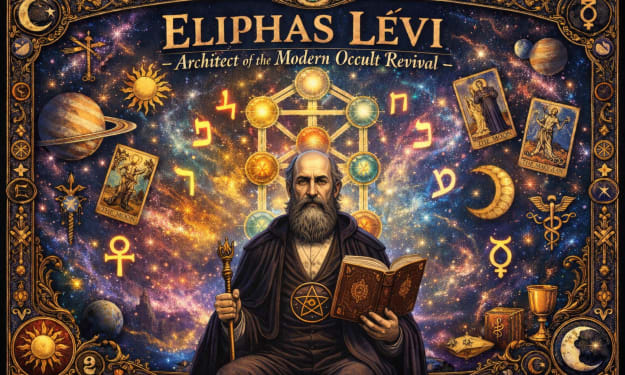
Eliphas Levi. Content Warning.
The Reconstruction of Western Esoteric Thought Nineteenth century France stood at a volatile intersection of political transformation, technological advancement, and intellectual reorientation. The aftermath of the French Revolution continued to reshape social hierarchy, while industrial expansion accelerated urban growth and altered labor structures. Scientific innovation challenged established religious doctrine and traditional metaphysical frameworks. Within this environment of ideological confrontation and spiritual searching, Alphonse Louis Constant, later recognized under the adopted name Eliphas Levi, emerged as a central architect in the revival and reinterpretation of Western esoteric philosophy.
By Marcus Hedare27 days ago in BookClub