Essay
The Theory of the New Leisure Class
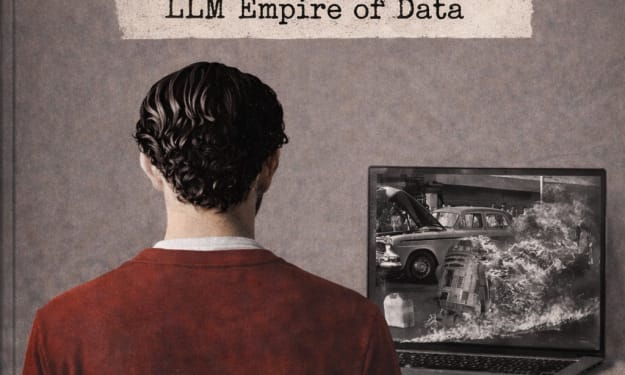
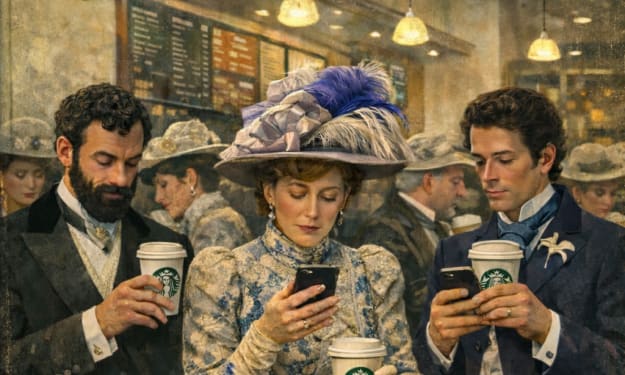
The Theory of the New Leisure Class: Homo Essentialis Thorstein Veblen wrote The Theory of the Leisure Class in 1899 to describe a social order in which status was displayed through visible idleness and conspicuous consumption. More than a century later, idleness has disappeared as a badge of honour, yet Veblen’s central insight has only intensified. The ruling class of the twenty-first century does not sit idle; it performs busyness. It does not withdraw from work; it transforms work into theatre. What we are witnessing is not the disappearance of the leisure class but its mutation. This is Leisure Class 2.1. This is Homo Essentialis.
By Peter Ayolova day ago in Critique
Matter in Revolt
Matter in Revolt: How Diamat Becomes History (The Architecture of Chaos in the 21st Century) The twenty-first century does not suffer from chaos; it suffers from misunderstood structure. Climate breakdown, algorithmic governance, financial volatility, pandemics, digital feudalism—these are not isolated crises. They are converging contradictions. What appears fragmented is in fact systemic. What appears accidental is material. To read this moment properly, one requires a method that does not panic before complexity. That method is Diamat.
By Peter Ayolova day ago in Critique
Teyana Taylor Joins Elite List as Time Magazine Woman of the Year 2026
At the outset of Women’s History Month, Teyana Taylor is already in the winner’s circle. Fresh from a Golden Globe win for Best Supporting Actress in the film One Battle After Another, a GRAMMY® nomination, and an Academy Award nomination, she has been named one of TIME Magazine’s Women of the Year.
By Skyler Saunders3 days ago in Critique
Just Thinkering
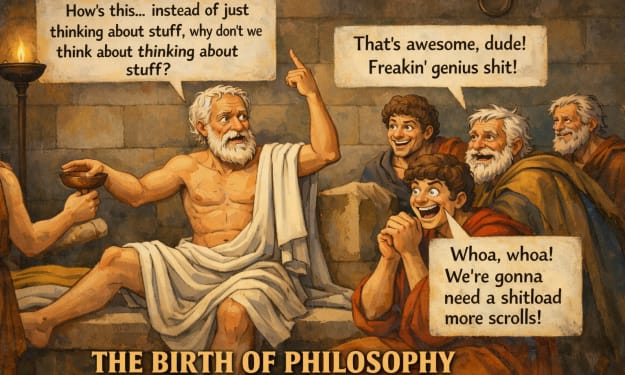
Just Thinkering: Talking about Thinking Philosophy begins with a strange upgrade to ordinary speech. Instead of talking about things, people start talking about the talking itself, then about the thinking behind the talking, then about the words used to name the thinking. This second level of language feels noble, even heroic: reflection, critique, self-awareness, ‘the examined life’. But it also carries a quieter risk. Once speech turns back on itself, it can become a room full of mirrors. The sound continues, yet nothing moves forward. There is talk about words, talk about thinking, talk about talk, and soon the whole performance becomes a kind of verbal tinkling: elegant, repetitive, self-pleasing noise.
By Peter Ayolov4 days ago in Critique
The Beauty of the Word
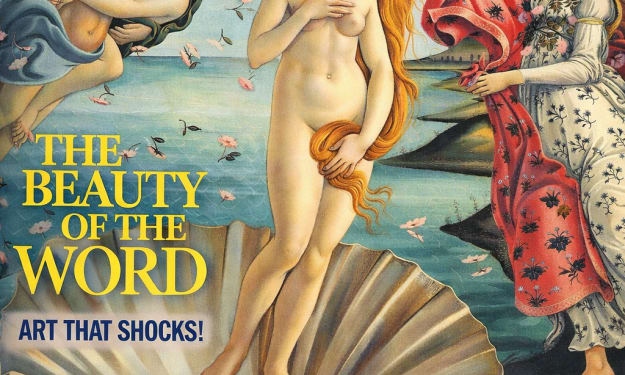
The Beauty of the Word: When “Beautiful” Becomes Power We rarely say “ugly truth.” We prefer to say “beautiful.” The choice is not innocent. “Truth” sounds like information: a fact, a report, a statement to be verified or dismissed. “Beauty,” by contrast, is an experience. It is not merely known; it is felt. When we call something beautiful, we lift it from the level of data to the level of meaning. We grant it weight, dignity, even sacredness. The word itself performs an elevation.
By Peter Ayolov4 days ago in Critique
Celluloid Comrades
A review of: Nadège Ragaru (2023). ‘Millions for the Movies’ in Late Socialist Bulgaria: : The Political and Moral Economy of the Cinema Industry. Sociétés politiques comparées. Revue européenne d’analyse des sociétés politiques . [online] doi:https://doi.org/10.36253/spc-18718.
By Peter Ayolov4 days ago in Critique
The Shaped Self: Images Without History
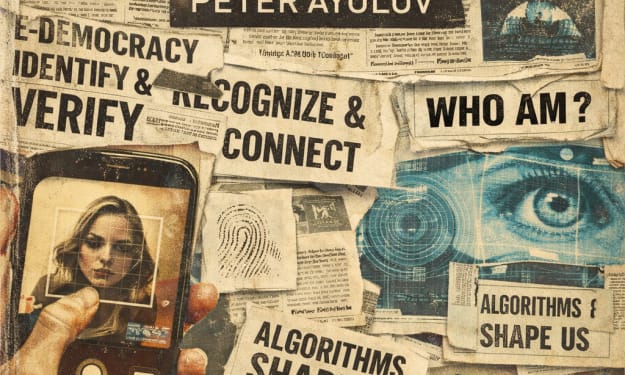
The Shaped Self: Images Without History Peter Ayolov, Sofia University “St. Kliment Ohridski”, 2026 Abstract E-democracy is not a technical upgrade of representative government. It is a transformation of citizenship inside a regime of visual formatting. Drawing on Žarko Paić’s analysis of video-centrism and the world-picture, this article argues that contemporary political life unfolds in an environment where images no longer reflect history but organise reality in advance. In this condition, the citizen does not merely participate; the citizen appears through an interface. Political agency becomes inseparable from visibility, recognisability, and circulation. By placing Paić in dialogue with Marcel Duchamp, Jean Baudrillard, Tom Wolfe, and Jean-Luc Nancy, the article develops the concept of the shaped self as the central figure of e-democracy: an interface-formed subject structured by edges, templates, and repeatable visual patterns that enable identification but risk reducing agency to performance. The struggle for democracy becomes a struggle over representation itself: over ownership of likeness, transparency of distribution systems, and the capacity to distinguish voice from simulation in an environment saturated with images, metrics, and deepfakes. As the concluding work of the Mirror Selves Trilogy, this article presents the book The Shapes of the Self: Identity and Recognition in Visual Space (2026) that investigates how the self emerges not as an inner essence but as a shaped and formatted presence within contemporary visual space.
By Peter Ayolov4 days ago in Critique
Why Saying Less Makes Words Feel More Valuable
There is a widely held belief that words gain value through scarcity. When someone speaks rarely, their statements are treated as weightier, more deliberate, and more worth attending to. When someone speaks often, their words are assumed to be interchangeable, disposable, or less carefully considered. This intuition is not entirely wrong, but it is frequently misapplied. Scarcity does affect perception, but perception is not the same as truth, and rarity is not the same as meaning.
By Peter Thwing - Host of the FST Podcast5 days ago in Critique
WELL DAMN Joe Budden Says He's Happy That J.Cole's Honda Civic Broke Down! "Tired Of The Fake Humble Gimmick"
If pride is the crown of all virtues, humility is the shabby little garbage swirling the gutters of the world. To J Cole, this bit of humble display cost him a hiccough in his roll out to his latest opus. In a nineties edition Honda Civic, he chose to go across the country and show off his modesty as a gimmick to hock his discount CDs.
By Skyler Saunders5 days ago in Critique
Completed Draft
When is a piece of writing finished? It’s a question with as many different answers as writers. For me, a work is finished when it can’t be improved anymore. Almost everything I have posted here is still in drafting (not draft; they’re posted). Even when I think a work is finished, I read it again, usually finding something I can improve or tighten.
By Harper Lewis6 days ago in Critique
$5 CHICKEN EXPOSED Creepy AI Video Goes Viral Claiming To Reveal How Costco And Other Stores Keep Their Chicken At $5!
At least in some videos, you know that it is obviously AI. In this clip, a chicken explains the difference between “real” chicken and “modified” chicken. The grotesque figure with bulbous eyes, bruised skin, and decaying teeth walks down a processing plant lane to show the chickens that can be found at your neighborhood supermarket. The ones that are encased in plastic and ready to eat, this chicken claims is full of “GMOs.” Let’s stop right there; genetically modified organisms have been part of the diet for centuries starting chiefly with American Indians who used the process of altering the genes to produce more corn.
By Skyler Saunders6 days ago in Critique