
A Window into the Ancient History of the Khyber Region
New discoveries in the historic gateway of the Khyber Pass reveal traces of ancient civilizations, trade routes, and cultural heritage.

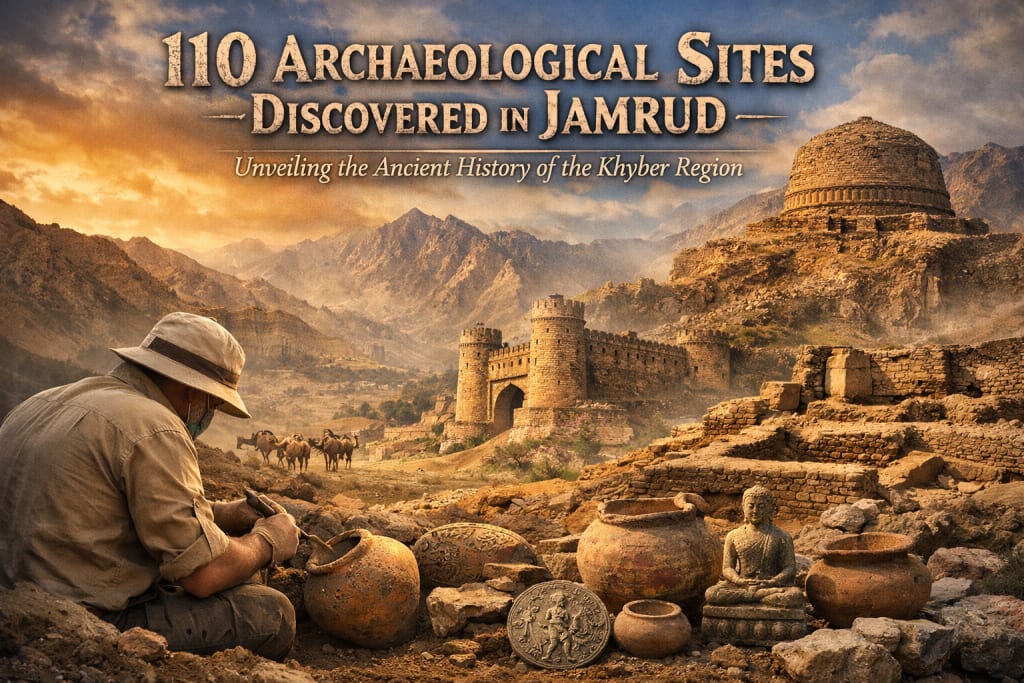
The historic town of Jamrud has recently gained renewed attention after archaeologists reported the discovery of 110 archaeological sites in and around the region. Located at the mouth of the famous Khyber Pass, Jamrud has long been known as a strategic and cultural crossroads between South Asia, Central Asia, and the Middle East. The newly identified sites provide remarkable evidence that the region was home to vibrant human activity stretching back thousands of years.
These discoveries were made during archaeological surveys conducted in the Khyber District by experts working with provincial heritage authorities. The sites include ancient settlements, burial grounds, pottery fragments, defensive structures, and traces of early trade networks. Together, they paint a fascinating picture of how people lived, traded, and interacted in this historically significant corridor.
A Strategic Gateway of Civilizations
Jamrud’s location has always made it one of the most important gateways in the region. Sitting at the entrance of the Khyber Pass, it served as a major route for armies, traders, pilgrims, and migrants moving between Central Asia and the Indian subcontinent.
Throughout history, powerful empires such as the Mauryan Empire, Kushan Empire, and later the Mughal Empire used this route to expand their influence. Because of this strategic importance, the region became a melting pot of cultures, languages, and traditions.
Archaeologists believe many of the newly discovered sites may date back to these historical periods. Some pottery fragments and settlement patterns suggest links with the ancient Gandhara Civilization, which flourished in the region between the 1st century BCE and the 7th century CE.
Evidence of Ancient Settlements
Among the 110 locations identified, several appear to be remains of ancient villages and habitation sites. These places contain fragments of pottery, tools, and building materials that indicate long-term human settlement.
In some areas, archaeologists found stone foundations and defensive walls, suggesting that communities built protective structures to guard against invasions or tribal conflicts. Other locations revealed burial sites and grave mounds, which could provide valuable insights into ancient burial traditions and cultural practices.
Experts say that systematic excavation of these sites could reveal artifacts such as coins, jewelry, sculptures, and inscriptions that would help historians better understand the people who once lived in the region.
Importance for Pakistan’s Cultural Heritage
The discovery of these archaeological sites is extremely important for the preservation of Pakistan’s cultural and historical heritage. According to heritage officials, documenting and protecting these locations will help prevent damage caused by construction, looting, or natural erosion.
The region around Jamrud has not been extensively studied in the past due to security challenges and limited archaeological exploration. As conditions have improved in recent years, researchers are now able to conduct detailed surveys and mapping of historical sites.
Authorities from the Khyber Pakhtunkhwa Directorate of Archaeology and Museums say they plan to register the sites and propose some of them for formal excavation. If properly preserved, these discoveries could contribute to educational research and tourism in the future.
Potential for Tourism and Research
Experts believe the newly discovered sites could transform Jamrud into an important archaeological and historical destination. The nearby Jamrud Fort already attracts visitors interested in colonial and regional history.
If some of the newly discovered locations are excavated and developed responsibly, they could offer visitors a glimpse into ancient trade routes, early settlements, and the cultural exchanges that shaped the region.
Such developments would also provide economic opportunities for local communities while promoting awareness about the region’s rich past.
Looking into the Past
Archaeologists emphasize that the discovery of 110 sites is only the beginning. Further surveys and excavations could uncover even more evidence about the civilizations that once thrived along the Khyber Pass.
For historians, Jamrud represents a living archive of human history, where layers of ancient cultures remain buried beneath the landscape. Each artifact or ruin uncovered adds another piece to the puzzle of how societies evolved in this important gateway between continents.
As research continues, the newly discovered archaeological sites in Jamrud may help rewrite parts of the region’s history and highlight its role as one of the most significant crossroads of civilizations in South Asia.
About the Creator
Irshad Abbasi
Ali ibn Abi Talib (RA) said 📚
“Knowledge is better than wealth, because knowledge protects you, while you have to protect wealth.
Keep reading
More stories from Irshad Abbasi and writers in History and other communities.
Why Is the Modi Government Searching for the Tomb of Dara Shikoh?
In recent years, discussions about the legacy of the Mughal Empire have become increasingly prominent in India. One intriguing development is the reported effort by the government led by Narendra Modi to locate the burial site of the Mughal prince Dara Shikoh. The search has sparked debate among historians, politicians, and the public alike. Many observers see it as part of a broader attempt to reinterpret India’s past and highlight figures who symbolize cultural harmony.
By Irshad Abbasi about 12 hours ago in History
The First Rainbow Baby
Pitter-patter, pitter-patter. The rain fell in rhythmic splatters, slowly slowing, but still constant. Mira rolled onto her side pulling the blanket tight against her ears, but still she could hear chitter-chatter and scurrying feet of the creatures that refused to sleep in the lower decks.
By A. J. Schoenfeldabout 19 hours ago in Fiction


Comments
There are no comments for this story
Be the first to respond and start the conversation.