
The Concept of the Antichrist Across Religions
Understanding Dajjal in Islam and Parallel Figures in Other Faith Traditions

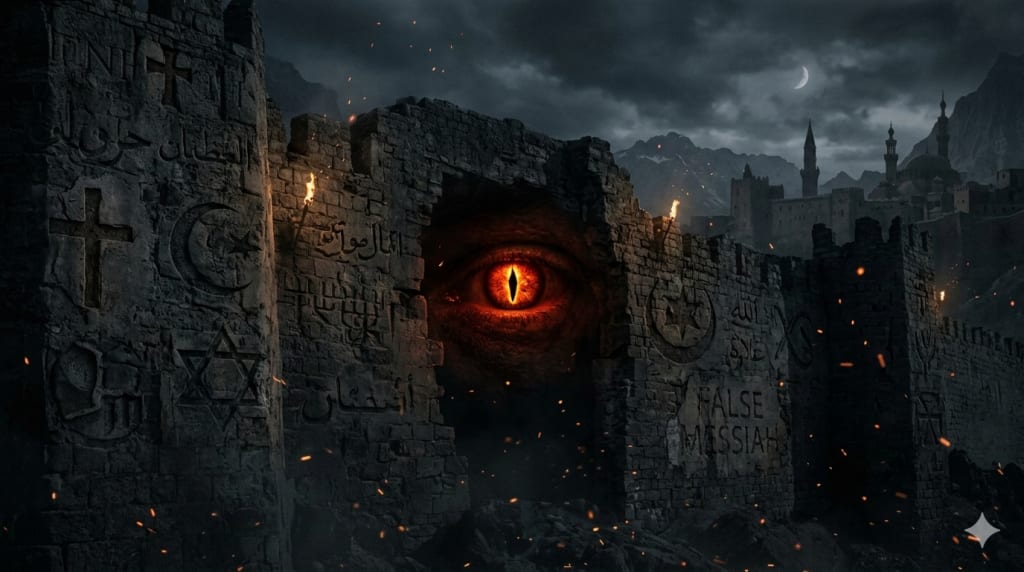
The idea of a deceptive, evil figure who appears near the end of times is a powerful and recurring theme in many religious traditions. In Islam, this figure is known as the Dajjal, while in Christianity and Judaism similar concepts exist under different names and interpretations. Although the details vary, these traditions share common themes of deception, moral testing, and the ultimate triumph of truth over falsehood.
Dajjal in Islam
In Islamic eschatology (the study of end times), the Dajjal (often translated as “the False Messiah”) is one of the major signs of the Day of Judgment. The word “Dajjal” comes from an Arabic root meaning “to deceive” or “to cover the truth with falsehood.” According to Islamic teachings, the Dajjal will appear during a time of great turmoil and confusion in the world.
Prophetic traditions (Hadith) describe the Dajjal as a human being with extraordinary powers of deception. He will claim to be divine and will perform acts that appear miraculous, such as bringing rain or reviving land. However, these powers are considered a test from God. The Dajjal is often described as being blind in one eye, and believers are warned not to be misled by his outward displays of power.
In Islam, the Dajjal’s appearance is closely linked with the return of Isa ibn Maryam (Jesus, son of Mary). Muslims believe that Jesus will descend to defeat the Dajjal, restoring justice and truth before the final Day of Judgment. Thus, the Dajjal represents the ultimate trial of faith, and his defeat symbolizes the victory of divine truth over deception.
The Antichrist in Christianity
In Christianity, a similar figure appears in the New Testament, commonly referred to as the Antichrist. The term is specifically mentioned in the letters of John the Apostle, particularly in the First and Second Epistles of John. In these texts, the Antichrist is described as one who denies Christ and opposes his teachings.
The concept is further developed in the Book of Book of Revelation, where a powerful and evil figure, often identified with the “Beast,” emerges during the end times. Although the word “Antichrist” does not directly appear in Revelation, many Christian scholars interpret the Beast as representing the Antichrist.
Christian tradition describes the Antichrist as a charismatic leader who will deceive many people, perform false miracles, and persecute believers. Like the Dajjal in Islam, the Antichrist’s power is temporary. According to Christian belief, he will ultimately be defeated by the return of Jesus Christ, who will establish God’s kingdom on earth.
Jewish Perspectives
In Judaism, the concept of a single, clearly defined Antichrist figure is less developed than in Islam or Christianity. However, there are references in Jewish texts to an evil figure known as Armilus. In later Jewish apocalyptic literature, Armilus is described as a tyrannical leader who opposes the Messiah and causes suffering before the final redemption.
Unlike Islam and Christianity, mainstream Jewish theology does not emphasize a dramatic, supernatural end-time villain as a central doctrine. Instead, the focus remains on the coming of the Messiah, who will restore peace and justice. Nevertheless, the idea of a final struggle between good and evil remains present in Jewish thought.
Similarities and Differences
Across these religions, several common themes can be identified:
1. Deception: All traditions describe a figure who misleads people through lies and false signs.
2. Trial of Faith: Believers are tested during the time of this figure’s influence.
3. Temporary Power: The evil figure’s authority is limited and ultimately defeated.
4. Final Victory of Good: Divine justice prevails in the end.
Despite these similarities, there are important differences. In Islam, the Dajjal is a clearly defined individual with detailed descriptions found in Hadith literature. In Christianity, interpretations vary widely; some view the Antichrist as a single future individual, while others interpret it symbolically as representing evil systems or ideologies. In Judaism, the concept is more marginal and not universally emphasized.
Conclusion
The concept of a deceptive end-time figure such as the Dajjal or the Antichrist reflects a broader religious concern about moral confusion, spiritual trials, and the endurance of faith. Whether in Islam, Christianity, or Judaism, this figure serves as a warning against being misled by outward appearances and false claims to power. Ultimately, all three traditions affirm that truth and righteousness will prevail, and that evil, no matter how powerful it may seem, is temporary in the face of divine justice.
About the Creator
Irshad Abbasi
Ali ibn Abi Talib (RA) said 📚
“Knowledge is better than wealth, because knowledge protects you, while you have to protect wealth.
Keep reading
More stories from Irshad Abbasi and writers in History and other communities.
The Lion of Mysore and the Pioneer of Rocket Warfare
Hyder Ali was not just a king; he was a phenomenon. Rising from the humble ranks of an illiterate soldier to become the de facto ruler of the Kingdom of Mysore, he became one of the most formidable challenges the British East India Company ever faced on Indian soil. While history often remembers his son, Tipu Sultan, for his fierce resistance, it was Hyder Ali who laid the strategic, economic, and technological foundations that made Mysore a superpower of the 18th century.
By Irshad Abbasi about 23 hours ago in History
Trump and Netanyahu Are Breaking the Bond Between American Jews and Israel
Israeli Elections & The public's demand: Even though Israel gained as many seats as its biggest significant adversary, the results of the April 9 election have been seen as a win for the status quo. Meanwhile, Prime Minister Benjamin Netanyahu is best positioned to form a new administration alongside the Likud party that he leads. Most certainly, Netanyahu will be able to maintain his position of authority. The public's demand for familiarity and regularity is the reason behind this.
By Laura Hooverabout 23 hours ago in History
This Is What I Do When People Throw Rocks At Me
Rocks have been thrown at me for a greater part of my life. Some have been small and missed hitting me. When people don't get a reaction from me, they throw bigger rocks with a better aim. Many have been hurled at me with precision over the years. For a long time, I thought my only options were to dodge them or be crushed by them.
By Margaret Minnicks6 days ago in Confessions


Comments
There are no comments for this story
Be the first to respond and start the conversation.