religion
How religion plays into corporate culture and office politics.
A Heart that makes room for God
In 2 Kings 4, we meet the Shunammite woman, a woman of discernment and quiet faith. She recognizes that Elisha is a holy man of God. But she does not merely admire him from a distance. She does not simply speak kindly of him or praise his ministry. Instead, she does something far more meaningful — she makes room for him. She prepares a small upper room in her home, placing a bed, a table, a chair, and a lamp there. It is a simple space, yet it becomes a sacred space. She creates room for the presence of God in her everyday life.
By Tahira Ikram18 days ago in Journal
Scott Silverman, Ed.D. on What Makes a Jewish Community—and How It Survives Conflict
Scott Silverman, EdD, is Dean of Noncredit & External Programs at Santa Monica College, where he leads adult education, workforce training, and community partnerships that broaden access beyond traditional credit pathways. He designs programs for older adults, career re-entry learners, and working professionals, pairing analytical forecasting with student development and engagement. A teacher and public speaker, he also mentors higher-education staff on program design, training, and service. Known for clear communication, he emphasizes in-person connection while using hybrid tools strategically. His career path was sparked by an early mentor in student affairs, turning curiosity into a commitment to community learning. Scott has been a Hebrew School teacher, youth group advisor and Hillel Director, and has been a co-founder and board member for several nonprofit organizations.
By Scott Douglas Jacobsen19 days ago in Journal
Dr. Scott Silverman on Tzedakah as Justice: Dignity, Anonymity, and Accountability in Jewish Giving
Scott Silverman, EdD, is Dean of Noncredit & External Programs at Santa Monica College in Culver City, California. He leads adult and noncredit education, workforce training, community outreach, and student development initiatives that expand access beyond traditional degree pathways. Silverman is known for program building, data-informed forecasting, and practical student-engagement strategies, and he frequently speaks on higher education management and the evolving workplace. He also teaches, mentors staff, and partners with local organizations to support older adults and re-entry learners. His work blends service, accountability, and a campus-centred belief in human potential while keeping equity and dignity at the center.
By Scott Douglas Jacobsen20 days ago in Journal
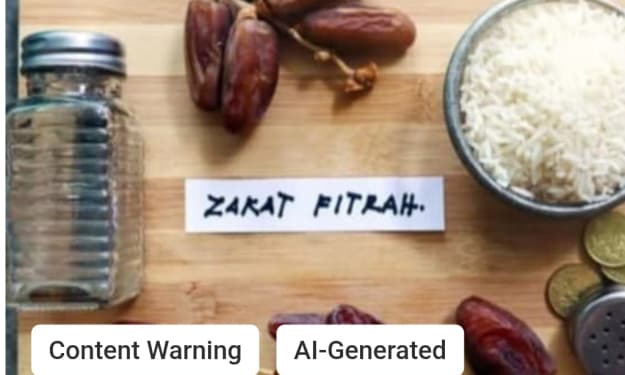
Pakistan Announces Sadqa-e-Fitr and Fidya Amounts for Ramadan 2026. Content Warning. AI-Generated.
Islamabad: As the holy month of Ramadan approaches, Pakistan’s religious authorities have officially announced the Sadqa-e-Fitr and Fidya amounts for Ramadan 2026, providing clarity for millions of Muslims preparing to observe fasting and fulfill their religious duties. The announcement aims to guide citizens in calculating their charitable obligations in accordance with Islamic principles and prevailing economic conditions.
By Ayesha Lashari21 days ago in Journal
Suicide Blast at Imambargah in Islamabad: Security Challenges, Government Position and Impact on National Security. AI-Generated.
Today, Friday, February 6, 2026, a severe suicide blast occurred immediately after Friday prayers in front of the main gate of Imambargah Khadijatul Kubra located in Tarlai area of the federal capital Islamabad, which not only raised serious questions about the security situation in the capital but also sent a wave of concern across the country. According to the initial and later updated official statements issued by the district administration, Islamabad Police and the Ministry of Interior, at least 31 people were martyred in this tragic incident while more than 169 worshippers were injured, many of whom are said to be in critical condition and it is feared that the number of martyrs may increase. Immediately after the explosion, the police completely sealed the area, Rescue 1122, Bomb Disposal Squad, Forensic Units and teams of intelligence agencies reached the spot and the process of collecting evidence was started. According to Islamabad Police, initial investigations have indicated that the attacker blew himself up when security personnel tried to stop him from entering the gate of the Imambargah. The initial police investigation statement said that the attacker may have links with extremist networks like Fitna al-Khawarij/TTP, but no organization has claimed responsibility yet. At the time of the incident, a large number of worshippers were present in the Imambargah due to Friday prayers, which increased the loss of life. The intensity of the explosion was so high that the windows of nearby buildings and vehicles were broken and panic spread in the area. The injured were immediately shifted to the Pakistan Institute of Medical Sciences (PIMS), Polyclinic and CDA Hospital, where an emergency was declared. According to doctors, many of the injured have been kept in special care due to neurological, orthopedic and burn injuries, while blood In view of the severe shortage of blood, hospitals have also appealed to the public for immediate blood donations. Islamabad Police and District Administration have confirmed that high alert has been imposed across the capital after the incident. Additional personnel have been deployed at sensitive locations, entry and exit points, religious gatherings and government facilities. According to a spokesperson for the Interior Ministry, three separate investigation teams have been formed, including Police Operations, Counter Terrorism Department (CTD), CIA and other enforcement agencies, which are jointly examining the nature of the incident, facilitators, network and possible security lapses. The spokesperson said that CCTV footage, DNA samples, mobile data and other forensic evidence are being carefully analyzed to identify the attacker. President Asif Ali Zardari, Prime Minister Muhammad Shahbaz Sharif, Interior Minister Mohsin Naqvi and other top government and political figures have strongly condemned the incident and termed it an attack on humanity, religious tolerance and national security. The state directed to provide the best medical facilities to the injured and provide immediate assistance to the families of the martyrs, while the Prime Minister made it clear that the zero tolerance policy against terrorism will continue and the responsible elements will be brought to justice. According to police and security sources, the martyrs and injured include civilians as well as some law enforcement officials who were performing security duties. The incident has once again sparked a debate on the security of religious places in the capital, intelligence sharing and the effectiveness of the counter-terrorism strategy. Government and security officials say that after the investigation is completed, all aspects of the incident will be brought to the public so that transparency is maintained and public confidence is restored. The government of Pakistan has appealed to citizens to avoid rumors, cooperate with law enforcement agencies and immediately report any suspicious activity, while the Islamabad Police has assured that more effective and strict security measures will be taken to prevent such incidents in the future so that the lives and property of citizens can be protected and The law and order situation in the capital remained stable. Written by: Malik Sarfaraz Hussain Awan
By Malik Sarfraz Hussain Awan24 days ago in Journal
Understanding a U.S. Government Shutdown
A “government shutdown” in the United States sounds like a sci-fi switch someone flipsand suddenly a whole country goes dark. Reality is messier, more legalistic, and (unfortunately) more human: it’s not the nation shutting off, it’s certain federal agencies losing legal authority to spend money, which then ripples into paychecks, services, contracts, and public trust.
By Sayed Zewayed30 days ago in Journal
Sade Sati 2026
Sade Sati is one of the most powerful and transformative periods in Vedic astrology. It is deeply connected with Saturn, the planet of karma, discipline, responsibility, and long-term consequences. While often feared, Sade Sati is better understood as a phase of intense learning and inner restructuring rather than pure hardship.
By Er. Benjamin Davis Mechanicabout a month ago in Journal