
Drone Strike Drives Calls to End British Military Presence on Cyprus
Cypriot leaders and protesters demand UK military withdrawal after drone hit British base amid Middle East tensions.

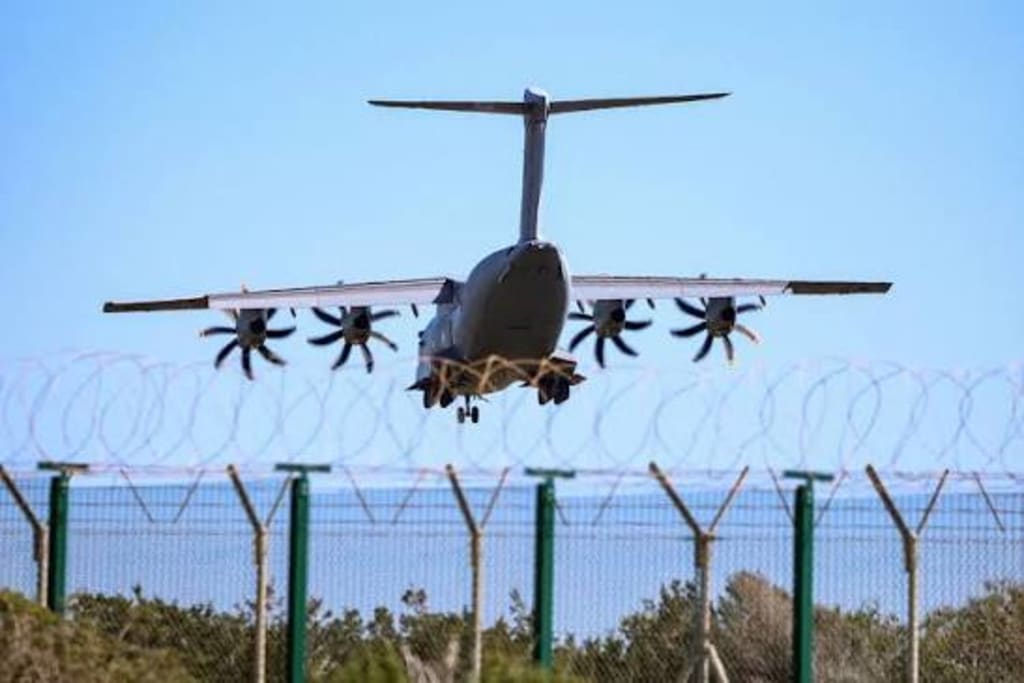
Tensions in the Eastern Mediterranean have spiked sharply this week after a drone strike hit Britain’s Royal Air Force base at Akrotiri on the island of Cyprus, reigniting longstanding debate over the presence of British military forces there and prompting renewed calls from local politicians and civil society for the bases to be withdrawn entirely. The strikes, occurring against the backdrop of the wider conflict involving Iran, Israel and the United States, have heightened anxieties that Cyprus could be drawn into a regional war.
The incident on March 2, 2026, involved an unmanned attack drone — widely believed to be an Iranian‑made model launched by a proxy such as Hezbollah — that struck the hangar at RAF Akrotiri, causing limited but highly visible damage. No casualties were reported, but the attack was significant as one of the few direct hits on a British sovereign base in decades.
The existence of British sovereign base areas in Cyprus dates back to the country’s independence in 1960, when the UK retained control of the Akrotiri and Dhekelia sites as part of longstanding treaty arrangements. These installations have traditionally served as strategic air and naval hubs for British and allied operations in the region. However, their continued presence has long been a source of public unease among some segments of the Cypriot population and political class.
Rising Local Opposition
In the days following the drone strike, protest movements gathered outside the Presidential Palace in Nicosia, with demonstrators demanding an end not only to the British military presence but also to broader military cooperation with the United States, Israel, and other nations involved in the Middle East conflict. One protest leader told local media that “Cyprus should not be a target because outside powers are using its territory for war,” echoing long‑held sentiments among critics of foreign military bases on the island.
Political figures in Cyprus — which is a member of the European Union but not of North Atlantic Treaty Organization — have also expressed serious concern about being caught in escalating regional hostilities. President Nikos Christodoulides has diplomatically noted that attacks were aimed at the British bases and not at Cyprus itself, highlighting the delicate balancing act Nicosia faces between sovereignty and security cooperation.
Diplomatic and Security Fallout
Britain’s response has been to bolster defenses around its Cypriot bases rather than retreat. In recent days, the UK has reinforced its presence with anti‑drone helicopters, additional naval assets like the Royal Navy destroyer HMS Dragon, and expanded air defense systems to protect against further unmanned aerial threats. The Ministry of Defence has emphasized that these deployments are defensive in nature.
British Prime Minister Keir Starmer has also come under pressure over the situation, with critics both at home and abroad questioning the clarity of London’s policy on the region’s escalating conflicts and the strategic use of the Cypriot bases. He has been compelled to publicly clarify that Britain is not formally at war but is supporting defensive measures for its personnel and allies.
Cypriot officials have criticized the level of information‑sharing and cooperation surrounding base security, suggesting that clearer communication and assurances are needed to reassure local populations. President Christodoulides has acknowledged the deployment of European and allied support — including operations by Greek, French and Spanish forces — but stopped short of calling for the removal of the bases, instead stressing the need for diplomatic de‑escalation.
Why the Controversy Matters
The debate over the British bases in Cyprus intersects several broader geopolitical dynamics. For one, Cyprus sits near key maritime routes and has become strategically vital for Western military operations tied to the Middle East. Its locations allow rapid deployment of air assets into the region and support surveillance and intelligence missions across the eastern Mediterranean.
For many Cypriots, however, the presence of foreign military forces — particularly in a context of increasing proximate violence — raises legitimate concerns about national sovereignty and civilian safety. The protest movement argues that being home to foreign bases effectively exposes Cyprus to risks that it has neither chosen nor consented to fully, especially as regional powers and their proxies demonstrate willingness to project force far beyond their core territories.
The question of whether Cyprus should reassess its treaty arrangements with the UK will likely remain a topic of political debate on the island. While there is no immediate indication that Nicosia will formally pursue the removal of British bases, the drone strike has amplified voices calling for a reevaluation of the military presence and its long‑term implications.
Looking Ahead
As regional conflicts continue to evolve, Cyprus finds itself at the intersection of shifting security landscapes. With mounting civilian unease, political pressure for policy review, and continuing military threats, the future of British military presence on the island may face increasing scrutiny from both domestic and international stakeholders.
Whether the calls for withdrawal translate into concrete policy changes remains uncertain. For now, though, the drone strike at Akrotiri has brought a renewed spotlight to an issue that blends history, geopolitics, and national identity — raising fundamental questions about the role of foreign military bases in an increasingly volatile world.
About the Creator
Fiaz Ahmed
I am Fiaz Ahmed. I am a passionate writer. I love covering trending topics and breaking news. With a sharp eye for what’s happening around the world, and crafts timely and engaging stories that keep readers informed and updated.
Keep reading
More stories from Fiaz Ahmed and writers in The Swamp and other communities.
Indonesia Says It Will Withdraw From Board of Peace if It Does Not Benefit Palestinians
Indonesia has escalated its diplomatic stance regarding its participation in the U.S.‑led Board of Peace, warning that it will withdraw from the international initiative if it fails to benefit the Palestinian people or serve Indonesian national interests. The announcement, made on March 6, 2026, reflects growing domestic unease in the world’s largest Muslim‑majority nation over its role in the platform and its implications for longstanding support for Palestinian rights. The Board of Peace is a multilateral initiative championed by Donald Trump and backed by several countries, including Indonesia. It was conceived as a mechanism to help stabilize Gaza, support reconstruction efforts, and promote broader peace in the Middle East — particularly after long years of conflict. However, recent criticism from religious groups and civil society in Indonesia has placed increasing pressure on the government to reassess its involvement. Domestic Criticism Fuels Pushback The Indonesian government’s commitment to the Board of Peace has drawn criticism from several influential groups at home, including the Indonesian Ulema Council and Nahdlatul Ulama, the country’s largest Muslim organization. Critics argue that joining the peace board, particularly with the backdrop of U.S. military involvement in the Middle East and the ongoing Iran conflict, risks diluting Jakarta’s historic support for the Palestinian cause. In a meeting with more than 160 Islamic scholars held at the Presidential Palace in Jakarta, President Prabowo Subianto reassured group leaders that Indonesia’s participation is conditional upon tangible benefits for the Palestinians. Deputy Chair of the Indonesian Ulema Council, Cholil Nafis, said that Prabowo was “determined to direct the board toward Palestinian independence” and reiterated that Indonesia stood ready to withdraw if the platform fails to advocate effectively for that goal. “This commitment is not symbolic,” Nafis told reporters after the gathering. “If the Board of Peace does not advance Palestinian independence or align with national interests, Indonesia will reconsider its involvement.” Balancing Diplomacy and Domestic Expectations Indonesia’s position highlights the delicate balancing act its leaders face between international diplomacy and domestic public opinion. While the government sees engagement in the Board of Peace as a way to influence international discussions on Gaza reconstruction and peacebuilding, critics argue that the initiative’s connection with U.S. policy — particularly amid ongoing hostilities involving the United States, Iran, and Israel — undermines the neutrality and moral weight of the effort. Following the board’s initial meeting in Washington earlier this year, Indonesia agreed to contribute troops to a proposed Gaza stabilization force — a move that alarmed many supporters of Palestinian independence, who feared that military involvement could compromise Jakarta’s long‑standing solidarity with Palestinian rights. Moreover, some opposition voices in Indonesia say that Jakarta should instead amplify Palestinian interests through other international institutions such as the United Nations and the Organization of Islamic Cooperation (OIC), rather than a U.S.‑led body perceived as too closely aligned with Western political objectives. Regional Conflict Casts Shadow Over Peace Efforts The broader geopolitical context has further complicated Indonesia’s position. Regional tensions, including the ongoing military campaign involving the United States and Israel against Iran, have heightened skepticism among Indonesian religious and civil groups about the Board of Peace’s effectiveness and credibility. Many argue that true peace and rights for Palestinians cannot be addressed independently of wider regional hostilities. Indonesian Foreign Minister Sugiono has acknowledged that all discussions within the Board of Peace are currently on hold due to the Iran war, underscoring how wider Middle East instability has impacted diplomatic initiatives aimed at resolving the Gaza conflict. A Broader Message on Sovereignty and Solidarity Indonesia’s conditional stance underscores its leaders’ emphasis on respecting national sovereignty and aligning foreign policy with public sentiment. For many Indonesians, support for Palestinian statehood and rights is not merely diplomatic rhetoric but a deeply held national principle rooted in decades of moral and religious solidarity. Religious organizations such as the Indonesian Ulema Council and Nahdlatul Ulama have played key roles in shaping public discourse, stressing that any international engagement must prioritize Palestinian aspirations above geopolitical alliances. At the same time, some government officials believe Indonesia’s role on the board could be strategically utilized to push for de‑escalation in the Middle East and bring voices from the Global South into peace discussions. What Comes Next As Indonesia signals its willingness to withdraw from the Board of Peace unless meaningful outcomes for Palestinians are shown, diplomatic observers are watching closely. Jakarta’s stance may prompt other countries to reevaluate their involvement or push for reforms within the peace initiative. It also reflects a broader trend among Global South nations seeking to assert greater autonomy in international forums and insist that peace efforts address the core concerns of affected populations. For now, Indonesia’s conditional participation sends a clear message: global peace initiatives must demonstrably benefit those they aim to serve — especially in conflicts with profound humanitarian consequences.
By Fiaz Ahmed 3 days ago in The Swamp
Parallel Protests
I haven't written for quite some time, but I have A LOT of thoughts about yesterday's protest rally against our government's involvement and complicity in America's war on Iran, on the harbourside of my home city Bristol, and I need to put them somewhere. My gorgeous girlfriend is always a loving and listening ear and sharing it all with her will always be a healthy and happy way of processing the mental and emotional weight, but getting it straight in my brain to share means writing it all down in straight lines, so, here we are and thanks for being here.
By Steph Cole6 days ago in The Swamp




Comments
There are no comments for this story
Be the first to respond and start the conversation.