
Israel Expands Offensive With New Wave of Coordinated Strikes in Iran and Lebanon
A widening military campaign sees Israel intensify strikes across Iran and Lebanon, targeting Hezbollah positions and strategic infrastructure, as fears of a broader Middle East war grow.
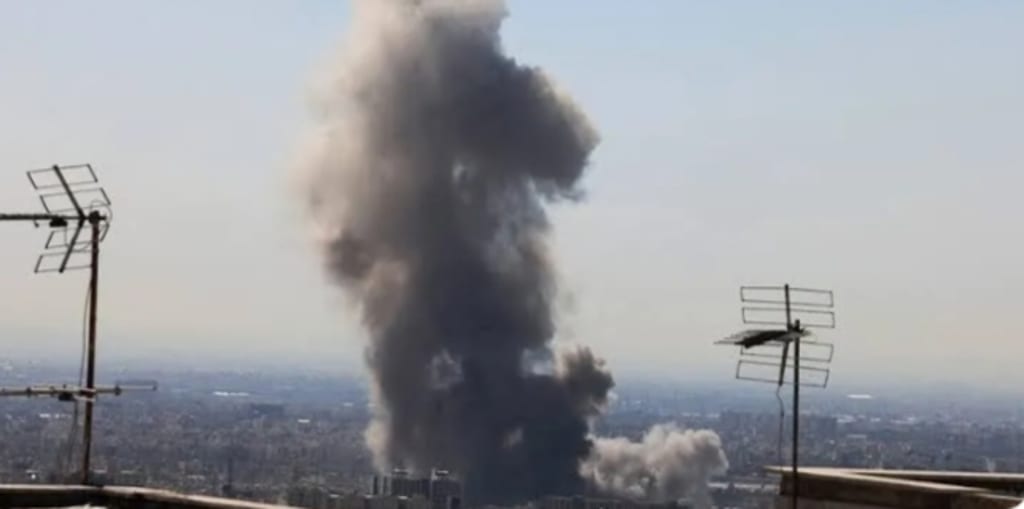
The Middle East stands at a dangerous crossroads as Israel dramatically expands its military offensive with coordinated strikes across both Iran and Lebanon. What began as a series of retaliatory exchanges has now evolved into a multi-front confrontation involving state forces, powerful militias, and global diplomatic pressure.
The latest wave of strikes signals a significant shift — not only in military scale but in geopolitical consequences.
A Multi-Front Campaign Unfolds
Israeli air and missile strikes have targeted strategic infrastructure inside Iran while simultaneously hitting Hezbollah strongholds in Lebanon. Military officials describe the campaign as a necessary escalation aimed at neutralizing long-range missile systems, drone networks, and command centers believed to be coordinating attacks against Israel.
In Lebanon, Israeli fighter jets struck areas in southern Beirut — widely regarded as a key stronghold of Hezbollah — as well as sites near the Israeli border. Explosions echoed through densely populated neighborhoods, sending civilians fleeing and reviving memories of previous wars that devastated the region.
The expansion of operations suggests a coordinated strategy designed to confront Iranian influence wherever it manifests — whether directly from Tehran or through allied groups.
Iran’s Central Role
Tensions with Iran have intensified sharply in recent weeks. Iranian officials have condemned the strikes as violations of sovereignty and acts of aggression. In response, Tehran has reportedly launched missile and drone barrages toward Israeli territory and strategic assets in the region.
The Iranian government frames its actions as defensive retaliation. Meanwhile, Israeli leadership insists the campaign is preemptive — aimed at dismantling threats before they can fully materialize.
This clash of narratives underscores the complexity of the conflict: both sides claim deterrence, yet each round of strikes pushes the region closer to open war.
Lebanon Caught in the Middle
For Lebanon, the escalation is particularly precarious. The country has long struggled with political instability, economic collapse, and social unrest. Renewed conflict threatens to further strain its fragile infrastructure.
Hezbollah’s involvement marks a turning point. The group, heavily backed by Iran, has positioned itself as a key player in the confrontation. Rocket fire and drone activity from Lebanese territory into northern Israel have prompted swift retaliation.
While Hezbollah portrays its actions as solidarity with Iran and resistance against Israeli aggression, many Lebanese citizens fear being drawn into another destructive conflict beyond their control.
The Lebanese government has expressed concern about unilateral military actions that risk national security and stability, though its ability to restrain Hezbollah remains limited.
Civilian Impact and Humanitarian Concerns
As military operations intensify, civilians on both sides face the brunt of the crisis.
In southern Beirut, residents have evacuated apartment blocks after receiving warnings of imminent strikes. Roads leading out of targeted districts became congested with families seeking safer ground. In northern Israel, sirens and missile interception systems have once again become part of daily life.
The psychological toll is profound. Communities already shaped by years of regional conflict now face renewed uncertainty. Schools, businesses, and public services are disrupted, while hospitals prepare for potential surges in casualties.
Humanitarian organizations warn that if the campaign continues at its current pace, displacement numbers could rise sharply — particularly in Lebanon, where economic hardship has already left many vulnerable.
Strategic Calculations
Israel’s expanded offensive appears rooted in a doctrine of overwhelming deterrence. By striking multiple fronts simultaneously, Israeli forces aim to degrade operational capacity across the network of Iranian-aligned actors.
Analysts suggest the strategy seeks to send a clear message: coordinated threats will be met with coordinated responses.
However, the approach carries risks. Direct strikes inside Iran increase the possibility of broader retaliation. Iran maintains influence through allied militias not only in Lebanon but also in Syria, Iraq, and Yemen. Escalation in one theater could ignite others.
For Tehran, the challenge is balancing retaliation with restraint. Too little response could weaken its regional standing; too much could trigger a larger confrontation involving additional global powers.
International Reactions
Global leaders have urged restraint as the situation grows more volatile. Diplomatic channels remain active, though prospects for immediate de-escalation appear uncertain.
The United Nations has called for urgent dialogue and protection of civilians, warning that a broader regional war would have catastrophic humanitarian consequences.
European governments have emphasized the need for proportional responses and renewed diplomatic engagement. Meanwhile, regional Gulf states monitor developments closely, concerned about potential spillover effects — particularly regarding energy security and maritime trade routes.
The expansion of hostilities also reverberates in global markets, with oil prices fluctuating amid fears of disrupted supply chains.
A Region on Edge
The conflict now stretches beyond isolated incidents and into what many analysts describe as a sustained campaign. Each strike increases the possibility of miscalculation.
Airspace congestion, missile interceptions, and cross-border operations create conditions where unintended escalation becomes more likely. Military planners must contend not only with strategic targets but with the risk of broader entanglement.
Observers note that past regional wars often began with limited objectives that spiraled into prolonged engagements. The current trajectory raises similar concerns.
What Happens Next?
Several scenarios remain possible:
Contained Escalation: Limited strikes continue without full-scale war.
Regional Expansion: Proxy groups across the Middle East intensify operations.
Diplomatic Breakthrough: International mediation produces a temporary ceasefire.
Prolonged Conflict: Sustained air campaigns reshape regional power dynamics.
Much depends on political calculations in Jerusalem and Tehran — and on whether backchannel diplomacy can gain traction before further casualties mount.
Conclusion
Israel’s decision to expand its offensive with coordinated strikes in Iran and Lebanon marks a critical moment in Middle Eastern geopolitics. What began as retaliation has transformed into a multi-layered confrontation with far-reaching implications.
For civilians, the stakes are immediate and personal — safety, stability, and survival. For governments, the calculus involves deterrence, influence, and regional balance of power.
As the conflict unfolds, one truth is evident: the Middle East is navigating a volatile chapter whose outcome could redefine alliances and reshape the strategic landscape for years to come.
About the Creator
A Gathering of Evil Bosses
“I’m the queen of chin jutting while I smooth my hair, attacking, insulting, and deflecting to protect my appointer.” “Oh, please, Blondi, my hair is curled, highlighted, and longer than yours. I feature television commercials telling immigrants that we will give them a free plane ride home, and if they voluntarily turn themselves in, they will be allowed to legally apply for re-entry. It runs everywhere, and I look good in it! You can’t compete because of your blond hair. Mine is nicer, and my lips are prettier than yours.”
By Andrea Corwin 13 days ago in The Swamp


Comments
There are no comments for this story
Be the first to respond and start the conversation.