
Majority of Americans Oppose Trump’s Iran Strikes, Per New Polling
New survey data reveals deep public skepticism as concerns grow over escalation, casualties, and economic fallout
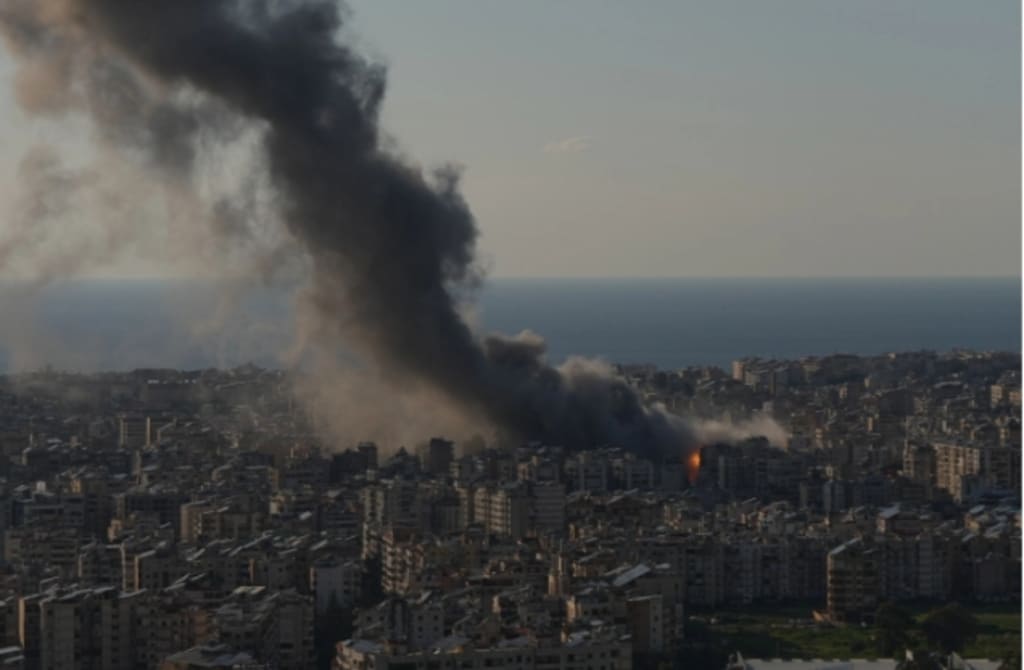
The American public is sending a clear message: they are not convinced.
A new national poll shows that a majority of Americans oppose President Donald Trump’s recent military strikes against Iran, highlighting widespread unease about the growing conflict in the Middle East. At a moment when tensions are escalating abroad, skepticism appears to be rising at home.
While military action is often framed as decisive leadership, polling suggests many Americans are questioning both the necessity and the long-term consequences of these strikes.
What the Polling Shows
According to newly released survey data from Reuters/Ipsos, public opinion tilts firmly against the strikes.
43% disapprove of the U.S. strikes on Iran
27% approve
29% remain unsure
That means more Americans oppose the action than support it — and a significant portion of the country is still uncertain about how to assess the situation.
The level of uncertainty is notable. Nearly one in three Americans say they aren’t sure where they stand, suggesting that confusion, incomplete information, or rapidly evolving events may be shaping early reactions.
Still, the balance clearly leans toward disapproval.
A Deep Partisan Divide
As with many national security issues, views on the strikes break sharply along party lines.
Democrats
A strong majority of Democrats oppose the military action. Many within the party argue that escalation risks drawing the United States into another prolonged Middle Eastern conflict — something voters have grown weary of over the past two decades.
Republicans
Republican voters are more supportive overall, but not overwhelmingly so. Even within Trump’s political base, there are signs of hesitation — particularly when questions turn to the possibility of American casualties or economic consequences.
Independents
Independents lean toward disapproval, reflecting broader unease among voters not strongly aligned with either party.
The divide underscores a fundamental disagreement about America’s role abroad: Should the U.S. project force to deter adversaries, or should it avoid further entanglement in regional conflicts?
War Fatigue Is Real
Public opinion on foreign wars has shifted significantly over the past twenty years.
The wars in Iraq and Afghanistan reshaped how Americans think about military intervention. Long deployments, high financial costs, and the loss of American lives created a lasting caution about new overseas conflicts.
That context matters.
Many voters appear to be evaluating the Iran strikes not in isolation, but through the lens of past experience. Questions arise quickly:
What is the end goal?
How long could this last?
Will American troops be drawn into combat?
Could this spiral into a broader regional war?
These are not abstract concerns. They reflect lived political memory.
Concerns About Escalation
One of the strongest themes emerging from polling is anxiety over escalation.
A majority of respondents say they would be less likely to support the strikes if they lead to:
U.S. military casualties
A prolonged regional conflict
Direct confrontation with additional countries
In other words, initial military action may be one thing. An open-ended war is another.
The Middle East remains a strategically sensitive region, and Americans understand that conflicts there can expand quickly. The fear of “mission creep” — limited action becoming long-term involvement — looms large in the public imagination.
Economic Anxiety: The Gas Price Factor
Another powerful factor shaping opinion? The economy.
The poll shows that many Americans would reconsider their support if the conflict drives up oil and gas prices. Given Iran’s proximity to key global energy routes, markets have already shown volatility.
For everyday Americans, higher fuel prices translate directly into higher costs for commuting, groceries, and goods. Inflation remains a dominant political issue, and voters are particularly sensitive to price spikes.
Foreign policy decisions do not exist in a vacuum — they land squarely in household budgets.
Is Trump “Too Willing” to Use Force?
More than half of respondents in the poll agreed with the statement that President Trump is “too willing to use military force.”
That perception crosses party lines more than one might expect. Even among Republicans, a notable minority expressed concern about the readiness to escalate militarily.
This reflects a broader debate within American politics:
Is strong deterrence achieved through visible military action?
Or does restraint better serve long-term stability?
For many Americans, the answer appears far from settled.
The Role of Uncertainty
Nearly 30% of respondents remain unsure about whether they support the strikes.
This uncertainty suggests that public opinion is still forming. Early reactions often shift as more information becomes available, especially if:
Casualty figures change
Diplomatic negotiations emerge
Retaliation intensifies
Economic consequences become clearer
History shows that public support for military action can fluctuate dramatically based on events on the ground.
Right now, the mood is cautious.
Political Implications
Public opinion matters — especially in a democratic system.
If opposition to the Iran strikes remains strong or grows, it could:
Influence congressional debates over military authorization
Shape funding discussions
Affect campaign messaging in upcoming elections
Pressure leaders to pursue diplomatic alternatives
Foreign policy decisions may be made in Washington, but they are ultimately judged by voters.
In an election cycle, that judgment carries weight.
A Nation Watching Carefully
The new polling does not necessarily signal isolationism. Nor does it suggest that Americans are indifferent to global threats.
Instead, it reflects something more nuanced: a public wary of escalation, cautious about costs, and deeply aware of the consequences of prolonged war.
Americans appear to be asking for clarity.
What is the objective?
What is the timeline?
What are the risks?
Until those questions are answered convincingly, skepticism may remain the dominant public sentiment.
Final Thoughts
The numbers are clear: a majority of Americans oppose the recent strikes on Iran, with many more uncertain than supportive. Concerns about escalation, casualties, economic impact, and long-term strategy are shaping public reaction.
As the situation unfolds, public opinion may evolve. But for now, the political landscape reflects hesitation rather than rallying consensus.
In moments of international crisis, leadership decisions move quickly. Public trust, however, builds — or erodes — over time.
And at this moment, Americans appear to be watching carefully before offering their full support.
About the Creator
A Gathering of Evil Bosses
“I’m the queen of chin jutting while I smooth my hair, attacking, insulting, and deflecting to protect my appointer.” “Oh, please, Blondi, my hair is curled, highlighted, and longer than yours. I feature television commercials telling immigrants that we will give them a free plane ride home, and if they voluntarily turn themselves in, they will be allowed to legally apply for re-entry. It runs everywhere, and I look good in it! You can’t compete because of your blond hair. Mine is nicer, and my lips are prettier than yours.”
By Andrea Corwin 12 days ago in The Swamp
Iran’s Supreme Leader Ayatollah Ali Khamenei, Who Led the Islamic Republic Since 1989, Is Dead at 86
Ayatollah Ali Khamenei, the supreme leader of the Iran for more than three decades, has died at age 86, Iranian state media confirmed, marking a historic turning point for Tehran and a potential reshaping of Middle East geopolitics. His death was announced Sunday following a major joint military operation by the United States and Israel that reportedly struck his compound in Tehran over the weekend.
By Fiaz Ahmed Brohi2 days ago in The Swamp



Comments
There are no comments for this story
Be the first to respond and start the conversation.