
Trump vs. Larijani: Escalating War of Words Between the U.S. and Iran
War Between U.S And Iran

Introduction
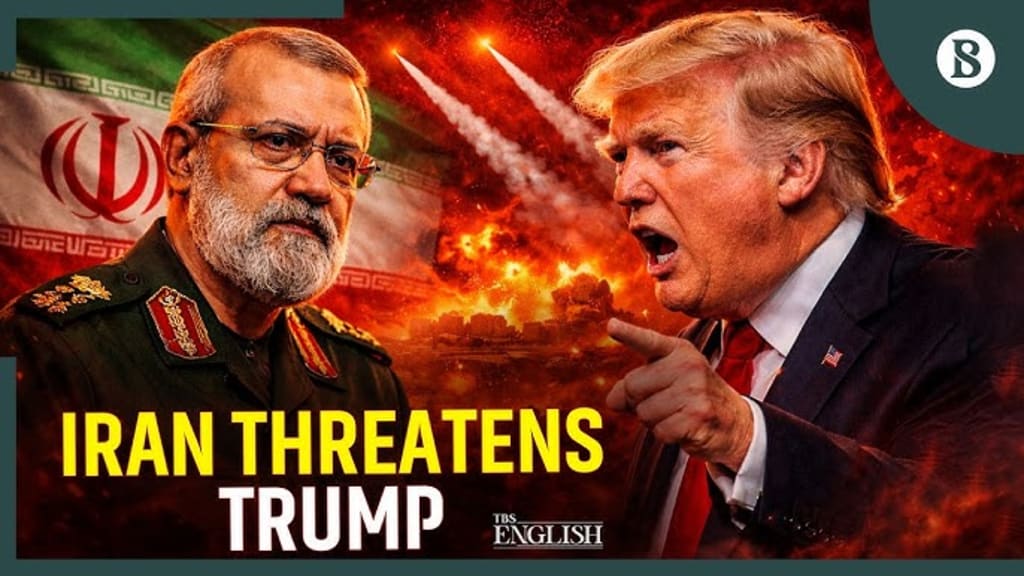
The relationship between the United States and Iran has long been marked by tension, rivalry, and political confrontation. In recent months, this rivalry has intensified through a sharp exchange of statements between Donald Trump and Ali Larijani. Their public remarks reflect the growing hostility between the two countries and highlight the risk of further instability in the Middle East.
While the conflict involves complex military, economic, and political issues, the strong rhetoric between these leaders has become a symbol of the broader struggle between Washington and Tehran.
Trump’s Strong Warnings
Donald Trump, the U.S. president, has repeatedly taken a hard stance against Iran. His administration has warned that the United States will respond aggressively to any Iranian action that threatens American interests or the flow of global oil supplies.
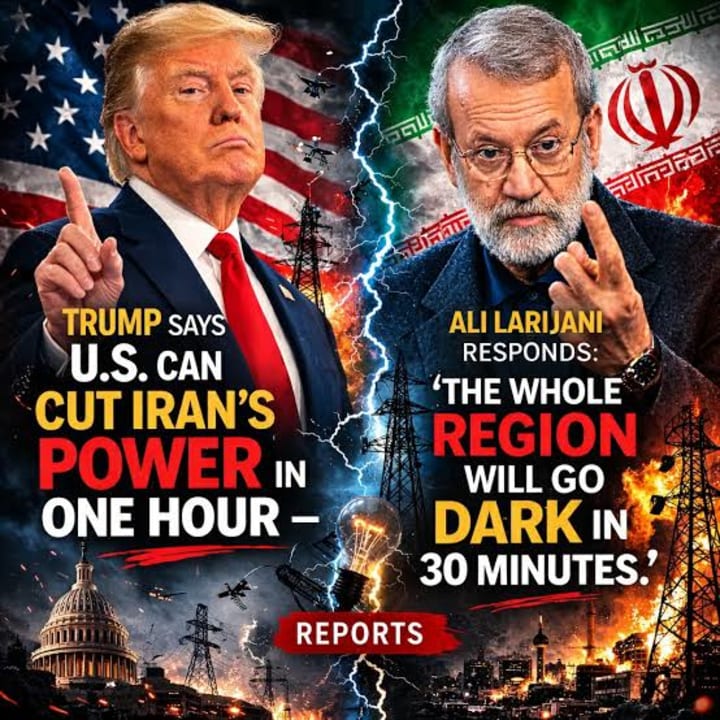
In one of his statements, Trump warned that if Iran attempted to disrupt oil shipments through the strategic Strait of Hormuz, the United States would respond with overwhelming force. He stated that Iran could be struck “twenty times harder” if it interfered with the global oil trade. �
Business Recorder
This strong language reflects Washington’s determination to protect international energy routes and maintain its influence in the region. Trump has often portrayed Iran as a destabilizing force in the Middle East, accusing its leadership of supporting militant groups and threatening regional security.
Larijani’s Response
Ali Larijani, a senior Iranian political figure and security official, responded sharply to Trump’s threats. He dismissed the American president’s warnings as “empty threats” and insisted that Iran would not be intimidated by U.S. pressure. �
Arab News PK
Larijani also issued a warning of his own, saying that Iran had faced stronger adversaries in the past and had survived them. In a pointed remark directed at Trump, he cautioned him to “be careful not to be eliminated himself.” �
Arab News PK
These remarks were widely reported and highlighted the deep hostility between the two governments. For Iran, such statements are intended to demonstrate strength and resilience in the face of American pressure.
A Wider Regional Conflict
The verbal clash between Trump and Larijani is not occurring in isolation. It is part of a much larger conflict involving military strikes, economic sanctions, and regional alliances.
Recent military actions and retaliatory attacks have pushed the Middle East toward a dangerous period of instability. Airstrikes, missile attacks, and political confrontations have increased fears of a wider war that could involve multiple countries across the region.
Oil markets have also reacted to the rising tensions. The Strait of Hormuz, through which a large portion of the world’s oil supply passes, has become a central point of concern for global energy security.
Political Messaging and Propaganda
The exchange of threats between Trump and Larijani also reflects the importance of political messaging during international conflicts. Leaders often use strong rhetoric to reassure their domestic audiences and demonstrate resolve to their rivals.
In the United States, Trump’s tough language appeals to supporters who favor a strong foreign policy approach. Meanwhile, Iranian leaders use defiant statements to show that their country will not surrender to external pressure.
These statements are therefore not only diplomatic signals but also political tools designed to influence public opinion both at home and abroad.
Risks of Escalation
Despite being a war of words, such rhetoric carries serious risks. History has shown that hostile statements between governments can quickly escalate into real military confrontation. Misunderstandings, miscalculations, or unexpected incidents could trigger further violence.
Many international observers have called for diplomacy and dialogue to reduce tensions. However, with both sides continuing to exchange threats, the possibility of peaceful negotiations remains uncertain.
Conclusion
The growing exchange of harsh statements between Donald Trump and Ali Larijani illustrates the deep and ongoing conflict between the United States and Iran. Their rhetoric reflects not only personal disagreements but also the broader geopolitical rivalry between the two nations.
As tensions continue to rise, the international community is watching closely. Whether this confrontation remains a war of words or develops into a larger conflict will depend on the choices made by leaders in the months ahead. For now, the verbal battle between Washington and Tehran remains a powerful symbol of the fragile stability in the Middle East.
About the Creator
Sk
"I am a passionate writer, crafting books and articles on Vocal Media, exploring human experiences, stories, and creative reflections."
A Gathering of Evil Bosses
“I’m the queen of chin jutting while I smooth my hair, attacking, insulting, and deflecting to protect my appointer.” “Oh, please, Blondi, my hair is curled, highlighted, and longer than yours. I feature television commercials telling immigrants that we will give them a free plane ride home, and if they voluntarily turn themselves in, they will be allowed to legally apply for re-entry. It runs everywhere, and I look good in it! You can’t compete because of your blond hair. Mine is nicer, and my lips are prettier than yours.”
By Andrea Corwin 24 days ago in The Swamp
Record 52 Israeli billionaires make Forbes list with $308B combined wealth
A record‑breaking number of Israeli billionaires have appeared on Forbes magazine’s 2026 annual World’s Billionaires list, underscoring the country’s growing economic muscle on the global stage. This year, a total of 52 individuals with Israeli citizenship made the list, with their combined net worth reaching about $308 billion — a historic high and a significant increase compared to previous years. The combined wealth figure represents roughly a 24% increase from the previous year and about a 50% jump since 2024, reflecting strong performance in global markets and particularly robust gains in technology, investment, and startup sectors. Technology and Markets Fueling Wealth Growth Israel has long been nicknamed the “startup nation” thanks to its vibrant high‑tech ecosystem. Local companies specializing in artificial intelligence, semiconductors, cybersecurity, cloud computing, and other advanced technologies have seen explosive growth in recent years, attracting significant venture capital and spurring lucrative acquisitions. These gains have helped boost the fortunes of entrepreneurs, founders, and investors who are now among the country’s wealthiest. Despite ongoing geopolitical tensions in the region, including recent conflicts that rattled global markets, Israeli stock exchanges showed resilience. Investors responded positively after brief periods of volatility, helping to elevate asset values — an outcome that benefited billionaire portfolios tied to publicly traded firms and private equity stakes alike. Top Israeli Wealth Holders on the Global Stage Leading the pack of Israeli billionaires is Miriam Adelson, who is ranked as the richest Israeli on the list with an estimated net worth of roughly $37.5 billion. Her fortune is closely linked to holdings in the Las Vegas Sands casino conglomerate and media assets, and she ranks among the top 60 richest individuals worldwide. Following Adelson are brothers Idan Ofer and Eyal Ofer, two generations‑spanning tycoons whose diversified investments span shipping, real estate, energy, banking, and technology. Both have built empires that position them well within the global billionaire rankings, with net worth estimates in the mid‑$30 billion range. Another notable success story comes from mobile gaming: Dmitry Bukhman and his brother Igor Bukhman, co‑founders of the gaming company Playrix, are also among Israel’s wealthiest. Each brother is estimated to be worth around $13.6 billion, thanks to the global popularity of titles like Township, Homescapes, and Fishdom. What This Means for Israel’s Economy The surge in billionaire wealth from Israel highlights several broader economic trends. First, it underscores the importance of the technology and innovation sector in the country’s economic strategy. Israeli startups and scale‑ups routinely attract global capital and are fertile ground for high‑value exits, whether through acquisitions by larger firms or successful public market debuts. Second, the record number of billionaires despite regional instability suggests a degree of economic resilience and investor confidence. Even as geopolitical tensions influence markets, sectors such as cybersecurity, AI, and biotech continue to draw strong interest. Long‑term investors view Israel as a hub of ingenuity with sustainable growth potential. Third, the diversification of wealth sources — from gaming to real estate to international investments — protects Israel’s billionaire class from downturns in any single industry. This diversification, amplified by global reach, means these wealthy individuals and families can balance risks associated with regional uncertainty. Global Wealth Context The surge in Israeli billionaire fortunes parallels broader global insights from Forbes’ 2026 list, which shows wealth expanding across continents. A record 3,428 individuals made the full billionaire ranking this year — an all‑time high — and their combined global wealth reached more than $20 trillion. Much of this growth has been driven by gains in technology and market valuations. Still, while countries like the United States, China, and India host far more billionaires, Israel’s per‑capita concentration of ultra‑wealthy citizens remains notable. It continues to rank among the top nations in terms of billionaire count relative to population size. Looking Ahead Economists and industry analysts say the upward trajectory in billionaire wealth likely reflects a combination of technological innovation, resilient capital markets, and favorable economic policies. If Israel can sustain investments in key sectors such as cybersecurity, AI, and life sciences, the nation could continue to produce influential business leaders whose impact stretches well beyond its borders. As wealth continues to concentrate among the global elite, the presence of 52 Israeli billionaires on Forbes’ 2026 list sends a powerful message about the country’s economic maturity and global relevance — even in times of regional uncertainty.
By Fiaz Ahmed 3 days ago in The Swamp

Comments
There are no comments for this story
Be the first to respond and start the conversation.