aging
Aging with grace and beauty. Embrace age with aging advice, tips, and tricks.
Why Is CoQ10 So Important?
What is CoQ10, and what does it do? CoQ10 is a form of coenzyme and natural antioxidant found in every cell in our bodies. Coenzymes can aid enzymes with several different bodily processes, from food digestion to muscle repair and more. Antioxidants protect the cells in your body from damage caused by harmful molecules. Specifically, CoQ10 plays a serious role in cell energy production and helps oxygen get where it has to move into your system. All the things that go into decline as we age, CoQ10 helps to repair and rejuvenate. If this sparks your interest then read ahead for all the data within the following article titled Why is CoQ10 so important?
By Krisna Garcia6 years ago in Longevity
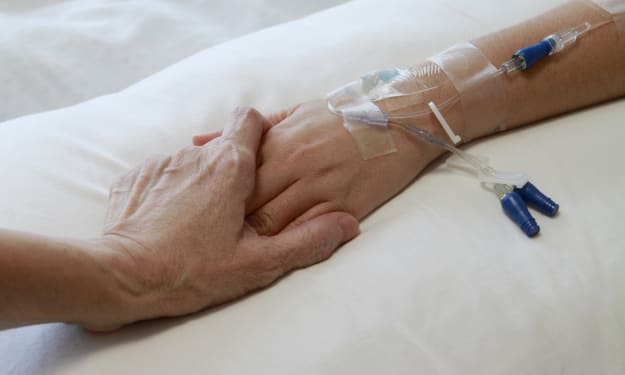
Could Nursing Home Abuse Spike During COVID-19?
Nursing home abuse is a growing problem in the United States and during a pandemic where contact with elders has become limited, we could see a spike in elder abuse across the country. According to U.S. statistics, at least 5 million elders are abused each year, most cases involving physical abuse. At the beginning of the spread of COVID-19 older people were considered the most vulnerable type of person to contract the virus, therefore, the first steps were to stay far from people who were older than 64. This meant family members couldn't visit them if they lived in an assisted living community.
By Stephanie Murguia6 years ago in Longevity
Generation Bloomer. First Place in Love More Challenge. Top Story - April 2020.
Why is a 22-year-old writing about the importance of positive ageing representation in social media, you may ask? At the time of writing, we are in the middle of a pandemic, a pandemic which is disproportionately affecting older people. With sombre statistics and bleak prospects overwhelming all media outlets, it is extremely difficult for anyone, let alone the older generation, to see the positive side to ageing at a time full of such uncertainty. Isolated at home, vulnerable and frightened, remaining in good spirits during this time is far from easy.
By Isabelle Emma6 years ago in Longevity
Portrait of a Memory Part 2
Jane pulled a purple composition notebook and purple pencil from her messenger bag. She didn’t particularly like the color purple. In fact, she had a love/hate relationship with that color. After her grandmother’s Alzheimer diagnosis, Jane went off the deep end of advocacy. She joined support groups, wrote and signed petitions to spread awareness, and ran fundraisers to raise money for research. Purple is the “official color” of Alzheimer’s disease, so naturally she collected everything in purple. She worked tirelessly as if her actions would somehow change her grandmother’s prognosis. When it didn’t work that way, Jane was stuck with a lot of purple junk.
By Britt Alexandria6 years ago in Longevity
Portrait of a Memory
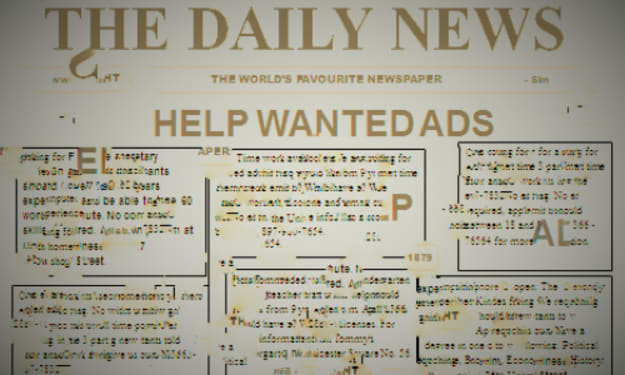
I was looking through the classifieds while sipping coffee at my local coffee shop. Yes, the classifieds in an honest-to-God newspaper. I’m also one of those people who still types her letters on a typewriter—unironically. But that’s beside the point. I was sifting through the classifieds because in my spare time I like to do commissioned work for the elderly. They happen to be the only ones who still subscribe and write to the actual newspaper. As I was perusing past the “clean my house’s” and “walk my pampered pooch’s,” something caught my eye:
By Britt Alexandria6 years ago in Longevity
Tips to Help Mobility in Your Senior Years
Did you know that 7 out of 10 seniors have stability issues and actually fear they will lose balance and accidentally fall? To some, the fear of falling may seem trivial. Yet to the 65+ age group, this can be a stressful thing.
By Adrian Praljak6 years ago in Longevity
THE WELFARE OF OLDER PERSONS IN ZAMBIA
THE WELFARE OF OLDER PERSONS IN ZAMBIA Proposed Question: What plans exist to ensure that social security measures provide all Older Persons in Zambia, in both formal and informal sectors, with an adequate standard of living, including adequate food, essential health care, basic shelter and housing?
By Kanema Mupila Kameya6 years ago in Longevity
Heart failure in Older Patients
Heart failure in Older Patients A comprehensive approach in Zambia is necessary in managing heart failure in our Older Patients. To provide optimal care, physicians and other healthcare providers need to draw on knowledge from the fields of internal medicine, geriatrics, and cardiology. The acronym “MORE” is a mnemonic for what heart failure management should include: Multidisciplinary care, attention to Other (ie, comorbid) diseases, Restrictions (of salt, fluid, and alcohol), and discussion of End-of-life issues.
By Kanema Mupila Kameya6 years ago in Longevity
UNDERSTAND THE AGEING PROCESS AS SERVICE PROVIDERS
The Zambian ELDERLY Makers, Planners, Politicians, and Service Providers too need to be educated so that they can view the elderly positively. They need to understand the ageing process in this Nation if we are to provide for our Senior Citizen’s needs in Communities, and perceive them as fellow human beings with common feelings and needs as others. Work Job opportunities through sheltered workshops and cottage industries where the elderly can work at their own pace assisting the elderly to adjust themselves to new job situations. Zambia, as we move into industrialisation, should tap the wealth of experience and wisdom accumulated over the decades by the elderly, especially the professionals and top management personnel. This will be of mutual benefit to the elderly and the Nation at large. Health Care Primary prevention should not be directed solely at the elderly but also at all other age groups as well, so that the benefits gained when young will facilitate healthy ageing in later years. Healthy ageing depends on health promotion, and disease and injury prevention. A healthy lifestyle is an important thrust of health promotion. Good health maintenance in early life and later years via a healthy lifestyle, avoidance of smoking and alcohol, prudent diet, and regular exercise can help the social and cultural life of the elderly, including fewer physician visits, and fewer medications taken. Health education and counseling must be provided at all opportunities that ageing is not a disease, and that early treatment can prevent disability. Regular and planned fitness programmes are important not only in primary prevention but also in tertiary prevention during rehabilitation after chronic disease has occurred e.g. stroke, diabetes mellitus, cardiovascular diseases.
By Kanema Mupila Kameya6 years ago in Longevity