
Flights Cancelled as Travel Warnings Issued After Strikes on Iran
Airspace closures, grounded flights, and rising regional tensions disrupt global travel across the Middle East and beyond.
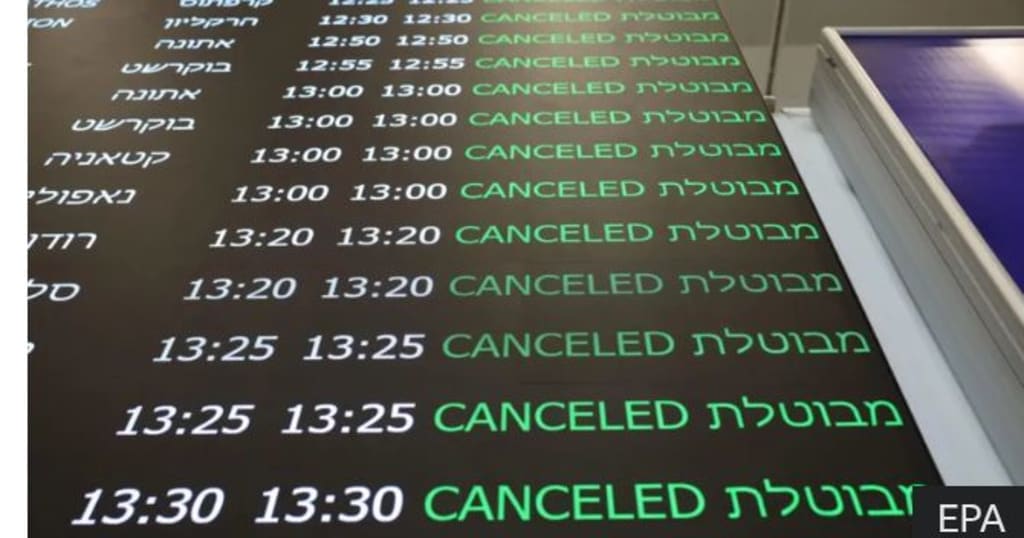
When military strikes hit Iran, the immediate focus was on geopolitical consequences. But within hours, another crisis unfolded in the skies above the Middle East. Flights were cancelled. Airspace was restricted. Governments issued urgent travel warnings. And thousands of passengers found themselves stranded far from home.
What began as a military escalation quickly turned into a full-scale disruption of one of the busiest aviation corridors in the world.
Here’s how it happened — and why the ripple effects are being felt globally.
Sudden Airspace Closures Trigger Chaos
As tensions escalated following the strikes, several countries moved swiftly to protect civilian aviation by restricting or closing their airspace.
Among those affected were:
Israel
Qatar
Bahrain
Kuwait
United Arab Emirates
Airspace restrictions are not decisions taken lightly. When governments issue such orders, it signals serious safety concerns — including potential missile threats, military aircraft activity, or interception risks.
Because the Middle East sits at the crossroads of Europe, Asia, and Africa, closing even part of its skies disrupts thousands of long-haul routes.
Major Airports Forced to Suspend Operations
The region’s most important aviation hubs were hit hardest.
At Dubai International Airport, one of the world’s busiest international transit airports, departures and arrivals were temporarily halted. Flights were diverted midair or cancelled outright.
Operations were also affected at Abu Dhabi International Airport, where airlines paused departures amid uncertainty over safe flight corridors.
Meanwhile, Hamad International Airport experienced schedule disruptions as airspace constraints tightened.
These airports serve as key connecting hubs for millions of passengers annually. When they shut down, the impact cascades worldwide.
Airlines Respond with Cancellations and Reroutes
Airlines across Europe, Asia, and the Middle East quickly announced cancellations.
Long-haul carriers rerouted aircraft to avoid affected airspace, adding hours to journeys and increasing fuel costs. Some flights were forced to return to their origin airports mid-route.
Passengers traveling between Europe and Southeast Asia were particularly affected, as many of those routes normally pass through Gulf airspace.
Airlines faced a difficult balancing act: protect passenger safety while minimizing operational disruption.
Safety, understandably, came first.
Governments Issue Travel Warnings
In parallel with airline cancellations, governments began issuing travel advisories.
Citizens were urged to:
Avoid non-essential travel to affected regions
Monitor airline updates closely
Register with embassies if currently in impacted countries
Some foreign ministries recommended that travelers already in certain areas remain indoors or delay movement until security conditions improved.
Travel insurance providers also issued statements reminding passengers to review policy coverage for geopolitical disruptions.
Why the Disruption Spread So Quickly
Unlike localized conflicts that impact a single country’s airports, this situation involved a region that acts as a global aviation bridge.
Three key factors amplified the disruption:
1️⃣ Geographic Centrality
The Gulf region is a natural midpoint between continents. Flights from London to Sydney, Frankfurt to Bangkok, or Paris to Mumbai often transit through Gulf airspace.
2️⃣ Hub-and-Spoke Networks
Airlines based in Dubai, Doha, and Abu Dhabi operate massive connection networks. A disruption at one hub can impact dozens of onward routes.
3️⃣ Security Protocols
International aviation authorities follow strict safety standards. When missile activity or military operations are reported, commercial aviation routes are quickly adjusted — often within minutes.
This layered safety response is designed to prevent catastrophe. But it also means rapid and widespread cancellations.
Passengers Left in Limbo
For travelers, the human side of the crisis became painfully visible:
Families stranded overnight in unfamiliar airports
Business travelers scrambling to reschedule meetings
Pilgrims and tourists unable to reach destinations
Long queues at customer service counters
Hotels near major airports filled quickly as passengers awaited rebooking options.
Airlines worked to provide accommodations and alternative routing, but the sudden scale of cancellations stretched resources thin.
Economic and Industry Impact
Beyond individual travelers, the aviation industry faces broader consequences:
Increased fuel costs due to longer rerouted flights
Higher insurance premiums for flights near conflict zones
Potential long-term route restructuring
Financial strain from refunds and compensation claims
Even temporary airspace closures can cost airlines millions of dollars in operational adjustments.
If tensions persist, some carriers may redesign regular flight paths permanently to reduce risk exposure.
What Happens Next?
Much depends on geopolitical developments.
If tensions de-escalate, airspace restrictions could gradually lift, allowing normal flight schedules to resume.
However, prolonged instability could lead to:
Continued rerouting
Extended travel advisories
Reduced passenger confidence
Higher ticket prices on alternative routes
Airlines and regulators are monitoring the situation in real time.
A Reminder of How Interconnected the World Is
This episode underscores a powerful reality: modern travel is deeply intertwined with global stability.
A military strike in one country can disrupt flights thousands of miles away. A closed air corridor can ripple through airline networks on multiple continents.
While aviation safety systems worked as intended — prioritizing passenger protection — the scale of cancellations reveals just how vulnerable global mobility can be to geopolitical shocks.
Final Thoughts
Flights cancelled. Airports paused. Governments issued warnings.
The strikes on Iran didn’t just reshape regional security — they grounded aircraft across the globe.
For now, travelers are advised to stay informed, remain flexible, and monitor official airline communications. In times of geopolitical uncertainty, adaptability becomes essential.
As the situation evolves, one thing is clear: in today’s interconnected world, conflict in one region can quickly take the rest of the world along for the ride — even at 35,000 feet.
About the Creator
A Gathering of Evil Bosses
“I’m the queen of chin jutting while I smooth my hair, attacking, insulting, and deflecting to protect my appointer.” “Oh, please, Blondi, my hair is curled, highlighted, and longer than yours. I feature television commercials telling immigrants that we will give them a free plane ride home, and if they voluntarily turn themselves in, they will be allowed to legally apply for re-entry. It runs everywhere, and I look good in it! You can’t compete because of your blond hair. Mine is nicer, and my lips are prettier than yours.”
By Andrea Corwin 13 days ago in The Swamp


Comments
There are no comments for this story
Be the first to respond and start the conversation.