Irshad Abbasi
Bio
Ali ibn Abi Talib (RA) said 📚
“Knowledge is better than wealth, because knowledge protects you, while you have to protect wealth.
Stories (329)
Filter by community
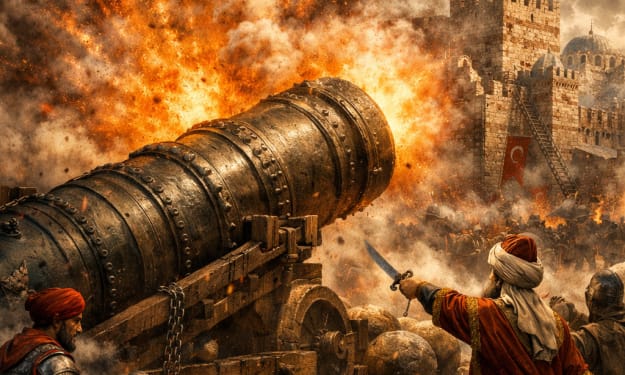
The Ottoman Cannon: How a Single Weapon Turned an Empire into a Superpower
In the annals of military history, few empires owe their early prominence to a single technological innovation as much as the Ottoman Empire. Among these innovations, the development and deployment of massive artillery—especially the formidable cannons—played a pivotal role in transforming the Ottomans into a dominant power spanning three continents. From the siege of Constantinople to the eventual decline of Ottoman influence, the story of their artillery reflects both the empire’s ingenuity and its vulnerabilities.
By Irshad Abbasi 3 days ago in History
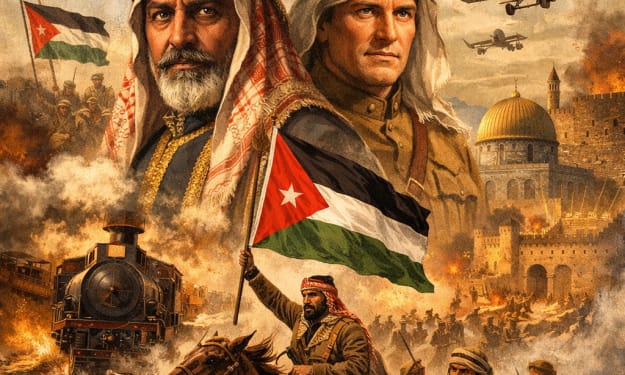
The Arab Revolt: How Arab Forces Allied with the British to Defeat the Ottoman Empire and Create Transjordan
During the early twentieth century, the Middle East was largely under the control of the Ottoman Empire, which had ruled Arab lands for nearly four centuries. However, the outbreak of World War I dramatically changed the political landscape of the region. One of the most significant developments of the war in the Middle East was the Arab Revolt, a rebellion led by Arab leaders with the support of the British. This revolt ultimately contributed to the defeat of Ottoman forces in the region and laid the groundwork for the creation of Transjordan.
By Irshad Abbasi 3 days ago in History
Stars or Sand: Which Is More Numerous in the Universe?
For centuries, humans have looked up at the night sky and wondered about the vastness of the universe. On a clear night, thousands of stars appear scattered across the sky like tiny shining dots. At the same time, anyone who has walked along a beach has seen what seems like an endless number of grains of sand. This raises a fascinating question: Are there more stars in the universe, or more grains of sand on Earth’s beaches?
By Irshad Abbasi 3 days ago in Beat
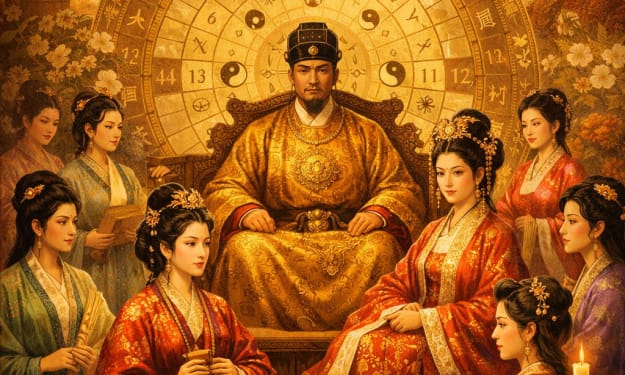
Mathematics Behind the Imperial Harem: How Ancient Chinese Scholars Organized the Emperor’s 121 Women
Throughout history, the courts of powerful rulers have been surrounded by mystery, luxury, and strict organization. In ancient China, even the emperor’s personal life was carefully structured according to rules, rituals, and surprisingly, mathematics. Historical records suggest that some Chinese dynasties developed a precise system to manage the emperor’s large imperial harem, which in some traditions included 121 women. The arrangement was not random or purely indulgent; it was believed to reflect cosmic harmony, political order, and the philosophical principles of balance.
By Irshad Abbasi 3 days ago in History
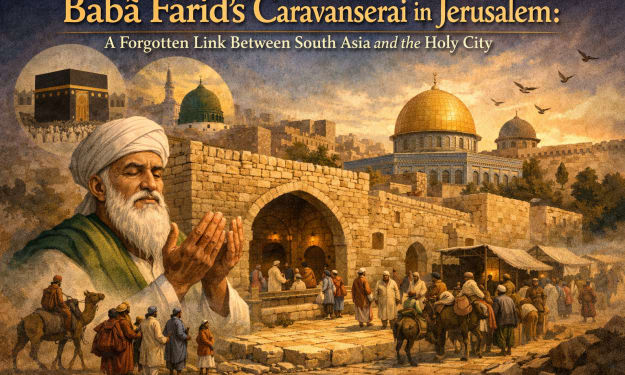
Babā Farīd’s Caravanserai in Jerusalem: A Forgotten Link Between South Asia and the Holy City
Throughout history, the sacred city of Jerusalem has attracted pilgrims, scholars, and travelers from every corner of the Muslim world. Among the many fascinating stories tied to this ancient city is the existence of Babā Farīd’s Sarai, a historical lodging place associated with the famous South Asian Sufi saint Fariduddin Ganjshakar, commonly known as Babā Farīd. This remarkable connection highlights how spiritual networks once connected distant regions like the Indian subcontinent with the heart of the Middle East.
By Irshad Abbasi 3 days ago in Filthy
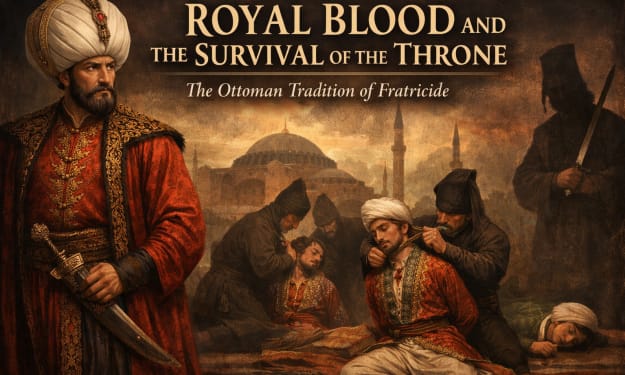
Royal Blood and the Survival of the Throne: The Ottoman Tradition of Fratricide
Among the many powerful dynasties in world history, the Ottoman Empire stands out for its longevity, political sophistication, and vast territorial reach. At its peak, the empire stretched across parts of Europe, Asia, and Africa, ruling over diverse peoples and cultures for more than six centuries. Yet behind the grandeur of its palaces and the power of its sultans lay a grim and controversial tradition: the execution of royal brothers to secure the throne.
By Irshad Abbasi 4 days ago in History
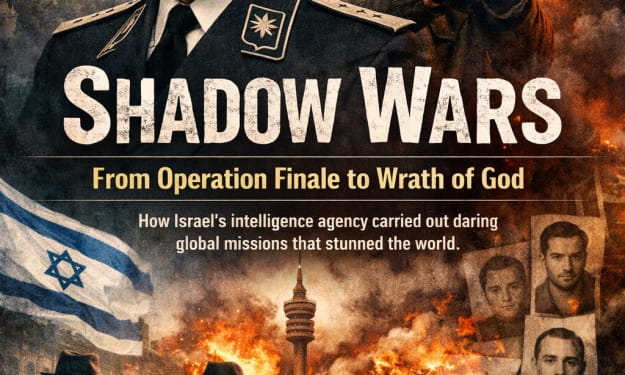
Shadow Wars: From Operation Finale to Wrath of God
Throughout modern history, intelligence agencies have operated in secrecy, carrying out missions that often remain hidden from public view. Among these organizations, the Israeli intelligence agency Mossad has gained a reputation for some of the most daring and controversial operations ever conducted. From tracking down Nazi war criminals to targeting militants responsible for attacks on Israelis, Mossad’s operations have repeatedly captured global attention. Two of the most famous missions associated with the agency are Operation Finale and Operation Wrath of God, both of which left a lasting mark on international intelligence history.
By Irshad Abbasi 4 days ago in History
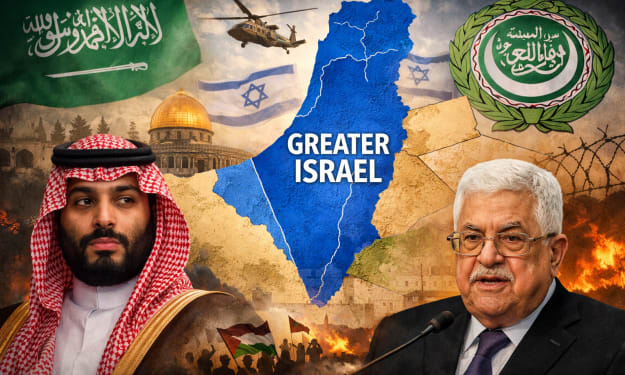
The “Greater Israel” Map Controversy: Saudi Arabia, Palestine and Arab League Condemn the Idea
A recent controversy over a map circulating online and in political discussions has reignited tensions across the Middle East. The map, often referred to as the concept of “Greater Israel,” depicts a much larger Israeli state stretching beyond its current internationally recognized borders and into parts of neighboring countries. The idea has drawn sharp condemnation from Arab states, including Saudi Arabia, Palestine, and the Arab League, who have dismissed it as dangerous political rhetoric and an unrealistic extremist vision.
By Irshad Abbasi 4 days ago in History
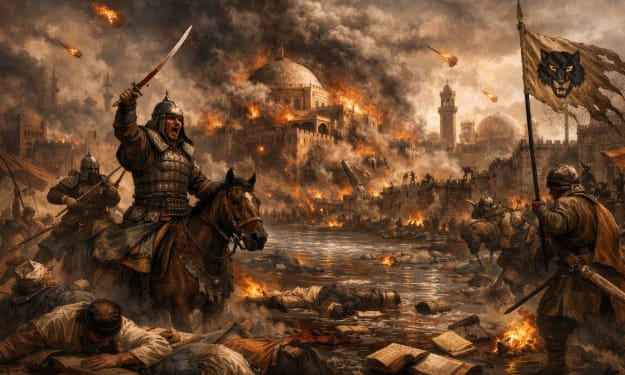
The Mongol Storm: When Baghdad Fell and a Civilization Trembled
In the winter of 1258, one of the greatest cities on Earth met a catastrophe from which it would never fully recover. Baghdad, once the intellectual and cultural capital of the Islamic world, fell to the armies of Hulagu Khan during the devastating Siege of Baghdad (1258). The invasion marked the end of the powerful Abbasid Caliphate and changed the course of Middle Eastern history forever.
By Irshad Abbasi 4 days ago in History
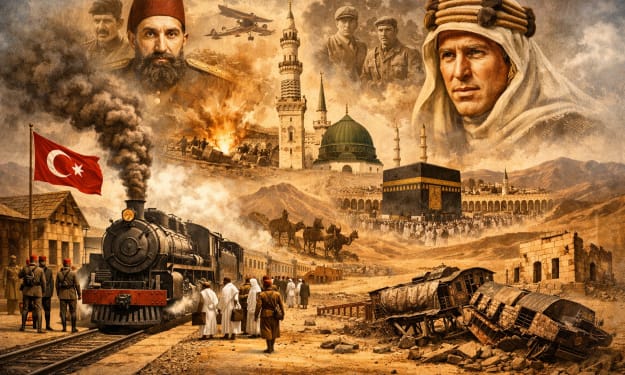
The Hijaz Railway: Why the Ottoman Empire’s Grand Vision to Unite Muslims Was Left Abandoned
In the early twentieth century, the Ottoman Empire launched one of the most ambitious infrastructure projects in the Muslim world: the Hijaz Railway. Conceived as both a symbol of Islamic unity and a practical solution to improve travel for pilgrims heading to Mecca, the railway represented the Ottoman Sultan’s vision of connecting distant Muslim lands. Yet, despite its promise and initial success, the project was ultimately left abandoned due to war, rebellion, and the collapse of the empire itself.
By Irshad Abbasi 4 days ago in History
The Last Ottoman Caliph: Abdulmejid II and the Burial That Happened a Decade After His Death
The fall of the Ottoman Empire in the early twentieth century marked the end of one of the longest-lasting and most influential Muslim empires in history. With it came the abolition of the Caliphate—an institution that had symbolized the political and spiritual leadership of the Muslim world for centuries. The last person to hold that title was Abdulmejid II, the final Ottoman Caliph, whose life ended in exile. Yet what makes his story even more remarkable is that his burial took place nearly ten years after his death, following efforts supported by the Governor-General of Pakistan.
By Irshad Abbasi 4 days ago in FYI
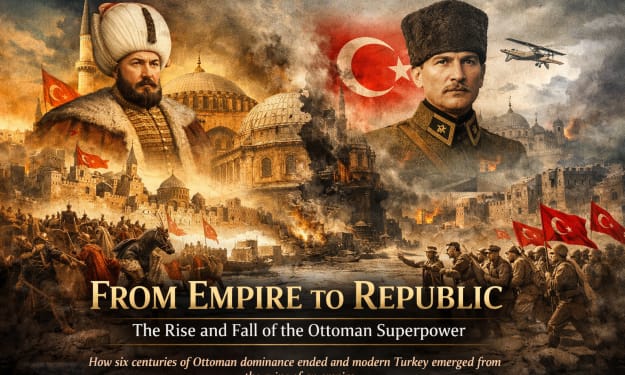
From Empire to Republic: The Rise and Fall of the Ottoman Superpower
For more than six centuries, the Ottoman Empire stood as one of the most powerful and influential states in world history. Stretching across three continents—Europe, Asia, and Africa—it controlled strategic trade routes, diverse populations, and some of the most important cities of the medieval and early modern world. Yet by the early twentieth century, this once-mighty empire collapsed, giving birth to the modern Republic of Turkey. The story of its rise and fall is one of military brilliance, political struggle, and dramatic reform.
By Irshad Abbasi 4 days ago in History