Latest Stories
Most recently published stories in History.
What Seven Soldier Skeletons Reveal About Their Lives.
History is often written by the victors, recorded in ink on parchment that celebrates grand strategies and royal decrees. However, the most honest account of war is frequently found beneath the earth, written in the very bones of those who fought it. When archaeologists uncover a mass grave—such as a recent discovery containing the remains of seven soldiers—they aren't just looking at the end of a life; they are opening a biological diary that spans decades.
By Irshad Abbasi about 13 hours ago in History
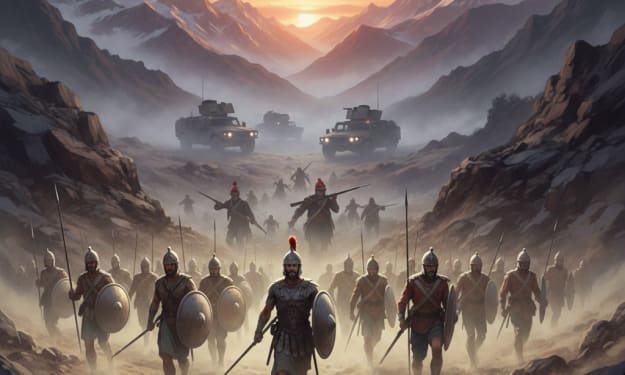
From Alexander to America: Afghanistan—Graveyard of Empires or Highway of Conquest?
For centuries, the rugged peaks of the Hindu Kush have stood as silent witnesses to the greatest ambitions of mankind. From the bronze shields of Alexander the Great’s phalanxes to the high-tech drones of the United States military, Afghanistan has been the stage for a recurring historical drama. It is often labeled the "Graveyard of Empires," a place where superpowers go to bleed. Yet, a deeper look at history suggests a more complex reality: for many, it was also a "Highway of Conquest," a vital corridor that linked the civilizations of the East and West.
By Irshad Abbasi about 14 hours ago in History
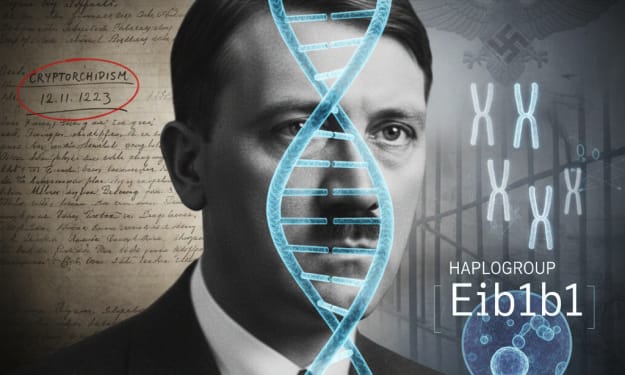
The Hitler Mystery: DNA Secrets and the Century-Old Rumor of the Dictator’s Anatomy
For over eighty years, one of the most persistent pieces of historical trivia has been a schoolyard rhyme and a medical mystery: the claim that Adolf Hitler suffered from a specific physical deformity. While once dismissed as mere British wartime propaganda, modern forensic science, rediscovered medical records, and DNA analysis have reignited the conversation. Was the "one testicle" myth a clever psychological warfare tactic, or was it a medical reality that shaped the psyche of the 20th century’s most notorious tyrant?
By Irshad Abbasi about 14 hours ago in History
The Night the Radio Terrified America
On the evening of October 30, 1938, the United States was a country on edge. The Great Depression was still casting a long shadow, and the drumbeats of war were growing louder in Europe. Families gathered around their wooden radio consoles, seeking a brief escape through music and drama. What they got instead was a chilling announcement that changed the history of mass media forever: The Martians had landed.
By Irshad Abbasi about 15 hours ago in History
The Secret of the 12,000-Year-Old Face: Turkey’s Newest National Treasure
For decades, the dusty plains of southeastern Turkey have been whispering secrets of a forgotten era. But a recent discovery has turned those whispers into a roar. Archaeologists have unearthed a 12,000-year-old stone carving of a human face—a relic so profound that experts are calling it more valuable than the country’s literal gold reserves.
By Irshad Abbasi about 15 hours ago in History
The Nazi Who Fooled Death
History often remembers the Nuremberg Trials as the ultimate reckoning for the Third Reich—a moment where the high command of Nazi Germany faced the gallows for their part in the 20th century's greatest horrors. Men like Joachim von Ribbentrop and Wilhelm Keitel met their end at the end of a rope. Yet, one man from Hitler’s innermost circle, his "best friend" and Minister of Armaments, Albert Speer, managed to walk away from the courtroom with his life.
By Irshad Abbasi about 15 hours ago in History
Modernizing India through Rails, Canals, and Conquest
History often remembers the British Raj through the lens of conflict and colonization, but few figures embody the complex duality of "modernizer" and "conqueror" as starkly as James Broun-Ramsay, the 1st Marquess of Dalhousie. Appointed as the Governor-General of India in 1848 at the remarkably young age of 35, Dalhousie commanded a staggering annual salary of £25,000—a fortune at the time. His eight-year tenure would fundamentally alter the physical and political geography of the Indian subcontinent.
By Irshad Abbasi about 15 hours ago in History
Eighty-year-olds produce twice as many new neurones than their counterparts.
Even in their 80s, some people are still able to think clearly and quickly as they would have decades ago. According to a recent study, their brains may be producing more new neurones than the majority of their classmates.
By Francis Damiabout 17 hours ago in History
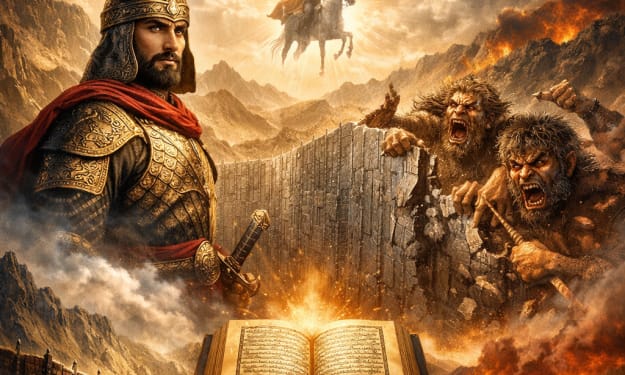
Zulqarnain and Yajuj & Majuj: A Timeless Proof of the Qur’an’s Divine Revelation
The story of Dhul-Qarnayn and Gog and Magog stands as one of the most fascinating and thought-provoking narratives in the Qur’an. Found in Surah Al-Kahf (18:83–98), this account combines history, prophecy, morality, and eschatology in a way that has inspired reflection for centuries. For many believers, it serves as a powerful sign of the Qur’an’s divine origin—revealing knowledge, wisdom, and foresight that transcend the limits of seventh-century Arabia.
By Irshad Abbasi about 21 hours ago in History
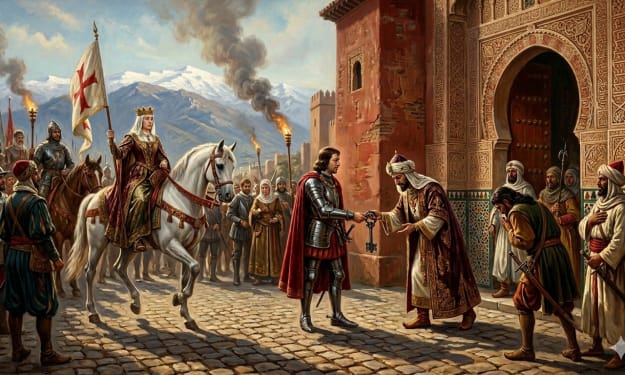
The Last Sigh of Al-Andalus: When the Keys to Paradise Were Lost
The date was January 2, 1492. As the morning mist cleared over the Sierra Nevada mountains, a somber procession wound its way down from the red walls of the Alhambra. At its head was Muhammad XII, known to the West as Boabdil, the last Sultan of the Nasrid dynasty. In his hands, he carried the keys to the city—keys that represented not just a fortress, but the final heartbeat of a civilization that had flourished for 781 years.
By Irshad Abbasi a day ago in History