Latest Stories
Most recently published stories in History.
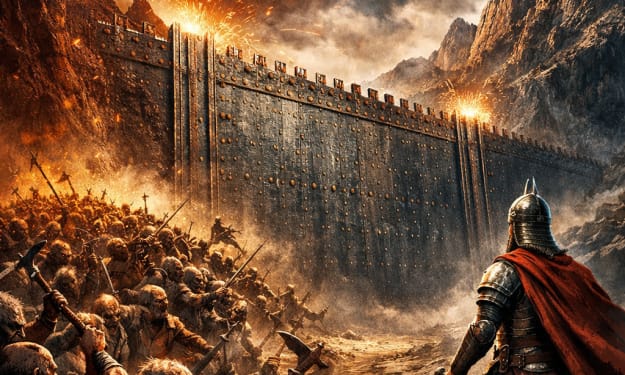
Yajuj and Majuj (Gog and Magog) and the Concept of the “Barrier” That Holds Them Back
The story of Yajuj and Majuj—known in English as Gog and Magog—occupies a powerful place in Islamic eschatology. These mysterious tribes are mentioned in the Qur’an and Hadith as forces of chaos who will emerge near the end of times. Central to their narrative is the construction of a massive barrier built by the righteous ruler Dhul-Qarnayn, a wall designed to restrain their corruption until a divinely appointed time. This article explores who Yajuj and Majuj are, the meaning of the barrier, and how the concept has been understood historically and symbolically.
By Irshad Abbasi a day ago in History
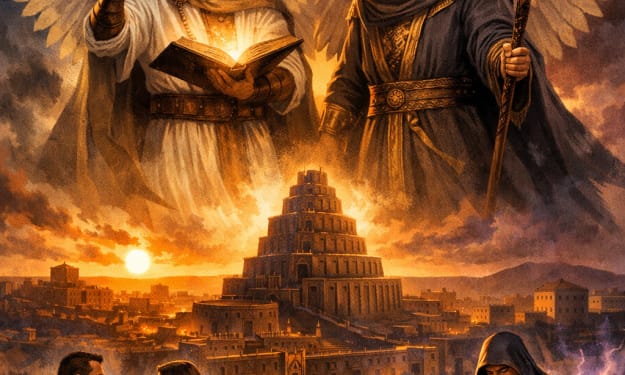
Harut and Marut The Story of the Angels Sent Down to Babylon
The story of Harut and Marut is one of the most intriguing and debated narratives in Islamic tradition. Mentioned briefly in the Qur’an, elaborated upon in later Islamic exegesis, and paralleled by certain themes in Jewish and biblical traditions, the account of these angels sent to Babylon explores themes of temptation, free will, magic, and divine testing. While the Qur’an provides a concise reference, Jewish apocryphal literature and later interpretations offer additional context that has shaped understanding across centuries.
By Irshad Abbasi a day ago in History
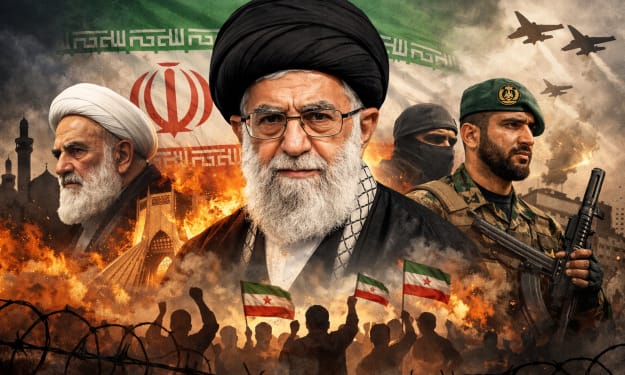
The End of Ayatollah Khamenei’s Long Iron Grip
For more than three decades, **Ali Khamenei** stood at the center of Iran’s political and ideological system, shaping the country’s domestic trajectory and foreign policy with a firm and often uncompromising hand. As the second Supreme Leader of the **Iran**, Khamenei inherited a revolutionary state and transformed it into a tightly controlled political order anchored by hardline clerics and the formidable **Islamic Revolutionary Guard Corps** (IRGC). His authority was neither accidental nor purely spiritual; it was built on institutional alliances, security structures, and a careful balancing of rival factions.
By Irshad Abbasi a day ago in History
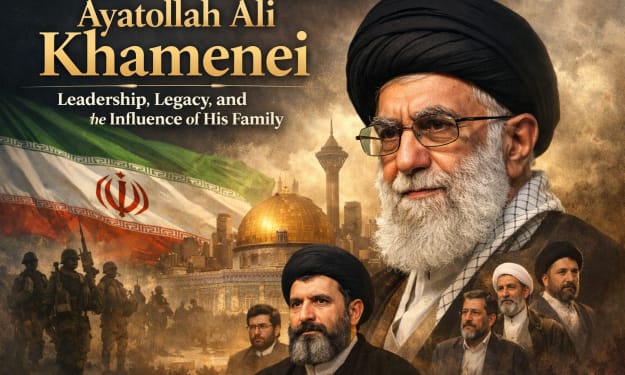
Ali Khamenei Leadership, Legacy, and the Influence of His Family
Ali Khamenei is one of the most influential political and religious figures in the contemporary Middle East. As the Supreme Leader of Iran since 1989, he has played a central role in shaping the country’s domestic governance, foreign policy, and ideological direction for more than three decades. His leadership position gives him authority over major state institutions, including the armed forces, the judiciary, and state media, making him the highest-ranking official in the Islamic Republic.
By Irshad Abbasi a day ago in History
She Was Admired by Many, Accepted by None
Literature often serves as a mirror reflecting the truths that society prefers to ignore. Among the masterpieces of Urdu fiction, Umrao Jaan Ada stands as a powerful exploration of identity, dignity, and social hypocrisy. Written by Mirza Hadi Ruswa in the late nineteenth century, the novel remains one of the earliest and most influential psychological narratives in South Asian literature.
By hamad khan2 days ago in History
The Next-Generation Conversational and Walking Sex Doll in Robotics
In the rapidly evolving field of robotics and artificial intelligence, innovations are no longer limited to industrial applications or personal assistants. One of the most talked-about developments in recent years is the emergence of advanced humanoid sex robots that combine lifelike aesthetics with interactive intelligence. Among these, a creation known as Harmony — or “Hum Aahang” in Urdu, meaning “harmony” — has gained significant attention for its unique capabilities. Harmony represents a new frontier where technology, companionship, and sexual wellness intersect.
By Irshad Abbasi 2 days ago in History
The First Human-Like Beings Lived in Morocco: Rewriting the Story of Human Origins
For centuries, scientists believed that the story of modern humans began in East Africa. Countries like Ethiopia and Kenya were long considered the cradle of humanity. However, a groundbreaking discovery in Morocco has dramatically reshaped this understanding. Fossils found at the archaeological site of Jebel Irhoud suggest that the first human-like beings—early forms of modern humans—may have lived in North Africa much earlier than previously believed.
By Irshad Abbasi 2 days ago in History
What the Women of Hiroshima and Nagasaki Witnessed
The double tragedy of Hiroshima and Nagasaki in August 1945 wasn't just a culmination of war; it was an unprecedented erasure of reality. For the thousands of women living within those two cities, the event was not an abstract historical moment but an intimate, terrifying collapse of their world. These women, known as Hibakusha (explosion-affected people), carried memories that blurred the line between the living and the dead. Their testimonies offer a searing perspective on what they saw—and what they could never unsee.
By Irshad Abbasi 2 days ago in History