Fiaz Ahmed
Bio
I am Fiaz Ahmed. I am a passionate writer. I love covering trending topics and breaking news. With a sharp eye for what’s happening around the world, and crafts timely and engaging stories that keep readers informed and updated.
Stories (1323)
Filter by community
Smugglers in Small Boats Turn to Belgium’s Beaches. AI-Generated.
Belgian Coast Sees Unusual Rise in Migrant Crossings as Smuggling Networks Adapt In a shift that has alarmed authorities in Western Europe, organised smuggling networks are increasingly using Belgium’s North Sea beaches as launch points for small boat crossings targeting the United Kingdom. Traditionally, most small-boat crossings into the Channel have originated from French beaches near Calais and Dunkirk, but recent intelligence from Belgian law enforcement indicates a rise in attempts from Belgian coastal towns such as De Panne, Koksijde and Nieuwpoort. Belgian police and coastal units have recorded at least five confirmed small-boat launch attempts this year – a notable change from the previous year, when no crossings were registered in the Westkust Police zone. These developments point to adaptability among smuggling networks seeking to evade intensified patrols and intervention efforts by French and British authorities. New Routes, New Tactics Officials say the use of Belgian beaches for attempted crossings marks a tactical shift by smuggling gangs. Historically, Belgium’s coastal launch points have been unattractive to organisers due to the longer distance to the UK and stronger tidal currents compared with French routes. But with increased law enforcement pressure in France, some networks have pivoted to secondary routes, effectively dispersing their operations across a wider stretch of coastline. On one recent night near the marina at Nieuwpoort, law enforcement found 15 migrants in possession of a rubber inflatable, a small outboard motor and jerry cans of fuel. Only four of the group had life jackets, underlining the perilous conditions inherent to such attempts. Authorities believe the group intended to reach the UK, reflecting a continued strong draw toward that destination despite rising risk. Westkust Police spokespersons confirmed that atypical launch locations such as Koksijde and Nieuwpoort, which are far from the French border, are now showing smuggling activity previously unseen in official records. “In the past we saw attempts primarily at De Panne,” said Jarne Pollie, a journalist with state broadcaster VRT. “Now we are seeing activity further afield.” Smugglers Respond to Pressure Smuggling networks are known to adapt rapidly in response to enforcement actions. Cross-Channel migrants frequently use so-called “taxi boats” — craft that shuttle groups out to larger dinghies in open water — complicating efforts by police and navies to intercept them close to shore. These tactics, which originated along French coasts, may be filtering across the border into Belgium as organised crime cells adjust their operations to exploit any relative gaps in supervision. According to some analysts, stronger patrols and barriers on French beaches — combined with joint UK-French deterrence strategies — have likely encouraged smugglers to test new launching points. The UK government has allocated £1.3 million to assist Belgian police in bolstering coastal surveillance and preventing smuggling attempts from Belgian territory. Police in Belgium have also installed physical obstacles to make it harder for vehicles carrying small boats to access dunes and beachfront areas where launches might occur. These include reinforced concrete blocks and increased use of night-vision and thermal imaging equipment during patrols. Broader Criminal Networks and Enforcement The evolving picture along Belgium’s coast is part of a larger pattern of transnational smuggling operations that extend well beyond simple beach departures. Several high-profile prosecutions across Europe have underscored the scale of organised crime involvement: in late 2025 a court in Bruges sentenced a Turkish national and several associates to lengthy prison terms for supplying thousands of small boats and outboard motors to smuggling networks servicing Channel crossings. The equipment often moved through Belgium en route to launch sites, highlighting the country’s role as a logistical node in broader smuggling schemes. Border Security Report Further back in 2023, Belgian courts handed significant sentences to 20 suspects tied to a cross-border smuggling ring responsible for moving hundreds of migrants. Such operations have historically exploited Europe’s open borders and interconnected transportation networks to shift migrants from source regions through multiple countries before reaching launch points. Public Safety and Humanitarian Concerns Officials warn that the longer crossing distances from Belgian beaches — combined with overcrowded and ill-equipped craft — pose grave risks to migrants. The English Channel is among the world’s busiest shipping lanes, and small boats lacking effective navigation or safety gear face significant danger from commercial traffic and unpredictable sea conditions. Retired maritime professionals echo these concerns, pointing out that many migrants are forced to wade into the sea to reach waiting craft, increasing the chances of hypothermia, exhaustion and tragedy before the journey even begins. aol.com Outlook Belgian authorities are stepping up cooperation with French, Dutch and UK counterparts to monitor smuggling activity and intercept attempted crossings from the North Sea coast. Law enforcement officials are emphasising intelligence sharing, improved surveillance technologies and continued disruption of organised networks that orchestrate and profit from these hazardous voyages.
By Fiaz Ahmed a day ago in The Swamp
Delivery of the Vlissingen, the second mine countermeasure vessel of the Belgian-Dutch rMCM programme. AI-Generated.
On 27 February 2026, the Vlissingen, the second mine countermeasure vessel (MCMV) developed under the collaborative Belgian-Dutch Replacement Mine Countermeasure (rMCM) programme, was officially delivered in Den Helder, marking a significant milestone in European maritime defence cooperation. The delivery ceremony brought together senior military leadership and industry representatives from Belgium, the Netherlands and France. Attendees included Vice Admiral Jan Willem Hartman, Commander of the Materiel and IT Command of the Royal Netherlands Navy, Navy Captain Ludo Portier from Belgian naval procurement, Navy Captain Kurt De Winter, Director of Operations for the Belgian Navy, Vincent Martinot-Lagarde, Executive Vice President of Surface Ships at Naval Group, and Steven Luys, CEO of Exail Robotics Belgium. A Strategic and Symbolic Delivery The Vlissingen represents a groundbreaking achievement: it is not only the second vessel in this next-generation class, but also the first built under Belgian contract for delivery to the Royal Netherlands Navy — a historical first under the BeNeSam naval cooperation framework. Belgian authorities acted as lead procuring nation, coordinating the project on behalf of its Dutch partner and ensuring delivery of a fully outfitted MCMV. This transfer underscores an exceptional depth of trust and integration between the partner nations, and, importantly, signals Belgium’s expanding role in European naval capability development. According to senior officials present at the ceremony, the delivery is a milestone that goes beyond a simple addition to the Dutch fleet. It showcases the maturation of a binational defence programme that leverages joint expertise and industrial cooperation to produce world-class naval platforms. The vessel’s handover was described as symbolic of deepened strategic ties and operational interoperability among Belgium, the Netherlands and, indirectly, France. Innovative Mine Countermeasure Capability The rMCM programme aims to equip both navies with a fleet of 12 state-of-the-art mine countermeasure vessels, supported by advanced unmanned systems. The underlying concept shifts mine warfare operations from traditional close-in clearance to a stand-off approach. The Vlissingen and its sister ships can deploy autonomous surface, underwater and aerial drones to detect, classify, identify and neutralise naval mines, keeping the ship and crew at safer distances from explosive hazards. This fully robotic, multi-domain approach represents a major evolution in mine countermeasure doctrine. By integrating unmanned systems and leveraging remote sensors, the vessels dramatically increase mine clearance speed and operational reach compared to legacy approaches. The result is a versatile and resilient platform capable of addressing modern maritime threats with minimal risk to personnel. Technically, the Vlissingen measures 82.6 m in length, with an overall beam of 17 m, displacing approximately 2,800 tonnes. She boasts a maximum speed of 15.3 knots and an operational range exceeding 3,500 nautical miles. Accommodation for up to 63 personnel ensures flexibility for both crewed and mission specialists. The drone suite includes surface vessels, autonomous underwater vehicles equipped with advanced sonar systems, aerial drones, and multiple mine neutralisation systems — all integrated into a cohesive mission toolkit. Industrial Partnership and European Defence Cooperation The vessel was developed by Belgium Naval & Robotics, a consortium comprising Naval Group and Exail. Under the 2019 contract, Belgium Naval & Robotics leads the rMCM programme, with Naval Group responsible for ship design and overall mission system integration, and Exail delivering the unmanned systems and sensor packages. Construction and assembly are carried out by Kership, a joint venture between Naval Group and shipbuilder Piriou, at shipyards in France. The programme itself is formalised under a trilateral agreement signed in September 2023 between France, Belgium and the Netherlands. This framework institutionalised collaborative development and standardisation of mine countermeasure assets and promotes interoperability within NATO maritime forces. Operational Outlook and Future Deliveries The Vlissingen’s delivery paves the way for enhanced mine warfare readiness in European waters, addressing both regional security concerns and broader NATO operational commitments. With the first vessel, Oostende, already delivered to the Belgian Navy in late 2025, the full rMCM fleet will be built out in phased deliveries through to 2030, reinforcing both nations’ capacity to counter naval mine threats with advanced autonomous technologies. As navies continue to transition from legacy minehunters to autonomous-centric platforms, the rMCM programme’s success sets a potential template for future multinational defence acquisitions. It demonstrates how shared vision, industrial cooperation and strategic alignment can deliver sophisticated, interoperable maritime capabilities at scale.
By Fiaz Ahmed a day ago in The Swamp
A New Maker of Passenger Jets Arrives: It’s Not Chinese but Indian. AI-Generated.
In a significant development for global aviation, India is emerging as a new centre for commercial aircraft production — not through an indigenous design from scratch, but by becoming a host for passenger jet manufacturing that could shift long-standing industry dynamics. This arrival marks a milestone for a country that has long imported almost all its airliners from foreign manufacturers, and could signal a future where Indian-based production plays a larger role in the global market. Halting a Long Wait for India-Built Airliners India has tremendous demand for commercial aircraft, driven by rapid growth in domestic travel and international flights. Until recently, airlines operating in the country — including Air India and low-cost carriers — have relied almost entirely on jets made by Airbus, Boeing, and others. Indian carriers have placed massive orders for new aircraft to expand fleets, but none of these planes were produced on Indian soil. India’s aerospace industry has primarily focused on military platforms and component work, not commercial manufacturing. That is beginning to change through a mix of strategic partnerships and industrial policy focused on self-reliance under initiatives such as “Make in India.” India to Produce SJ-100 Jets A key step toward a domestic passenger jet industry was taken in October 2025, when Hindustan Aeronautics Limited (HAL) signed a memorandum of understanding with United Aircraft Corporation to produce the SJ-100 regional passenger aircraft in India. The SJ-100 (formerly the Sukhoi Superjet 100) is a twin-engine narrow-body aircraft used by airlines in several countries. Under the collaboration, HAL will manufacture the aircraft in India and eventually assemble and sell it domestically, marking the first time a complete passenger jet will be built on Indian soil since the production of the Avro HS-748 ended in 1988. The deal lays the groundwork for a new aerospace manufacturing ecosystem, potentially creating jobs, building supply chains, and reducing India’s dependence on foreign aircraft imports. HAL and its partners also aim to secure certification and regulatory approval within India, paving the way for the jets to serve domestic carriers — particularly under regional connectivity schemes improving air links to smaller cities. Building an Aviation Ecosystem with Global Partners India is not stopping with the SJ-100. A separate strategic partnership between Adani Defence & Aerospace, a subsidiary of the Adani Group, and Embraer aims to establish a final assembly line for the Embraer E-175 regional jet in India. The MoU signed in early 2026 outlines plans to build out a regional aircraft manufacturing ecosystem with an Indian supply chain, pilot training, maintenance facilities, and related services. Although the E-175 itself is a Brazilian design, assembling these jets in India is a major step toward local aviation manufacturing and could set the stage for broader roles in global supply chains. Combined with the SJ-100 effort, India could position itself as a significant player in the short- and medium-haul regional aircraft market — a segment especially important for expanding domestic air travel. Why It Matters Globally For decades, the commercial aircraft market has been dominated by a small number of large producers, principally Boeing and Airbus. Other national manufacturers such as Commercial Aircraft Corporation of China (COMAC) have tried to break into the market, but India’s approach is notable because it combines international cooperation with domestic industrial policy. By hosting manufacturing and final assembly of well-established aircraft types, India gains immediate industrial capability and workforce experience, even if it has not yet developed a fully homegrown jet design. This model reflects a pragmatic approach: leap-frogging into production of certified aircraft rather than starting from zero in design and development. Challenges Ahead Despite the optimism, hurdles remain. Completing certification, establishing quality assurance systems, and building a robust supply chain will take years of sustained commitment. Winning airline orders for jets assembled in India — especially from major international carriers — will depend on meeting global safety standards and competitive pricing. India will also have to balance collaboration with countries like Russia and Brazil while maintaining strong relationships with Western manufacturers and regulators, given their continued dominance in global aviation. A Turning Point for Indian Aviation Still, the arrival of passenger jet manufacturing in India represents a meaningful shift. It matches the country’s broader ambitions of technological self-reliance and economic modernization. What was once a dream — seeing commercial jets assembled or produced in India — is now underway, potentially setting the stage for India not just to fly jets, but to make them.
By Fiaz Ahmed a day ago in The Swamp
What We Know So Far: Supreme Leader Khamenei Killed, as Iran Launches Retaliatory Strikes. AI-Generated.
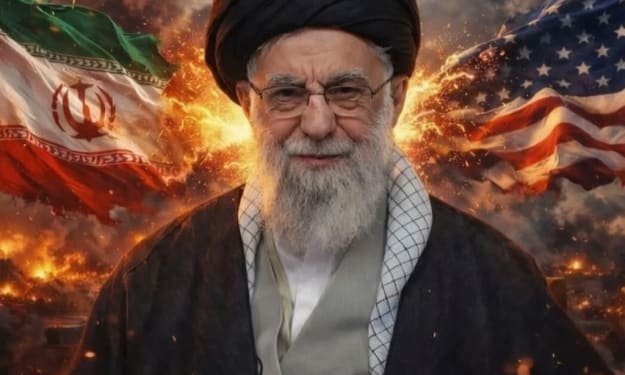
Iran’s long-time supreme leader, Ayatollah Ali Khamenei, has been confirmed dead following a dramatic escalation of hostilities in the Middle East, setting off a cycle of retaliation and raising fears of a broader regional conflict. The developments — unfolding over the past 48 hours — mark one of the most consequential turning points in modern Iranian history. Khamenei’s Death Confirmed Iranian state media confirmed early on 1 March 2026 that Supreme Leader Ayatollah Ali Khamenei — who had led the Islamic Republic since 1989 — was killed in joint U.S. and Israeli airstrikes on Tehran and other key locations in Iran on 28 February. The official announcement described his death as the “martyrdom” of a figure who had steered Iran for nearly four decades, and state TV declared 40 days of national mourning, accompanied by a week of public holidays. President Donald Trump had earlier posted on social media that Khamenei, aged 86, was killed during a major military offensive designed to degrade Iranian leadership and strategic capabilities. Tehran’s confirmation ended initial uncertainty about his status, although both U.S. and Israeli military and political leaders had suggested the supreme leader was dead based on battlefield reports. The Military Offensive That Killed Him The strikes, dubbed by some sources as part of a coordinated campaign between Washington and Jerusalem, reportedly targeted senior leadership compounds, nuclear sites, and ballistic missile infrastructure. Satellite imagery released by analysts showed heavy damage to Khamenei’s compound in Tehran. Independent details about the precise mechanics of the strike remain limited due to ongoing conflict conditions. The joint operation marks a dramatic escalation from earlier phases of tension, which had been largely conducted through proxy confrontations and limited tactical strikes by both sides. Khamenei’s death — a strategic objective reportedly communicated by U.S. and Israeli officials — represents a direct assault on Iran’s political core. Retaliation and Regional Response In response to the news of the attacks and the death of their leader, Iranian officials vowed harsh retaliation. The Islamic Revolutionary Guard Corps declared that a “most ferocious offensive operation” would soon begin against U.S. and Israeli targets. Tehran has already launched missile and drone strikes against U.S. bases in the region and sites inside Israel — a significant escalation that carries high potential for wider conflict. Iran’s government statement described the strikes on its territory — which reportedly killed other high-ranking officials and civilians — as breaches of international law and a direct assault on national sovereignty. Top Iranian leaders warned that “enemies must pay a heavy price” and reaffirmed that the country will pursue retaliation “with all its strength and determination. Succession and Power Vacuum Khamenei’s death immediately triggered constitutional procedures to manage the leadership transition. Iran’s Assembly of Experts, a clerical body, is tasked with selecting the next supreme leader. In the interim, a temporary leadership council is expected to be formed, reportedly including senior figures such as Iran’s president, the judiciary chief, and a jurist from the Guardian Council. This transitional authority will lead the country until a new supreme leader is formally appointed. However, the succession process is unfolding amid wartime conditions and internal factional tensions, raising questions about whether hardliners linked to the IRGC or more traditional clerical figures will prevail. The outcome could shape Iran’s domestic stability and foreign policy for years to come. Domestic and Regional Unrest Khamenei’s death has provoked significant reactions across the region as well as domestically. Thousands of Iranians have participated in memorial gatherings, while strong anti-U.S. and anti-Israeli sentiment is being expressed in public commemorations. Pro-Iran demonstrations have also erupted in neighbouring countries including Pakistan and Iraq, prompting heightened security measures. The potential for further regional instability remains high, with various governments calling for restraint and urging an urgent move back to diplomacy to avoid wider conflict and catastrophic humanitarian consequences. Global responses have been mixed. Some Western leaders reiterated support for self-defence and emphasised the need to prevent Iran from pursuing nuclear weapons, while others warned that targeting a sitting head of state could violate international norms and risk a broader war. The United Nations Security Council convened emergency discussions aimed at de-escalation and humanitarian relief. The New Indian Express Market responses have also reflected the shock of the developments, with energy prices and defense stocks fluctuating amid uncertainty about the conflict’s trajectory and the stability of critical energy corridors such as the Strait of Hormuz.
By Fiaz Ahmed 2 days ago in The Swamp
Ayatollah Khamenei’s Iron Grip on Power in Iran Comes to an End. AI-Generated.
Ayatollah Ali Khamenei, who ruled Iran with an iron grip for more than three decades, is dead at age 86 — a historic turning point that brings an abrupt end to his authoritarian control over the Islamic Republic’s political, military, and religious machinery. Iranian state media confirmed his death early Sunday following coordinated airstrikes by the United States and Israel that targeted key leadership sites in **Tehran. The announcement, broadcast on state television, declared a period of 40 days of national mourning and marked the beginning of a volatile succession process. For decades, Khamenei embodied the Islamic Republic’s theocratic establishment, maintaining ultimate authority over Tehran’s political, military, and security institutions. He succeeded Ruhollah Khomeini after the latter’s death in 1989 and fundamentally shaped Iran’s trajectory as a deeply authoritarian state. Under his rule, the clerical elite and the Islamic Revolutionary Guard Corps (IRGC) became dominant forces within Iran’s power structure, controlling everything from national defence to major economic assets. A Regime Built on Control and Repression Khamenei’s leadership was defined by rigid ideological control and the suppression of dissent. Though Iran maintained formal republican institutions — including a president and parliament — it was the supreme leader who wielded final authority over internal policy, the judiciary, and foreign affairs. Dissent was routinely met with harsh crackdowns, and major protest movements were often brutally suppressed. The nationwide protests following the 2022 death of Mahsa Amini, a young woman who died in morality police custody, were among the largest challenges to his rule. Security forces responded with lethal force, resulting in tragic loss of life and drawing international condemnation. Internationally, Khamenei pursued a confrontational foreign policy centered on anti-Western rhetoric and strategic competition with the United States and Israel. He championed support for allied militia and political movements across the region — from Syria to Lebanon — creating what Tehran described as an “Axis of Resistance” against perceived external threats. This network helped expand Iran’s regional influence, even as U.S. and allied forces pushed counter-measures. Death and Power Vacuum Khamenei’s death follows a dramatic escalation triggered by U.S.–Israeli strikes in Iran. Iranian state media reported that he died “while performing his assigned duties,” blaming Israel and the U.S. for the attack and describing him as a martyr of the Islamic Republic. Flags were ordered lowered to half-mast, and state media suspended regular programming. The immediate consequence of his death is a power vacuum at the heart of Iran’s political system. Iran’s constitution requires the Assembly of Experts, a body of senior clerics, to select the next supreme leader. However, no clear successor has been identified, and hardliners associated with the IRGC are widely seen as likely contenders. In the interim, a three-member leadership council — composed of the president, the head of the judiciary, and a jurist from the Guardian Council — is expected to assume temporary authority. Uncertain Succession and Factional Tensions The transition period could expose fractures within Iran’s political elite. Khamenei’s authority was sustained by a tightly controlled security apparatus and loyalty networks, but without his unifying figure, rival factions could struggle for dominance. The IRGC’s role will be especially significant: as the backbone of Iran’s domestic control and foreign projection, it may seek to shape the succession in its favour, raising fears of further militarisation of politics. At the same time, public reactions inside Iran are complex. While conservative factions mourn his death and frame it as martyrdom, segments of the population — especially those critical of years of economic hardship and restricted freedoms — view his passing as the end of an era marked by repression and isolation. Analysts caution that if the transitional process lacks legitimacy or transparency, it could exacerbate unrest and deepen internal instability. Khamenei’s death has prompted concern across the Middle East and beyond. Governments in the region are bracing for possible escalation or fallout from Tehran’s reaction. Western capitals have urged restraint, warning that unchecked conflict could destabilise key energy corridors and international markets. Meanwhile, global powers are watching developments in Tehran’s political process closely, aware that leadership shifts in Iran could upend decades-long strategic calculations. As Iran embarks on this uncertain transition, the question of what replaces Khamenei’s iron grip — whether a continuation of hardline rule or a contest for influence among competing elites — will be central to determining the future of the Islamic Republic and its role on the world stage.
By Fiaz Ahmed 2 days ago in The Swamp
British Jets in the Air in Defensive Action Over Middle East. AI-Generated.
British fighter jets are actively flying defensive missions over the Middle East as part of regional security operations in response to escalating hostilities following recent military strikes on Iran by the United States and Israel, British officials have confirmed. The deployment marks a significant moment in London’s military posture in the region, underscoring both the strategic importance of allied defence cooperation and the intensifying security environment. Prime Minister Keir Starmer announced on Feb. 28 that British military aircraft are “in the sky today” over the Middle East as part of “coordinated regional defensive operations” intended to protect British personnel, strategic interests, and allied partners. Starmer stressed that while the United Kingdom had not participated in the initial U.S.–Israeli strikes against Iranian targets, it was committed to safeguarding forces and installations in an increasingly volatile theatre. What London Calls Defensive Operations According to Starmer’s statement, British jets — understood to include Royal Air Force Typhoon and possibly F-35 aircraft — are engaged in patrols designed to deter and, if necessary, intercept hostile activity in the region. The operations follow a surge in tensions that began when U.S. and Israeli forces launched strikes inside Iran, reportedly targeting nuclear and missile infrastructure. Iran responded with widespread missile and drone attacks against U.S. and allied bases, prompting concerns about escalation. Defence Secretary John Healey reiterated that the RAF jets are conducting defensive actions to protect British personnel and assets. “Force protection for British bases and personnel is at the highest levels,” he said, underscoring the precautionary posture being adopted across the region. London has also elevated security measures at its bases in the Gulf and eastern Mediterranean, including enhanced anti-aircraft defences and alert levels for troops. Starmer’s government has further urged British nationals in Gulf Cooperation Council states — such as Bahrain, Qatar, and the United Arab Emirates — to shelter in place should further escalation occur. Avoiding Direct Combat Involvement Both Starmer and his defence chiefs have been careful to emphasise that British armed forces are not participating in offensive action against Iran, and have no role in the U.S.–Israeli strikes that triggered the latest round of hostilities. Instead, the RAF’s involvement is characterised as a defensive response to protect UK interests and allies from potential Iranian retaliation. This distinction seeks to keep Britain out of a direct combat role while acknowledging its commitments to NATO and regional securit “Our forces are active and British planes are in the sky today as part of coordinated regional defensive operations to protect our people, our interests and our allies — as Britain has done before, in line with international law,” Starmer said in a televised address. He added that Iran “must refrain from further strikes” and urged a return to diplomatic negotiations to de-escalate the conflict Diplomatic and Regional Concerns The British government’s approach comes amid intense diplomatic pressure to prevent a wider regional conflict. Leaders in London, Paris, and Berlin have jointly called for restraint and emphasised the importance of pursuing diplomatic avenues to resolve the crisis. European officials have signalled alarm about the potential for spillover violence that could threaten global energy supplies, disrupt trade routes, and destabilise neighbouring states. Starmer’s administration has underscored that Britain’s priority is the safety of its forces and citizens, and that UK involvement will remain defensive unless broader alliance commitments dictate otherwise. He also reiterated the long-standing British position that Iran should not be allowed to develop nuclear weapons, framing that as a key element both of the current response and of broader Middle East strategy. Public and Parliamentary Reaction The deployment has sparked debate domestically in the UK. Some lawmakers and commentators argue that Britain must avoid becoming entangled in a larger conflict, while others support the government’s decision to protect personnel and demonstrate solidarity with regional allies. Opposition voices have also highlighted the need for a clear legal framework for involvement in overseas military activity, especially in what may not yet be a formal state of war. Looking Ahead With British jets actively patrolling Middle East skies, the situation remains fluid. Military planners in London are monitoring developments closely, including potential expansions of defensive missions or adjustments to force postures should Iranian retaliation intensify. For now, the British government’s messaging prioritises deterrence and protection over offensive engagement, even as concerns about wider conflict persist.
By Fiaz Ahmed 2 days ago in The Swamp
Sirens Expected Across Central Israel Amid New Iranian Missile Attack. AI-Generated.
Central Israel braced for potential air-raid sirens and heightened alert after Tehran launched a fresh missile attack targeting Israeli territory, in what Israeli officials called a “significant escalation” in a conflict that has drawn the two adversaries into direct confrontation. The incident underscores the increasing risk of a wider regional war and has prompted intensified military readiness, emergency preparations, and diplomatic alarm from capitals around the world. The reported missile barrage late Tuesday was confirmed by both Israeli and Iranian sources, with the Iranian government claiming the strikes were retaliation for recent attacks on Iranian territory and “acts of aggression” attributed to Israel. According to state media in Iran, multiple ballistic missiles and long-range cruise systems were fired toward targets inside central Israel, including near urban population centres. Israeli defence officials, while remaining cautious about public disclosures, acknowledged that air-defence systems had detected incoming threats and that civil defence sirens could be expected across central districts, including in and around Tel Aviv and Jerusalem. The Israeli military stressed that interception efforts were underway and urged civilians to follow protective instructions from authorities. Details of the Attack Iranian state television released video footage purportedly showing ballistic missiles being launched from bases in central Iran, accompanied by statements from Iranian military officials claiming the operation was precise and intended to strike military infrastructure. Tehran asserted that its forces had successfully launched multiple projectiles that crossed neighbouring airspace and entered Israeli defensive zones. Israeli air-defence batteries, including the Iron Dome and longer-range anti-missile systems, were reported to have engaged the incoming missiles to protect population centres and critical infrastructure. Early reports suggested that several intercepts had occurred, though assessments of resulting damage were still being compiled as of early Wednesday. Casualty and Damage Assessments At the time of the report, Israeli authorities had not confirmed civilian casualties but described some structural impacts in outlying areas near military installations. Hospitals in central districts were placed on emergency standby, and authorities mobilised additional medical and civil-defence personnel to prepare for potential civilian injuries. Local news outlets broadcast footage of residents taking shelter in protected areas, while official civil-defence channels advised families to remain indoors, stay near reinforced areas, and avoid unnecessary travel until the alert was lifted. Escalatory Context The missile exchange comes amid months of intensifying hostilities between Iran and Israel. The two countries, which have long engaged indirectly through proxies and covert operations, have escalated to overt strikes in recent weeks. Israel has targeted Iranian missile and nuclear facilities, claiming that Tehran’s efforts to expand its nuclear programme and long-range strike capabilities pose an existential threat. Iran, in turn, has justified its actions as defensive, framing them as retaliation for apparent aggression by Israeli forces. The attacks mark a significant shift from earlier phases of tension, which were primarily conducted through proxy forces in Syria, Lebanon (via **Hezbollah), and Palestinian territories. Analysts say direct missile exchanges between Tehran and Jerusalem increase the risk of miscalculation and could draw in other regional actors. Military and Civil Responses In Israel, the military — known as the Israel Defense Forces — placed key units on heightened alert and prepared fighter squadrons, air defence batteries, and reserve forces. Defence Minister Yoav Gallant emphasised that Israel would defend its citizens and sovereignty “with full force and resolve,” vowing that any attacks on Israeli civilians or territory would be met with decisive response. Prime Minister Benjamin Netanyahu addressed the nation, urging calm and unity. “Our enemies seek to sow fear, but we will protect our people and our land,” he said in a televised statement. “We call on all residents to remain vigilant and heed instructions from civil-defence authorities.” Global Diplomatic Reactions International reaction to the escalation was swift. Western capitals, including the United States Department of State, called for restraint, urging both sides to step back from further military confrontation. The United Nations Security Council convened an emergency session to address the crisis, with diplomats warning that unchecked escalation could destabilise the Middle East and disrupt global economic and security interests. European leaders expressed concern about the safety of civilians and called for an immediate de-escalation. Several countries emphasised support for Israel’s right to self-defence while also criticising the use of long-range missile strikes against population centres. Economic and Regional Impacts Markets reacted to the news of the missile strikes, with energy prices rising amid fears of wider disruption in the region, which contains some of the world’s most critical oil-export infrastructure. Shipping corridors, including access to the Strait of Hormuz, were closely monitored amid concerns about disruptions. Regional neighbours, including Jordan, Egypt, and Gulf Cooperation Council members, heightened their own security postures and appealed for de-escalation. Looking Ahead With sirens and alerts expected across central Israel, the immediate focus remains on civilian protection and intercepting any further missile threats. The broader geopolitical implications — from defence postures to diplomatic negotiations — continue to evolve rapidly. As both Tehran and Jerusalem stand firm, analysts warn that without diplomatic intervention, the exchange of strikes risks drawing the region into a broader conflict that could have far-reaching consequences for security and economic stability across the Middle East and beyond.
By Fiaz Ahmed 2 days ago in The Swamp
Push from Saudis, Israel Helped Move Trump to Attack Iran. AI-Generated.
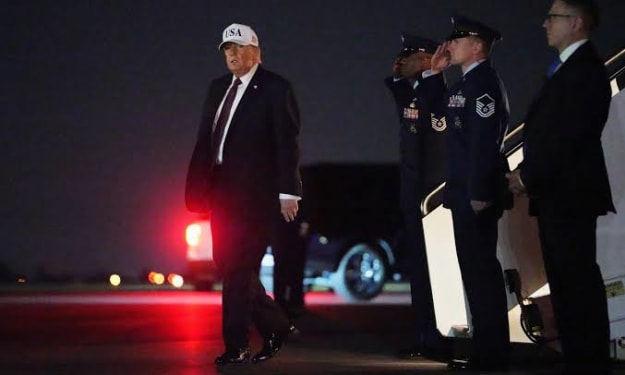
A weeks-long campaign by two of America’s closest Middle Eastern allies — Saudi Arabia and Israel — played a significant role in persuading former President Donald Trump to launch a major military assault on Iran in late February 2026, according to classified U.S. and allied sources. Internal White House assessments and reporting by The Washington Post indicate that diplomatic pressure from Riyadh and Jerusalem helped tilt Trump’s decision toward direct military action at a moment when the White House was still weighing diplomatic options. The coordinated offensive, carried out jointly by American and Israeli forces and dubbed “Operation Epic Fury,” targeted Iranian leadership figures and strategic military infrastructure, including areas linked to the Islamic Revolutionary Guard Corps (IRGC), ballistic missile sites, and facilities associated with Tehran’s nuclear programme. Iranian state media later confirmed that Supreme Leader Ayatollah Ali Khamenei was killed in the strikes. The Washington Post Behind the Push: Riyadh and Jerusalem’s Influence According to officials familiar with the matter, the Saudi Crown Prince Mohammed bin Salman made repeated private appeals to Trump over weeks leading up to the attack. Although publicly Riyadh maintained support for a negotiated settlement to de-escalate tensions, in private calls the crown prince urged Trump to act assertively against Iran’s nuclear and missile ambitions. In those calls, he cautioned that Iran could emerge stronger and more threatening if the United States did not use its considerable military capaltities Israeli Prime Minister Benjamin Netanyahu was equally vocal. Netanyahu has for years framed Iran as an existential threat to his country — especially over its nuclear activities and long-range missile development. His government had publicly and privately pressed Washington to strike, arguing that only decisive military action could sufficiently degrade Iran’s strategic capabilities. Trump’s inner circle, including advisers and personal envoys, also played a role. Jared Kushner — Trump’s son-in-law and a senior advisor — maintained close communication with both Saudi and Israeli counterparts during the run-up to the strike. These interactions, according to sources, helped shape the narrative presented to Trump: that a timely military offensive would avert an even greater threat later. A Break from Diplomatic Negotiations The pressure from Riyadh and Jerusalem came at a delicate moment. U.S. officials had been engaged in indirect nuclear negotiations with Tehran in Geneva, mediated by regional partners such as Oman. Iranian Foreign Minister Abbas Araghchi later described those talks as “progressing,” and he expressed confusion and frustration at why U.S. forces struck during active diplomacy. Critics inside the U.S. government and Congress argued that the decision to attack Iran represented a dramatic departure from previous U.S. policy, which had traditionally prioritized containment, sanctions, or diplomatic avenues. Some lawmakers expressed concern that the pressure applied by Middle Eastern allies had outweighed careful strategic assessment within U.S. national security institutions. Regional Dynamics and Strategic Calculus Saudi and Israeli motivations are rooted in long-standing regional rivalries with Iran. Riyadh, despite periodic rapprochement with Tehran, views Iran’s expanding influence — particularly through proxy networks in Iraq, Syria, Lebanon, and Yemen — as destabilizing and a threat to Gulf security. Israel sees Iran’s missile programmes and purported nuclear ambitions as direct existential challenges. The Saudi push may have included warnings about the consequences of inaction. Riyadh signalled that if Washington failed to act, Tehran could consolidate power in ways that would force Saudi Arabia’s hand in future conflicts. Israeli leaders reinforced this by portraying the window for effective military action as narrowing rapidly. These strategic frames reportedly helped convince Trump that military force, rather than prolonged diplomacy, was the more prudent choice. Consequences of the Decision Trump ultimately ordered the air and missile campaign that resulted in Khamenei’s death and significant damage to Iranian infrastructure. Tehran swiftly retaliated with missile and drone attacks targeting U.S. allied bases and Israeli territory across the region, raising the spectre of broader conflict. International reactions have been sharply divided. Some Gulf states condemned Iranian retaliation and pledged support for collective defence, while European powers stressed the dangers of military escalation and the need to return to diplomatic channels. Meanwhile, the United Nations Security Council held emergency discussions on the crisis. Broader Geopolitical Implications The episode highlights how allied pressure can influence U.S. foreign policy — particularly when regional partners frame threats in ways that resonate with American strategic priorities. It also underscores the complex interplay between diplomacy and military action in managing nuclear proliferation and regional security. For Trump, the decision represents both a culmination of long-running pressure from key allies and a risky gamble: that overwhelming force could reset Iran’s behaviour and deter future threats. For the region, it has ushered in a period of profound uncertainty, with the potential for long-term geopolitical realignment as governments reassess their security strategies in the aftermath of direct U.S.–Israeli strikes on Iranian soil.
By Fiaz Ahmed 2 days ago in The Swamp
UAE Announces Remote Learning for Schools, Universities from March 2 to 4. AI-Generated.
The United Arab Emirates has ordered all schools, universities, and higher education institutions to switch to remote learning from Monday, March 2, until Wednesday, March 4, 2026, as part of precautionary measures amid rising regional tensions. The decision, confirmed by the Ministry of Education and the Ministry of Higher Education and Scientific Research, affects students, teachers, administrative staff, and infrastructure across both public and private sectors, marking a temporary departure from in-person instruction Scope and Implementation Under the directive, all academic activities — including classes, discussions, and administrative functions — will be conducted through approved online platforms already in use across the UAE’s education system. Authorities have emphasised that schools and universities must ensure uninterrupted delivery of curriculum content and maintain regular schedules via digital means. Support services for students and staff, including technical assistance and attendance monitoring, are also required. The move applies nationwide to both public and private institutions, including universities, colleges, schools, and higher education facilities. Meanwhile, local regulators such as the Knowledge and Human Development Authority also urged parents and educators to follow updates from official government sources for accurate information and avoid rumours or misinformation on social media. Reasons Behind the Decision Officials described the switch to distance learning as a precautionary step aimed at protecting the safety and wellbeing of students, faculty, and administrative teams. The decision follows heightened regional security concerns, including escalating tensions after recent military strikes in the Middle East involving Iran, the United States, and Israel. Some reports suggest that nearby Gulf countries have implemented similar remote learning measures to mitigate risk amid uncertainty and persistent alerts. Authorities emphasised that the situation will be continuously reassessed during the week, and the remote learning period could be extended if needed based on evolving circumstances. In-person classes are currently expected to resume on Thursday, March 5, 2026, unless official updates say otherwise. Logistics and Preparedness The UAE has built robust online learning systems since the Covid-19 pandemic, when large-scale e-learning infrastructure was first deployed across schools and universities to accommodate remote classes. This experience has made the transition smoother and more manageable, with platforms ready to support live or recorded sessions, interactive assignments, and continuous communication between educators, students, and parents. School administrations are also adjusting exam plans and academic schedules as required. Some institutions have confirmed that examinations affected by the online learning period will be rescheduled or adapted for remote delivery, with details communicated directly to families. Transport services, extracurricular activities, and other on-campus programs are suspended during the remote learning duration. Government Messaging and Public Reassurance In official statements, ministries reiterated their commitment to education continuity and the safety of the school community. They asked stakeholders to rely only on announcements from verified channels such as government websites and official social media accounts. Educators have been instructed to ensure that students have the necessary access credentials and tools to participate in online learning effectively. Parents and students have been responding on social platforms with questions about how exams, particularly board-level assessments, will be handled, reflecting shared concern about academic progress amid the temporary shift. Universities and schools are expected to provide detailed schedules and guidelines to address academic continuity and evaluation. Context and Regional Trends The UAE’s precautionary remote learning move reflects how education sectors in the Gulf are adjusting to evolving security dynamics. Similar measures have been seen in neighbouring countries like Qatar and Bahrain, which have also announced temporary shifts to online learning amid regional security alerts. These decisions underline the priority given to student safety and academic resilience in uncertain times. Despite the temporary nature of the measures, education authorities emphasise that learning will continue seamlessly through digital platforms, ensuring that students remain engaged and academic disruption is minimised. As the situation develops, the government has pledged to update the public promptly on any changes to the schedule or conditions for returning to classroom instruction.
By Fiaz Ahmed 2 days ago in The Swamp
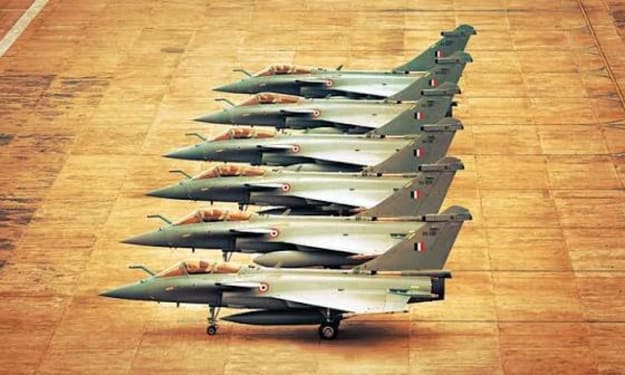
Rafale Revolution: How India’s $40B Deal for 114 Jets Could Supercharge Air Power, Industry & Geopolitics. AI-Generated.
India’s ambitious $40 billion deal to procure 114 Dassault Rafale fighter jets marks one of the most consequential defence acquisitions in the country’s history — a move that is poised not only to transform the India Air Force’s combat capability but also carries significant implications for its defence industry and geopolitical posture in a rapidly evolving security environment. The Rafale deal — signed over the past decade — was designed to meet India’s urgent need for more modern airpower while bolstering domestic manufacturing through offset obligations. It comes as India faces multiple threats along its borders and seeks to maintain a technological edge against potential adversaries. A Leap in Combat Capability The Rafale is a twin-engine, multirole combat aircraft manufactured by Dassault Aviation, widely regarded as one of the most versatile fighters in service today. India’s variant is configured with advanced avionics, electronic warfare systems, and powerful weapons packages, making it suitable for air superiority, precision strike, reconnaissance and nuclear delivery missions. Defense analysts say the Rafale’s superior radar, data fusion capabilities and integration with beyond-visual-range (BVR) missiles will significantly enhance the Indian Air Force’s (IAF) ability to penetrate contested airspace and conduct long-range operations. “India’s Rafales will be a game-changer,” said an airpower expert in New Delhi. “They bring together lethality, situational awareness, and networked warfare — features that legacy platforms struggle to match.” The deal’s initial phases have already seen a frontline Rafale squadron fully operational, with pilots and ground crews reporting high levels of performance in simulated and real-world missions. The Indian Air Force has praised the aircraft’s reliability and ease of maintenance, factors that will be critical as more jets are inducted. Industrial Offsets and Domestic Production A defining feature of India’s Rafale agreement is its large offset component — requirements that the foreign supplier reinvest a percentage of the contract value back into India’s defence industry. Airbus, Thales and other European partners involved in the Rafale ecosystem have committed to offset investments exceeding $8 billion, spread across aerospace, avionics, and training systems. Indian companies such as Hindustan Aeronautics Limited (HAL) and private sector firms are slated to receive technology transfers and workshare in areas including maintenance, repair and overhaul (MRO), simulation, and sub-assembly production. Over time, this could seed capabilities that enable India to maintain and upgrade its fleet indigenously, reducing reliance on foreign supply chains. Proponents argue that these offsets will accelerate India’s push toward Aatmanirbhar Bharat — or self-reliant India — by deepening expertise in advanced aerospace systems and creating thousands of skilled jobs. Regional Power Dynamics In strategic terms, the Rafale deal also reverberates across South and Central Asia. India’s primary near-peer, China, has continued to modernize its air force with fifth-generation fighters and long-range systems. Meanwhile, tensions along the India-China border and persistent challenges from Pakistan have underscored the need for credible deterrence. With Rafales and their advanced weapons — including Meteor BVR missiles and Scalp cruise missiles — India gains a qualitative edge that may deter adversaries and strengthen its negotiating position in crises. Analysts say the aircraft’s extended range and precision strike capability enhance India’s ability to project power across the Indian Ocean and into contested airspace. The Rafale’s integration with Indian defence networks — including airborne early warning and control (AEW&C) platforms and ground-based air defence systems — further amplifies its strategic value. This integrated warfare construct can enhance deterrence by complicating an adversary’s operational planning. Diplomatic and Geopolitical Significance Beyond the battlefield, the Rafale deal has broader diplomatic implications. India’s growing defence ties with France — a strong advocate of a multipolar global order — have strengthened cooperation in maritime security, space, counterterrorism, and joint exercises. Paris has endorsed India’s role in Indo-Pacific security frameworks and supported its ambitions for greater global influence. The aircraft deal also signals India’s preference for diversifying defence partnerships beyond traditional suppliers, reflecting a nuanced strategic calculus that balances autonomy with strong international ties. Challenges and Future Prospects Despite its promise, the Rafale acquisition is not without challenges. Questions remain about sustaining costs, logistics infrastructure, and integrating future upgrades. Additionally, ensuring that offset commitments translate into real industrial gains requires consistent policy focus and transparency. Still, many in India’s defence establishment view the deal as a model for future procurements, one that marries capability enhancement with industrial growth. With additional squadrons expected to be operational in the coming years, the Rafale is likely to remain central to India’s airpower strategy. A New Chapter in Airpower India’s $40 billion Rafale deal represents a decisive shift in the country’s military and industrial trajectory. By acquiring one of the world’s most capable fighters and linking it to domestic industry growth, New Delhi is investing in both deterrence and self-reliance. As geopolitical fault lines evolve and security challenges persist, the Rafale fleet will be a cornerstone of India’s strategy to protect its skies, assert regional influence, and modernize its defence ecosystem for decades to come.
By Fiaz Ahmed 2 days ago in The Swamp
Oil Shipments in Persian Gulf Already Disrupted by Iran Attack. AI-Generated.
Oil markets and global shipping routes have been thrown into disarray following the recent U.S. and Israeli military strikes on Iran, with major disruptions already reported in the Persian Gulf — a region that handles a substantial share of the world’s energy exports. The attacks have sent shockwaves through global shipping, forcing oil companies and tanker operators to halt or reroute shipments, at least temporarily, raising questions about supply security and broader economic impact. Strait of Hormuz Under Strain At the centre of the disruption is the Strait of Hormuz, a narrow waterway between Iran and Oman that links the Persian Gulf to the Gulf of Oman and the open sea. It is one of the most strategically important maritime chokepoints in the world: roughly 20% of global crude oil and a similar share of liquefied natural gas (LNG) exports pass through it every day. In the aftermath of the strikes, Iranian authorities — including elements of the Islamic Revolutionary Guard Corps — reportedly broadcast radio warnings telling all vessels that no ship is allowed to pass through the strait, effectively asserting a ban on navigation through the key trade route. Although these broadcasts are not legally binding, they have dramatically raised fears among shipowners and insurers alike. Shipping Suspensions and Vessel Backups Major oil companies, global trading houses, and tanker operators have responded by suspending shipments of crude oil, refined fuels, and LNG through the Strait of Hormuz. Several vessels that were en route are now idling near ports such as Fujairah in the United Arab Emirates, with satellite tracking imagery showing congestion at key anchorage points. A top trading desk executive told Reuters that many ships are expected to remain in port for several days until the situation stabilises. Additionally, international advisories from naval and maritime security bodies — including warnings that the U.S. Navy cannot guarantee safe passage through the region — have prompted Greek, British, and Japanese ship owners to recommend avoiding the Persian Gulf, Gulf of Oman, and Hormuz until further notice. Japanese shipping companies, among others, have temporarily halted operations in the region, instructing crews to stay in safer waters as a precaution, since there are no viable alternative routes for the vast quantities of oil that typically transit the strait. Impact on Oil Markets The disruptions present significant risks to global energy markets. Because such a large share of crude and LNG shipments passes through the strait, any sustained interruption — even temporarily — has the potential to tighten supply, drive up wholesale prices and increase volatility in energy derivatives markets. Traders and analysts have already noted sharp increases in war-risk premiums for tankers operating in the region, with some insurers cancelling policies or raising costs sharply to reflect heightened risk. War-risk insurance prices in the Gulf and Hormuz corridor could increase by up to 50%, significantly raising the cost of transporting oil by sea and reflecting growing concern about the possibility of a broader conflict extending to commercial shipping. Broader Logistical and Economic Consequences Even before a potential full closure of the strait, tanker operators are making decisions that will have ripple effects on shipping schedules and supply chains. Some vessels have halted or reversed course, while others are delaying entry into the area altogether. According to tracking data, some tankers carrying crude from Gulf producers like Saudi Arabia, Iraq, and the UAE have stopped outside the Gulf of Oman rather than risk navigating a contested waterway. Experts warn that the longer these conditions persist, the more likely it is that buyers will seek alternative supply routes or sources, which could involve lengthier voyages around the southern tip of Africa or other strategic adjustments — all of which are costlier and slower. That, in turn, could put upward pressure on refined fuel and shipping costs globally. Regional Dynamics and Future Risk Why the disruption is taking place now is directly tied to the broader military confrontation involving Iran, the United States, and Israel — hostilities that have introduced new layers of risk into maritime trade. Tehran’s reprisals, warnings to shipping, and the perceived risk of escalation are collectively affecting operational decisions by energy companies and shipowners. The situation also highlights the geopolitical sensitivity of the Strait of Hormuz: any escalation that is perceived to threaten security along this narrow sea lane almost immediately resonates in oil markets and the global economy at large. Policymakers and oil market watchers are closely monitoring developments, especially as the impact of sustained disruptions could extend far beyond the region.
By Fiaz Ahmed 2 days ago in The Swamp
Iran’s Supreme Leader Ayatollah Ali Khamenei, Who Led the Islamic Republic Since 1989, Is Dead at 86. AI-Generated.
Ayatollah Ali Khamenei, the supreme leader of the Iran for more than three decades, has died at age 86, Iranian state media confirmed, marking a historic turning point for Tehran and a potential reshaping of Middle East geopolitics. His death was announced Sunday following a major joint military operation by the United States and Israel that reportedly struck his compound in Tehran over the weekend. Iran’s official broadcaster described Khamenei’s death in solemn terms, saying the supreme leader “has reached martyrdom” and announcing 40 days of public mourning across the country. Authorities declared a week-long holiday to honour him, a signal of his central role in Iran’s state identity. A Leader Who Dominated Iranian Politics Khamenei assumed the post of supreme leader in 1989 after the death of Ayatollah Ruhollah Khomeini, the founder of the Islamic Republic. Although originally seen by some as a compromise successor with weaker religious credentials, Khamenei consolidated power over time and became one of the most influential figures in Iran’s modern history. As supreme leader, he held ultimate control over the government, military, judiciary, and state media — outranking elected officials such as the president and parliament. He was the commander-in-chief of the armed forces and the final authority on foreign policy, security, and national ideology, shaping Iran’s path through repeated domestic and international crises. Domestic Hardline Rule and Crises Domestically, Khamenei’s tenure was marked by repeated unrest and government crackdowns. Major waves of protest erupted under his watch, including large-scale demonstrations in 2022 over the death of Mahsa Amini, an Iranian Kurdish woman who died in morality police custody, sparking widespread outrage. Security forces were accused of lethal force against demonstrators, intensifying international criticism of Tehran. Through periods of economic hardship, unemployment, inflation, and social restrictions, opposition to the clerical establishment grew among younger Iranians who chafed under political and cultural repression. Yet, the regime maintained control through a network of loyal institutions, including the powerful Islamic Revolutionary Guard Corps (IRGC), which became a dominant force in both security and economic spheres. Foreign Policy and Regional Influence Khamenei’s foreign policy was defined by opposition to Western powers, particularly the U.S. and Israel, and by expanding Iran’s influence across the Middle East. Tehran supported allied militias and political groups in countries such as Iraq, Syria, Lebanon, and Yemen, viewing them as part of an “Axis of Resistance” against Western influence. His resistance to U.S. pressure over Iran’s nuclear ambitions was a defining feature of his leadership. Although he issued a religious ruling that nuclear weapons were forbidden under Islam, Tehran advanced its nuclear program significantly, drawing intense scrutiny and sanctions from the West. In 2015, Iran agreed to an international nuclear deal, but the U.S. withdrawal from the pact in 2018 led to renewed escalation and reciprocal violations. The Strike and Its Aftermath According to multiple reports, Khamenei was killed on February 28, 2026, after a coordinated military operation by U.S. and Israeli forces targeting key locations in Tehran, including his residence and other strategic sites. President Donald Trump publicly confirmed the death on social media platforms, framing it as justice for the victims of the Iranian regime and a potential catalyst for change in Iran’s governance. Before Iranian state confirmation, there was confusion about his status, with semi-official outlets initially reporting that he remained “steadfast and firm.” However, the state broadcaster’s confirmation has now ended that uncertainty. Business Standard Uncertain Succession and Power Struggles Khamenei’s death leaves a significant power vacuum. Iran’s constitution empowers the Assembly of Experts, a body of senior clerics, to select his successor, but no clear front-runner has emerged. Analysts warn that factional infighting among hard-liners, conservatives, and pragmatic elements could intensify as various interests seek to shape the next era of Iranian leadership. The role of the IRGC is also critical; the powerful military institution has played a central role in maintaining internal order and executing foreign policy goals. Its influence may be decisive in determining Iran’s political direction and stability in the coming months. Regional and Global Repercussions The death of such a pivotal figure is bound to send shockwaves beyond Iran’s borders. Middle Eastern governments, global powers, and international markets are all closely watching the developments. Security measures have been heightened across the region amid fears of retaliation or escalation, while diplomatic efforts to manage tensions are likely to intensify. Oil markets, already sensitive to geopolitical risk, may also react to the leadership transition and potential instability, given Iran’s strategic position in global energy corridors. End of an Era Ayatollah Ali Khamenei’s death marks the end of an era that saw Iran transform from a revolutionary state into a formidable regional power, albeit one fraught with internal repression and international isolation. His legacy is deeply polarizing — venerated by loyalists and reviled by critics who accuse him of authoritarianism and human rights abuses. As Iran enters a period of uncertainty, questions loom about its future direction, leadership dynamics, and the broader implications for Middle East stability in an already volatile geopolitical landscape.
By Fiaz Ahmed 2 days ago in The Swamp