Irshad Abbasi
Bio
Ali ibn Abi Talib (RA) said 📚
“Knowledge is better than wealth, because knowledge protects you, while you have to protect wealth.
Stories (215)
Filter by community
The Nazi Who Fooled Death
History often remembers the Nuremberg Trials as the ultimate reckoning for the Third Reich—a moment where the high command of Nazi Germany faced the gallows for their part in the 20th century's greatest horrors. Men like Joachim von Ribbentrop and Wilhelm Keitel met their end at the end of a rope. Yet, one man from Hitler’s innermost circle, his "best friend" and Minister of Armaments, Albert Speer, managed to walk away from the courtroom with his life.
By Irshad Abbasi about 13 hours ago in History
Modernizing India through Rails, Canals, and Conquest
History often remembers the British Raj through the lens of conflict and colonization, but few figures embody the complex duality of "modernizer" and "conqueror" as starkly as James Broun-Ramsay, the 1st Marquess of Dalhousie. Appointed as the Governor-General of India in 1848 at the remarkably young age of 35, Dalhousie commanded a staggering annual salary of £25,000—a fortune at the time. His eight-year tenure would fundamentally alter the physical and political geography of the Indian subcontinent.
By Irshad Abbasi about 13 hours ago in History
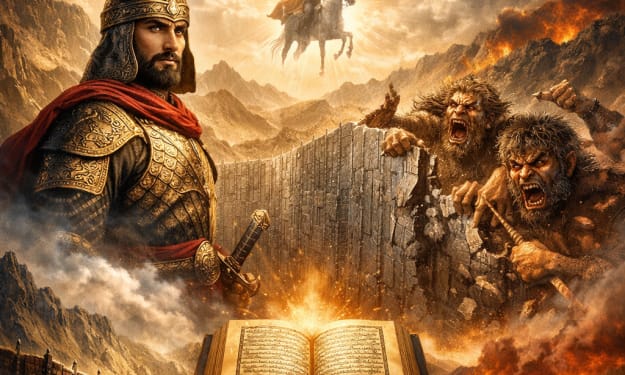
Zulqarnain and Yajuj & Majuj: A Timeless Proof of the Qur’an’s Divine Revelation
The story of Dhul-Qarnayn and Gog and Magog stands as one of the most fascinating and thought-provoking narratives in the Qur’an. Found in Surah Al-Kahf (18:83–98), this account combines history, prophecy, morality, and eschatology in a way that has inspired reflection for centuries. For many believers, it serves as a powerful sign of the Qur’an’s divine origin—revealing knowledge, wisdom, and foresight that transcend the limits of seventh-century Arabia.
By Irshad Abbasi about 19 hours ago in History
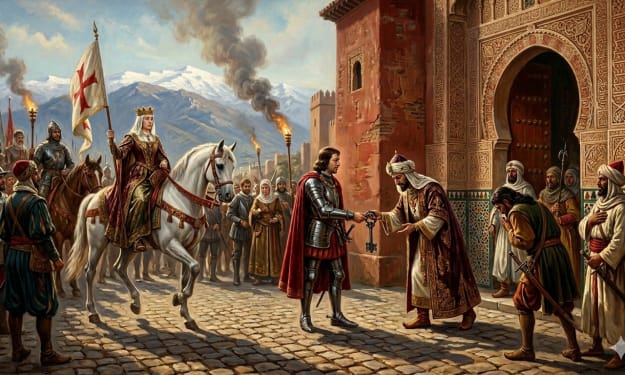
The Last Sigh of Al-Andalus: When the Keys to Paradise Were Lost
The date was January 2, 1492. As the morning mist cleared over the Sierra Nevada mountains, a somber procession wound its way down from the red walls of the Alhambra. At its head was Muhammad XII, known to the West as Boabdil, the last Sultan of the Nasrid dynasty. In his hands, he carried the keys to the city—keys that represented not just a fortress, but the final heartbeat of a civilization that had flourished for 781 years.
By Irshad Abbasi a day ago in History
“After Witnessing 40 Wars, Why Did 2025 Feel Like the Most Troubling Year Yet?”
For someone who has witnessed four decades of global conflict—wars in the Middle East, civil unrest in Africa, political revolutions in Europe, and prolonged military engagements in Asia—fear is not unfamiliar. History has been turbulent, and the world has endured devastating moments, from the Cold War era to modern terrorism. Yet, for many seasoned observers, 2025 felt uniquely unsettling. The question arises: why did this year, despite not hosting a single world war, feel more disturbing than the previous forty conflicts combined?
By Irshad Abbasi a day ago in History
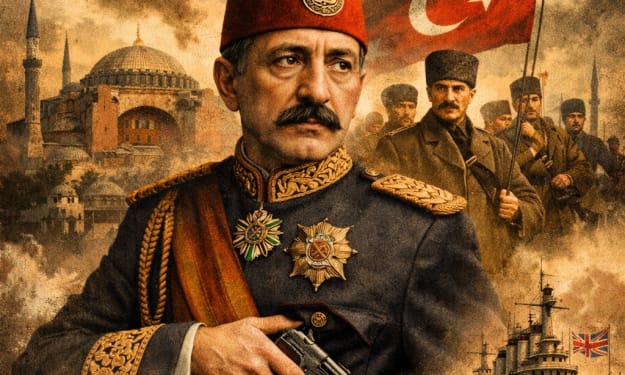
The Last Ottoman Sultan Who Carried a Pistol in His Pocket
Fear, Exile, and the Fall of an Empire: The Final Days of Mehmed VI --- The fall of the Ottoman Empire marked the end of one of history’s most powerful and enduring dynasties. For more than six centuries, the House of Osman ruled vast territories stretching across Europe, Asia, and Africa. Yet, in its final chapter, the empire’s last ruler lived not in splendor, but in fear. Mehmed VI, the final Sultan of the Ottoman Empire, was a man surrounded by uncertainty, political chaos, and real threats to his life. According to accounts from the turbulent years following World War I, he carried a pistol in his pocket, fearing assassination at any moment.
By Irshad Abbasi a day ago in History
The Secret Return of a Former President’s Body from Nigeria to Somalia
In a story that sounds more like a political thriller than a real-life event, the body of a former Somali president was secretly transported from Nigeria to Somalia in an operation that involved only two pilots, a coffin, and a journey of thousands of kilometers. The quiet and discreet mission reflected not only the sensitivity surrounding the former leader’s death but also the complex political realities of the region.
By Irshad Abbasi a day ago in History
Pakistani-Origin British Student Surpasses Legendary Minds with Extraordinary IQ
In an inspiring story that has captured international attention, a young Pakistani-origin British student has achieved an intellectual milestone that places her among the brightest minds in the world. Mahnoor Cheema, a gifted student based in the United Kingdom, has reportedly recorded an IQ score higher than that of the world-renowned physicist Stephen Hawking. The achievement has not only brought pride to her family and community but has also sparked discussions about the importance of nurturing young talent regardless of background.
By Irshad Abbasi a day ago in History
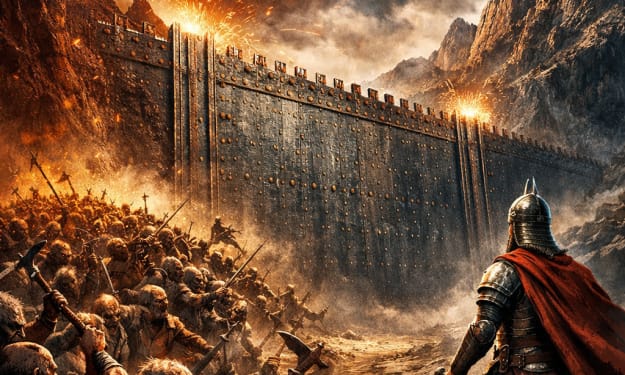
Yajuj and Majuj (Gog and Magog) and the Concept of the “Barrier” That Holds Them Back
The story of Yajuj and Majuj—known in English as Gog and Magog—occupies a powerful place in Islamic eschatology. These mysterious tribes are mentioned in the Qur’an and Hadith as forces of chaos who will emerge near the end of times. Central to their narrative is the construction of a massive barrier built by the righteous ruler Dhul-Qarnayn, a wall designed to restrain their corruption until a divinely appointed time. This article explores who Yajuj and Majuj are, the meaning of the barrier, and how the concept has been understood historically and symbolically.
By Irshad Abbasi a day ago in History
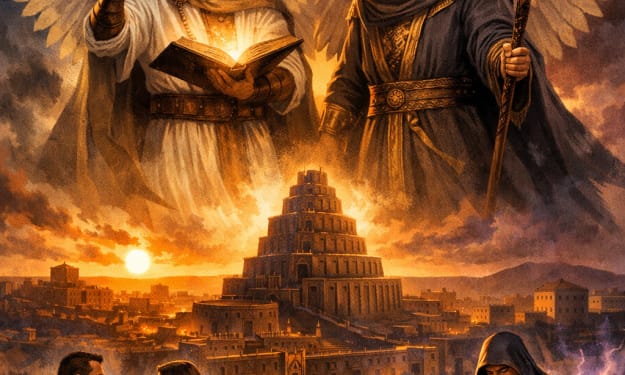
Harut and Marut The Story of the Angels Sent Down to Babylon
The story of Harut and Marut is one of the most intriguing and debated narratives in Islamic tradition. Mentioned briefly in the Qur’an, elaborated upon in later Islamic exegesis, and paralleled by certain themes in Jewish and biblical traditions, the account of these angels sent to Babylon explores themes of temptation, free will, magic, and divine testing. While the Qur’an provides a concise reference, Jewish apocryphal literature and later interpretations offer additional context that has shaped understanding across centuries.
By Irshad Abbasi a day ago in History
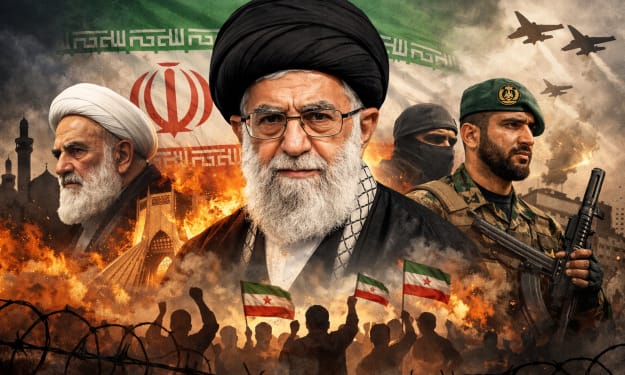
The End of Ayatollah Khamenei’s Long Iron Grip
For more than three decades, **Ali Khamenei** stood at the center of Iran’s political and ideological system, shaping the country’s domestic trajectory and foreign policy with a firm and often uncompromising hand. As the second Supreme Leader of the **Iran**, Khamenei inherited a revolutionary state and transformed it into a tightly controlled political order anchored by hardline clerics and the formidable **Islamic Revolutionary Guard Corps** (IRGC). His authority was neither accidental nor purely spiritual; it was built on institutional alliances, security structures, and a careful balancing of rival factions.
By Irshad Abbasi a day ago in History