Latest Stories
Most recently published stories in The Swamp.
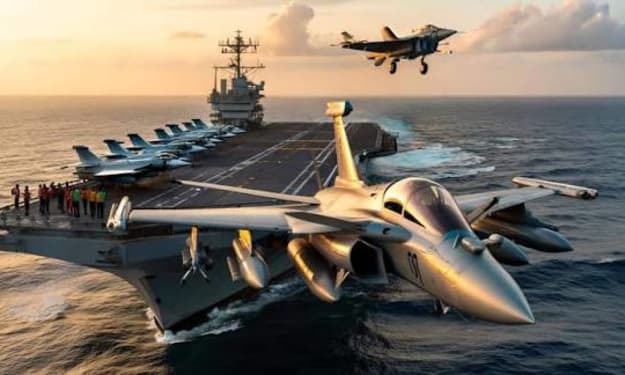
Rafale: India prepares a second major Rafale M carrier jet contract. AI-Generated.
India is gearing up for yet another significant step in its growing partnership with Dassault Aviation by preparing a follow-on contract to expand its fleet of Rafale M carrier-based fighter jets. This potential new agreement comes on the heels of India’s landmark acquisition of 26 Rafale Marine aircraft — the first export order for the naval version of the French multirole fighter — and underscores New Delhi’s ambition to modernize its naval air power as it faces evolving security challenges in the Indian Ocean region. In April 2025, India and France concluded a major intergovernmental agreement for 26 Rafale M jets, consisting of 22 single-seat and four two-seat aircraft, valued at roughly ₹63,000 crore (about $7.5 billion) and slated for delivery starting in 2028. These jets are intended to operate from India’s indigenous aircraft carrier INS Vikrant as well as the Soviet-origin INS Vikramaditya, replacing ageing MiG-29K platforms. Now, barely a year after that deal was signed, New Delhi is laying the groundwork for an additional contract that could substantially increase its inventory of Rafale M fighters. Reports and defence sources indicate that India’s Navy has identified a requirement for more carrier-capable Rafale Marine jets to complement the existing order, potentially bringing the total number of Rafale Ms in Indian service to well over 50 aircraft. This prospective contract is part of a broader strategy to ensure India’s maritime dominance in the Indian Ocean — a region of increasing geostrategic importance due to rising Chinese naval activity, contested sea lanes, and ongoing competition with other regional powers. The addition of more Rafale M aircraft would enhance the Indian Navy’s strike, reconnaissance, and air defence capabilities, enabling more robust carrier air wing operations for extended periods at sea. The expanded Rafale M fleet would be expected to feature the latest F4 standard upgrades, including advanced avionics, reinforced structures, improved weapons integration, and enhanced sensor fusion designed to boost survivability and lethality in multi-domain operations. The F4 standard also improves interoperability with allied forces, a key consideration given India’s increased cooperation with Western and Indo-Pacific partners. From a tactical perspective, carrier-borne aircraft like the Rafale M are critical for projecting power beyond a nation’s shores. They provide significant flexibility during maritime air defence missions, strike operations, fleet escort duties, and humanitarian assistance and disaster relief tasks. India’s Navy has placed emphasis on building a credible carrier strike capability as part of its overall force structure modernization, and these additional aircraft would play a central role in achieving that objective. While official details about the second Rafale M contract — including the number of jets, monetary value, and timeline — have not been confirmed publicly, industry analysts believe negotiations between New Delhi and Paris are in advanced stages. A formal contract announcement could be linked to high-level diplomatic engagements, defence dialogues, or visits by senior officials from both countries. In addition to the direct tactical benefits, this emerging contract has broader strategic implications. It signals India’s continued reliance on French aerospace technology in its quest to modernize its armed forces, even as New Delhi explores indigenous production and global partnerships for future combat aircraft. Past discussions have highlighted India’s desire for deeper technology transfer and local industrial participation — although France has historically been cautious about sharing sensitive source code and core intellectual property. Economically, the expanded Rafale M deal could also involve a wide network of Indian suppliers and aerospace firms under India’s “Make in India” initiative. This would not only support local industry but also build up technical expertise and sustainment infrastructure for high-end military aircraft. Some commentators suggest that a significant portion of future jets could eventually be assembled or serviced domestically with French technical collaboration. The potential new contract for additional Rafale M fighters illustrates how defence procurement is evolving into a long-term partnership between India and France. It builds on the foundation of previous deals — including orders for 36 Rafale jets for the Indian Air Force and the initial 26 naval Rafale Ms — and reinforces the importance of enduring military-industrial ties between the two democracies. As India prepares to finalize this second contract, it is clear that carrier aviation remains a cornerstone of its military strategy. The expanded Rafale M fleet will significantly enhance the Indian Navy’s operational reach, contributing to deterrence and stability in the wider Indian Ocean region. Whether at sea or anchored at home ports, the aircraft are poised to become a defining feature of India’s naval aviation for decades to come.
By Fiaz Ahmed about 4 hours ago in The Swamp
Starmer Faces Dilemma After Drone Hits British Base in Cyprus. AI-Generated.
British Prime Minister Keir Starmer is confronting a fraught political and diplomatic challenge after a hostile drone strike struck a United Kingdom military base in Cyprus, drawing international attention and raising questions about Britain’s role and response amid heightened tensions in the Middle East. The incident has tested both the UK’s defence posture and Starmer’s leadership at home, as officials and opposition politicians debate how to balance national security, diplomatic restraint, and global commitments. The attack occurred late last week at one of the UK’s sovereign base areas in Cyprus, long a strategic hub for British operations across the region. The base hosts signals intelligence facilities, logistics units supporting operations in the Middle East and Eastern Mediterranean, and serves as a key staging point for humanitarian and military missions. According to defence sources, the drone caused structural damage but no casualties, highlighting both the vulnerability of overseas facilities and the ability of small unmanned systems to penetrate otherwise secure perimeters. Early investigations suggest the drone strike was deliberate rather than accidental, prompting immediate concern in London and among NATO allies. While no group has formally claimed responsibility, officials suspect actors aligned with Iranian proxy forces in the broader regional conflict may be involved. Such groups have increased their operations in recent months, targeting Western and allied military assets in retaliation for allied strikes against Iranian interests further east. Starmer’s government has publicly condemned the attack, emphasizing that the UK will defend its personnel and interests. “We will not tolerate attacks on our forces or bases overseas,” a Downing Street spokesperson said, underscoring Britain’s resolve. However, Starmer’s response has been measured, avoiding retaliatory rhetoric that might escalate the situation. That cautious stance reflects the broader dilemma confronting the prime minister: how to respond firmly to aggression without drawing the UK deeper into a widening conflict. With British troops still supporting NATO missions and humanitarian operations in volatile regions, a heavy-handed response could risk escalation and entangle London in a broader confrontation. Opposition figures have seized on the incident to criticise the government’s defence strategy. Some Conservative MPs and defence analysts argue that the UK must send a stronger message of deterrence, potentially through joint military exercises with allies or sanctions targeting those believed responsible. Others, however, warn that such steps could be counterproductive, risking retaliation against British forces and citizens abroad. Foreign policy experts stress that the UK’s options are constrained by geography and alliances. Cyprus’s proximity to the Middle East places British bases within range of various actors, especially unmanned systems that are increasingly prevalent in modern warfare. While drones offer tactical advantages to militant groups, they also complicate defence planning, making fixed installations more vulnerable despite traditional perimeter security. In this context, Starmer’s government is exploring both defensive and diplomatic responses. Defence officials have accelerated efforts to harden UK facilities overseas, incorporating advanced counter-drone technologies and improved surveillance measures. These include electronic jamming systems, radar tracking networks, and rapid response teams capable of intercepting small unmanned aerial vehicles before they can strike. On the diplomatic front, London has urged United Nations and regional partners to condemn the attack and support investigations into its origin. British diplomats in the region are engaging with counterparts in Cyprus, Greece, and broader EU networks to coordinate messaging and reinforce commitments to de-escalation. Starmer’s dilemma is further complicated by domestic politics. Labour traditionally positions itself as cautious on military engagement, favouring diplomatic solutions where possible. Yet public opinion in the UK remains sensitive to perceived threats against British personnel. A response seen as too tentative could erode confidence in the government’s ability to protect national interests. Media coverage has reflected this tension, with commentators debating whether the attack should lead to a recalibration of British defence policy. Some argue that the UK must invest more heavily in autonomous defence systems and cyber capabilities to counter asymmetric threats like drones. Others caution against policies that could entwine Britain in conflicts fought primarily by larger powers with direct stakes in the region. For now, Starmer appears to be steering a careful course — condemning the strike, strengthening defensive measures, and seeking international support while avoiding actions that might provoke a broader confrontation. The coming weeks will likely see intensified debate in Westminster over the UK’s strategic priorities and how best to safeguard its forces abroad. As investigations continue and the international community weighs in, the Cyprus drone strike will remain a critical test of Starmer’s leadership and Britain’s role in a turbulent global security environment. The challenge will be finding a balance between deterrence and diplomacy as the UK navigates one of the most complex foreign policy dilemmas of the year.
By Fiaz Ahmed about 4 hours ago in The Swamp
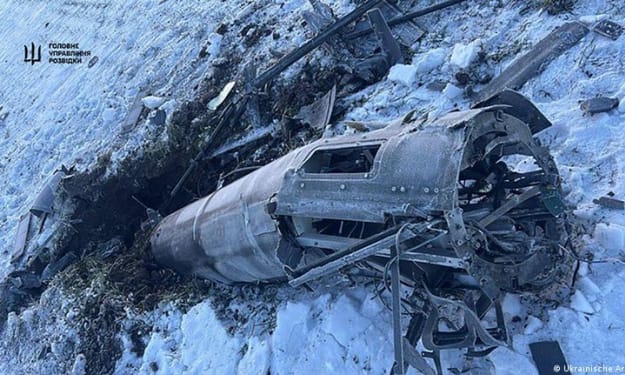
Ukraine war: German parts make their way into Russian drones. AI-Generated.
Investigators examining wreckage from Russian drones used in the war in Ukraine have found electronic components traced back to Germany, raising new concerns about how Western-made technology continues to reach Moscow’s weapons programs despite sweeping sanctions. The discoveries underscore the complexity of enforcing export controls in a globalized electronics market and the challenges European governments face in preventing sensitive dual-use goods from being diverted to military purposes. Since the start of Russia’s full-scale invasion of Ukraine in 2022, Western nations have imposed strict restrictions on the export of advanced technologies to Russia. These measures were designed to cut off access to components critical for weapons manufacturing, including microchips, navigation systems, and communications equipment. Yet forensic analysis of downed drones has repeatedly shown that parts produced in Europe, the United States, and Asia still appear inside Russian military hardware. According to Ukrainian officials and independent researchers, several Russian-made drones recovered from the battlefield contained power regulators, microcontrollers, and signal-processing units produced by German manufacturers. While these components are widely used in civilian industries such as automotive electronics and industrial automation, they can also be repurposed for military applications, particularly in unmanned aerial systems. Germany has been among Ukraine’s strongest supporters in Europe, providing air defense systems, armored vehicles, and financial aid. At the same time, Berlin has tightened export rules and expanded its list of restricted technologies. The presence of German parts in Russian drones has therefore triggered political scrutiny and demands for stronger oversight. Officials in Berlin stress that there is no evidence German companies deliberately supplied Russia’s military. Instead, they point to complex supply chains that often involve intermediaries in third countries. Components legally exported to firms in Asia or the Middle East can be resold multiple times before ultimately reaching Russia through gray or black markets. In many cases, the original manufacturer has little visibility over the final destination of its products. Experts say this highlights a central weakness in sanctions enforcement: modern electronics are small, cheap, and widely available. A single drone may contain dozens of parts sourced from different countries, making it difficult to trace responsibility. “Sanctions were never designed to stop every resistor or chip,” one European trade analyst noted. “They are meant to raise the cost and slow production, not eliminate it entirely.” For Ukraine, the findings are deeply troubling. Russian drones have become a key tool in the conflict, used for reconnaissance, targeting, and long-range strikes against infrastructure. Shahed-type drones and domestically produced variants have been deployed in large numbers, often overwhelming air defenses through sheer volume. Even basic commercial components can significantly enhance their reliability and accuracy. Ukrainian authorities have urged the European Union to introduce tighter controls on so-called dual-use goods—items that can serve both civilian and military purposes. They also want harsher penalties for companies that fail to conduct proper due diligence on buyers and distributors. Some lawmakers in Kyiv have proposed the creation of a centralized database to track recovered components and identify recurring supply routes. Within the European Union, the issue has reignited debate over how to close loopholes in sanctions regimes. Several member states have called for more cooperation with countries outside Europe to monitor re-exports. Germany, in particular, is reviewing its export licensing system and considering new rules that would require companies to verify the end users of sensitive electronics more rigorously. Meanwhile, Russia continues to adapt. With limited access to high-end Western technology, its defense industry has shifted toward using commercially available components that are easier to acquire. Analysts believe this strategy has allowed Moscow to maintain drone production despite sanctions, though at the cost of lower performance and higher failure rates. For Germany, the revelations pose both a political and moral dilemma. As one of Ukraine’s main backers, Berlin wants to ensure its industrial output is not indirectly fueling the very weapons used against Ukrainian cities. Government officials have promised investigations and closer coordination with manufacturers, while urging international partners to strengthen controls across borders. The appearance of German parts in Russian drones serves as a stark reminder that modern warfare is deeply entangled with global trade networks. Even as sanctions aim to isolate Russia’s military sector, the realities of interconnected supply chains make complete separation nearly impossible. The challenge for Europe now is to reduce these leakages as much as possible—before more civilian technology is transformed into tools of war.
By Fiaz Ahmed about 4 hours ago in The Swamp
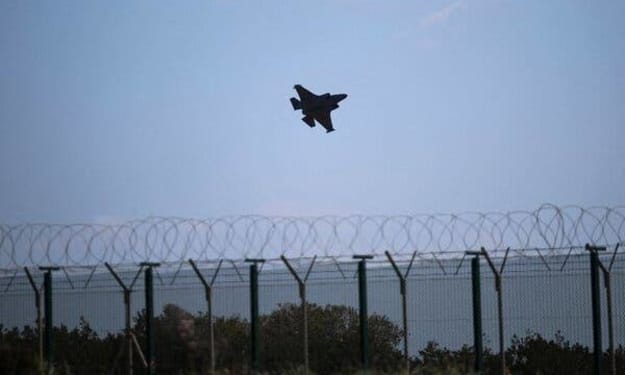
Norwegian F-35s Engage Russian Knights Su-35s During Strategic Bomber Escort Mission. AI-Generated.
In a notable air operation over the Barents Sea, two F‑35 Lightning II jets from Royal Norwegian Air Force intercepted and shadowed a formation of Russian strategic bombers escorted by Su-35 fighters — including aircraft associated with Russia’s famed “Russian Knights” aerobatic team — during a routine NATO air policing mission. The encounter, which occurred in international airspace, underlines ongoing vigilance by NATO members in the High North amid heightened military activity. The mission unfolded on February 27, 2026, when Norwegian F-35s assigned to NATO’s Arctic watch were scrambled from Evenes Air Station to investigate two Tupolev Tu-95 Bear H strategic bombers accompanied by two Sukhoi Su-35 Flanker-M fighters. These Russian aircraft were flying over international airspace in the Barents Sea, north of Norway’s border, as part of a long-range aviation sortie. Upon detecting the foreign formation, the Norwegian pilots closed in to visually identify and monitor the Russian aircraft. The intercept was carried out in a professional and measured manner, with no violation of Norwegian sovereign airspace reported. “Today, two Norwegian F-35s at NATO mission identified and shadowed two Russian Tu-95 Bear H bombers and two Su-35 Flanker M fighters in international airspace over the Barents Sea — a routine activity, but an important part of monitoring and safeguarding our region,” the Norwegian Armed Forces said in an official statement posted on social platforms. What drew particular attention from analysts and aviation enthusiasts was the presence of one Su-35 aircraft bearing the distinctive colors of the Russian Knights, an aerobatic demonstration team known for performing at air shows and national ceremonies. Instead of flying in performance configuration, the aircraft was equipped in a combat-ready setup with air-to-air missiles, indicating its operational deployment alongside the escort mission. Military observers note that the use of aircraft traditionally associated with aerobatic displays in an armed escort role may reflect broader operational pressures within the Russian Aerospace Forces. Experts suggest that high operational tempos and continuing demands on frontline squadrons could lead to the integration of all available aircraft — even those from demonstration units — into routine combat or patrol assignments. While intercepts such as this are not unusual — NATO air forces regularly scramble fighters to identify and monitor Russian long-range aviation — the Barents Sea has become a focal area due to its strategic location and proximity to the alliance’s northern flank. Norway plays a significant role in NATO’s Quick Reaction Alert (QRA) system, maintaining F-35 fighters on alert to rapidly respond to unidentified or foreign military flights near alliance territories. The Tu-95 Bear H bombers involved in the mission are long-range aircraft with historical significance dating back to the Cold War. Capable of carrying cruise missiles and operating at great distances from their bases, the Bear series continues to feature in Russian long-range aviation patrols. Their flights near NATO airspace routinely trigger allied responses to ensure situational awareness and deterrence. Russia’s use of Su-35 fighters for escort duties underscores the multirole nature of the Flanker-M design, which combines air-to-air and secondary air-to-ground capabilities. In this mission, the role of the Su-35s was to protect the strategic bombers from potential aerial threats as they traversed international airspace. NATO interceptors, including Norway’s F-35s, monitored the formation closely, ensuring that all aircraft adhered to international aviation law and did not stray into restricted zones. Despite the potentially sensitive context, Norwegian authorities emphasized the routine nature of the operation. Such intercepts help maintain open skies while ensuring that aerial activity near alliance borders is properly observed and recorded. They also reinforce NATO’s commitment to collective defense and rapid response readiness in northern Europe. The encounter highlights both the evolving operational landscape of Northern Europe and the critical role played by advanced fighter aircraft in modern air policing missions. As tensions persist between NATO and Russia, especially over strategic regions like the Arctic, routine interceptions may continue to be a key aspect of maintaining security and stability in international airspace. In sum, the Norwegian F-35s’ engagement with Russian bombers and Su-35 escorts demonstrates the ongoing vigilance required to manage military air operations in sensitive regions. While no aggressive action occurred, the event underscores the importance of robust air defense protocols and coordinated monitoring by allied forces as part of broader security efforts in northern Europe.
By Fiaz Ahmed about 4 hours ago in The Swamp
War on the Horizon: Trump Signals Possible Ground Troops in Iran as Conflict Escalates. AI-Generated.
Global attention has once again turned toward the Middle East as the United States signals a possible expansion of military operations in Iran. Recent statements from U.S. leadership suggest that the conflict could intensify significantly, raising concerns about the potential deployment of American ground troops and the prospect of a prolonged military campaign. The situation represents one of the most serious escalations in regional tensions in recent years. With airstrikes already underway and military targets reportedly hit across multiple locations, the possibility of a wider war has become a topic of urgent discussion among policymakers, analysts, and citizens around the world. As diplomatic efforts struggle to keep pace with military developments, many observers are asking whether the region is approaching another major conflict that could reshape global politics. Trump’s Statement Raises Global Questions President Donald Trump recently stated that he would not rule out sending U.S. ground troops into Iran if the situation required it. While he emphasized that such a step has not yet been taken, the comment signals that military planners are keeping all options open. Trump also suggested that the current military campaign could last four to five weeks, although he acknowledged that operations could continue longer if strategic objectives are not achieved. These remarks have sparked debate both within the United States and internationally. Supporters argue that maintaining strong military pressure may deter further threats, while critics warn that expanding the conflict could lead to unpredictable consequences. How the Conflict Began to Escalate The recent escalation follows months of rising tensions between Washington and Tehran. Disagreements over nuclear policy, regional influence, and military activities have steadily increased friction between the two nations. The United States and its allies have accused Iran of advancing its missile and nuclear capabilities, while Iranian officials have criticized Western pressure and sanctions as hostile actions aimed at weakening the country. As diplomatic negotiations stalled, military options began to appear more prominently in policy discussions. The launch of coordinated airstrikes marked a turning point, transforming political tensions into open military confrontation. Airstrikes and Military Operations Reports indicate that hundreds of military targets have been struck since the operation began. These targets reportedly include: Missile facilities Military bases Command and communication centers Air defense installations The strategy behind these strikes appears designed to reduce Iran’s ability to launch retaliatory attacks and weaken its military infrastructure. Military officials emphasize that the current operation relies primarily on air power, naval forces, and advanced technology rather than large-scale ground operations. However, Trump’s recent comments suggest that the possibility of deploying ground forces remains under consideration if circumstances change. Iran’s Response Iran has strongly condemned the strikes and warned of serious consequences. Iranian leaders have vowed that the country will defend itself against what it describes as foreign aggression. Retaliatory actions have already been reported, including missile launches and drone operations targeting military facilities linked to the United States and its allies in the region. The potential for further escalation remains high, especially if additional countries become involved in the conflict. For Iran, the stakes are enormous. The country views the confrontation as a matter of national sovereignty and survival. Regional Impact and Rising Tensions The Middle East has long been a region where local conflicts can quickly expand into wider geopolitical struggles. Neighboring countries are closely monitoring the situation, concerned that the conflict could spread beyond Iran’s borders. Military bases, shipping routes, and energy infrastructure throughout the region could become targets if hostilities continue. The Strait of Hormuz, one of the world’s most important oil shipping routes, is particularly vulnerable. Any disruption to traffic in this narrow waterway could have immediate effects on global energy markets. Oil prices have already shown signs of volatility as traders react to the possibility of prolonged instability. Domestic Debate in the United States Within the United States, the possibility of a longer war is triggering intense political debate. Some lawmakers argue that strong action is necessary to counter perceived threats and maintain national security. Others question whether expanding military involvement could lead to another prolonged conflict similar to past wars in the region. Critics have also raised constitutional concerns about the extent of presidential authority to launch military operations without explicit approval from Congress. Public opinion remains divided, reflecting broader disagreements about America’s role in global security. The Strategic Risks of Ground Troops Sending ground troops into Iran would represent a major escalation. Iran is a large country with complex terrain and a significant military presence. Military experts warn that a ground campaign could involve enormous logistical challenges and potentially high casualties. Iran’s geography—including mountains, deserts, and dense urban areas—could make any invasion extremely difficult. In addition, Iran maintains strong regional alliances and proxy networks that could open multiple fronts across the Middle East. These factors make military planners cautious about expanding operations beyond air and naval strikes. Global Reactions World leaders have reacted with a mix of concern and caution. Many governments are urging restraint and calling for renewed diplomatic efforts to prevent further escalation. International organizations have also expressed concern about the humanitarian consequences of a prolonged conflict. A large-scale war in the Middle East could lead to: Major refugee movements Economic instability Disruptions in global energy supply Increased geopolitical tensions between major powers For these reasons, many countries are urging negotiations rather than continued military action. Could Diplomacy Still Prevail? Despite the ongoing military operations, some analysts believe diplomacy may still have a chance. History has shown that even the most intense conflicts can eventually lead to negotiations once both sides recognize the costs of prolonged warfare. Diplomatic channels often continue quietly behind the scenes, even while public rhetoric becomes more confrontational. Whether these efforts will succeed remains uncertain. However, many observers agree that avoiding a broader war will require careful diplomacy from multiple global powers. The Uncertain Road Ahead The coming weeks could prove decisive. If the campaign unfolds as predicted and concludes within a few weeks, tensions may gradually decrease. But if the conflict expands or ground troops become involved, the situation could change dramatically. The world is watching closely as events continue to unfold. For now, the only certainty is uncertainty. Military operations, political decisions, and diplomatic efforts will all shape the future of this conflict and determine whether the region moves toward escalation or resolution. Conclusion The possibility of deploying ground troops in Iran marks a critical moment in international politics. Statements from President Trump suggest that the United States is prepared to escalate its response if necessary, even as leaders hope to achieve strategic objectives quickly. Yet history has shown that conflicts in the Middle East rarely follow predictable timelines. What begins as a limited operation can sometimes evolve into a prolonged confrontation with far-reaching consequences. As the situation develops, the world faces a difficult question: will diplomacy find a path forward, or will the conflict deepen into another long and costly war? The answer may emerge in the weeks ahead.
By Zahid Hussainabout 8 hours ago in The Swamp
Iran Plunges Into Chaos After Khamenei’s Death
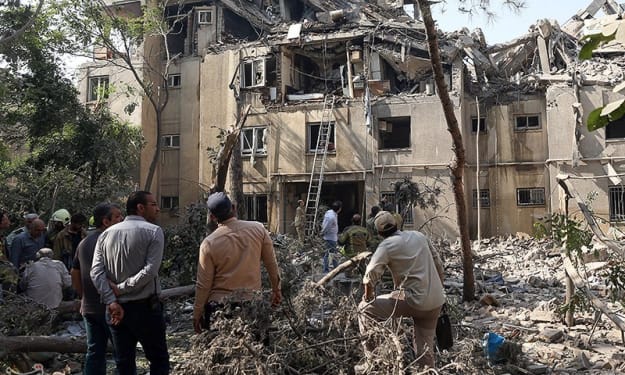
Iran erupted into unprecedented chaos after Supreme Leader Ayatollah Ali Khamenei was killed during targeted strikes on Feb. 28. Streets in Tehran filled with protesters, while retaliatory attacks hit U.S. bases in the Persian Gulf and the U.S. Embassy in Kuwait. Analysts warn that the violence could escalate into a wider regional crisis.
By Jacqueline Bowserabout 10 hours ago in The Swamp
UAE Court Orders Global Search Engine to Remove Offensive Video. AI-Generated.
In a landmark ruling that could reshape digital accountability and online privacy in the United Arab Emirates, a UAE court has ordered a major international search engine to remove an offensive video from its search results — establishing an important precedent for how global tech companies must comply with local judicial decisions. The case highlights the growing importance of digital dignity and the enforcement of online content regulation in the Emirates. Background of the Case The legal battle began when a video containing offensive material targeting a woman living in the UAE was posted on a global online platform. Despite local authorities prosecuting the individual responsible under existing cybercrime and digital content laws, the video remained accessible online, continuing to cause reputational harm. When the woman requested the removal of the content from public view, the international search engine failed to respond, prompting her to take legal action. In hearings at both the court of first instance and on appeal, judges considered whether the global technology company — which operates locally through a registered UAE entity — could be held responsible for content discoverable via its service. The company argued that it did not directly control the platform hosting the video and therefore should not be obliged to take action. Court Ruling and Legal Implications UAE judges ultimately ruled in favor of the plaintiff, concluding that local subsidiaries or legal entities of global tech firms are obligated to comply with judicial rulings, even if the company’s servers or management are located overseas. The court ordered the offensive content to be removed from search results accessible in the UAE. The ruling was upheld on appeal, after which the search engine complied and removed the video. Legal experts say the decision reflects a broader effort by UAE authorities to hold technology platforms accountable for the spread and persistence of harmful content online. The ruling reinforces that digital platforms with legal presence in the UAE cannot sidestep local court orders simply by pointing to operational structures abroad. One prominent digital law researcher described the decision as part of an expanding focus on the “right to digital forgetting” — a concept that allows individuals to petition for the removal of outdated, irrelevant, or privacy‑violating content that continues to harm their reputation online. Such legal frameworks seek to balance freedom of expression with protections for personal dignity and privacy in the digital age. Context: UAE Digital Laws and Enforcement The ruling comes amid heightened regulatory scrutiny of online content in the UAE. Authorities have recently warned residents and social media users against sharing unverified information, rumors, or misleading material, stressing that such conduct can be legally punishable if it threatens public security or social stability. The Federal Decree‑Law on Countering Rumors and Cybercrimes criminalizes the dissemination of harmful digital content and imposes penalties ranging from fines to imprisonment. The judiciary has also pursued defamation and privacy cases in other contexts. For example, influencers and social media users have faced fines, sanctions, and orders to delete defamatory content under UAE law, reflecting the broad application of online content regulations. Digital rights advocates note that UAE authorities place strong emphasis on content that threatens national stability or infringes on individual dignity. While freedom of expression remains protected within certain bounds, laws governing online behavior can be strict compared with many Western jurisdictions. Critics argue that this may have a chilling effect on online discourse, though supporters maintain such measures are necessary to maintain social harmony and protect individuals from harm. Impact on Global Tech Platforms The ruling signals to international technology companies that local legal presence in the UAE comes with legal responsibilities. Firms operating in the country through subsidiaries, offices, or registered entities must be prepared to respond to judicial orders — even those that involve content hosted beyond national borders. Compliance with such orders could increasingly become a condition of doing business in the region’s rapidly growing digital market. Experts say the decision may prompt other countries with strict online content laws to issue similar orders targeting global platforms. If more courts adopt comparable interpretations of digital accountability, search engines and social platforms might face a complex patchwork of legal obligations requiring greater resources for localized compliance. Conclusion The UAE court’s decision to compel a global search engine to remove an offensive video represents a defining moment in digital jurisprudence within the Emirates. It underscores the evolving landscape of online regulation, personal dignity protections, and corporate responsibility in the age of ubiquitous digital platforms. As governments around the world grapple with how best to balance free speech and harmful content, the UAE’s landmark ruling may influence broader debates on content moderation, privacy rights, and the obligations of international technology companies operating in diverse legal environments.
By Fiaz Ahmed about 11 hours ago in The Swamp
Has the LAUSD School Board Race Been Turned Upside Down?
“Ed was clearly a product that was rushed out, without any evidence for its efficacy, and without any transparency around the dealmaking process." — Lila Byock, founder of Schools Beyond Screens
By Carl J. Petersenabout 12 hours ago in The Swamp
Chinese Navy Inducts Additional Type 903 Fleet Replenishment Ships. AI-Generated.
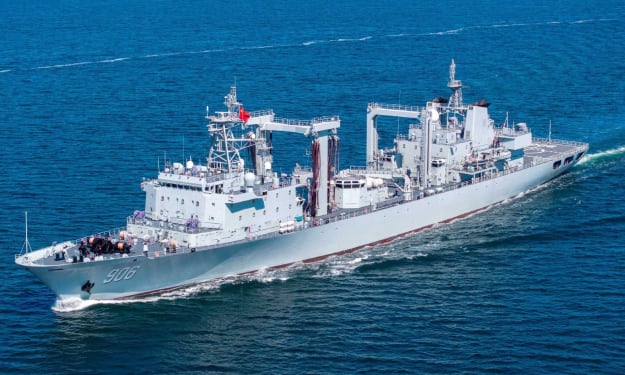
The People's Liberation Army Navy (PLAN) has officially inducted two more Type 903 fleet replenishment ships into service, marking a significant enhancement of China’s underway replenishment capabilities. The new vessels, designed to extend the reach and sustainability of PLAN task groups at sea, reflect Beijing’s ongoing efforts to modernize its naval logistics and support infrastructure in line with its expanding blue‑water aspirations. Type 903 replenishment ships — officially designated the Fuchi class — are a critical component of modern naval operations. Unlike traditional supply ships limited to port resupply, these vessels are capable of underway replenishment (UNREP), providing fuel, food, ammunition, spare parts, and other essentials to warships while both are underway. This capability enables naval task forces to remain operational far from home ports for extended periods without returning to port for resupply. The two latest additions, commissioned after rigorous sea trials and outfitting, join a growing fleet of Type 903s already serving with PLAN. The class has been continually upgraded since its introduction in the early 2000s, with enhancements to cargo handling, automation, and replenishment rigs to support coordinated supply operations with destroyers, frigates, and submarines. These improvements reflect a global trend toward logistics ships capable of integrating with advanced combat fleets in contested environments. Chinese naval analysts argue that the expanded replenishment fleet will bolster PLAN’s ability to conduct sustained missions across distant theatres. In recent years, China has increased its naval presence beyond regional waters, deploying task groups to the Gulf of Aden for anti‑piracy operations, participating in multinational exercises, and conducting port calls as far as Europe and Africa. The ability to maintain a forward naval presence depends heavily on replenishment ships like the Type 903. Strategic observers note that the enhanced logistics capacity also supports China’s evolving maritime strategy. As the PLAN transitions from a primarily coastal defense force to a more expeditionary blue‑water navy, reliable logistics become indispensable. Replenishment ships not only keep combatants supplied but also act as force multipliers by allowing carrier strike groups, amphibious assault vessels, and surface combatants to remain at sea for longer durations. In addition to fuel and supplies, modern Type 903 vessels are equipped with medical facilities and can support humanitarian assistance and disaster relief (HADR) operations. During previous deployments, Chinese replenishment ships have played roles in delivering aid following natural disasters and in supporting evacuation efforts for Chinese nationals in crisis zones. Such missions underscore the dual‑use nature of logistics vessels in both military and civilian contexts. Experts believe that the PLAN’s expanding fleet of Type 903s will complement China’s future naval infrastructure, including potential overseas support bases. While China maintains a formal logistics hub in Djibouti, additional forward support facilities would further enhance the PLAN’s global reach. Replenishment ships bridge gaps when overseas basing is limited or unavailable, allowing naval groups to sustain operations without relying solely on fixed installations. The induction of these ships also conveys a message about China’s industrial and technological capabilities. Building complex, ocean‑going logistics vessels requires advanced shipbuilding infrastructure, sophisticated engineering, and integrated supply systems. Shipyards along the Chinese coast have now demonstrated an ability to produce these vessels at scale, supporting not only the PLAN but also commercial shipbuilding demand. International reactions to China’s naval expansion have been mixed. Some observers view the strengthening of logistics capabilities as a natural evolution of a growing naval power. Others express concern about the implications for regional security dynamics, particularly in areas where China’s maritime interests intersect with those of rival powers or contested territorial claims. The debate often centers on whether increased logistical support signifies a shift toward power projection versus defensive posturing. Regardless of interpretation, the operational impact is clear: replenishment ships enhance fleet endurance. In naval parlance, logisticians say that “amateurs talk tactics; professionals talk logistics.” This adage underscores the importance of supply chains and support vessels — assets that rarely make headlines but are indispensable to sustained naval operations. As the PLAN incorporates these additional Type 903 ships into its order of battle, training and integration with existing formations will likely follow. Joint exercises, underway replenishment drills, and interoperability tests will ensure that the vessels can operate seamlessly with China’s surface combatants and submarines. In summary, the induction of additional Type 903 fleet replenishment ships represents a strategic investment in naval logistics by the People’s Liberation Army Navy. These vessels will enhance China’s ability to sustain maritime operations far from its shores, support humanitarian missions, and project influence in distant waters. As naval competition continues in the Indo‑Pacific and beyond, logistics ships like the Type 903 will play a vital role in shaping how maritime power is exercised.
By Fiaz Ahmed about 12 hours ago in The Swamp
Lufthansa Airbus A380 Becomes Most Tracked Flight in the World as First Departure From Abu Dhabi Following Airspace Closure. AI-Generated.
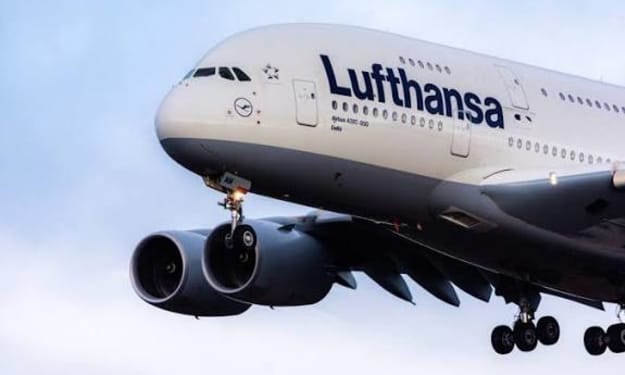
In the midst of ongoing turmoil in the Middle East that has dramatically disrupted global aviation, a Lufthansa Airbus A380 superjumbo has become the most tracked flight in the world after taking off from Abu Dhabi — marking the first departure from the emirate since widespread airspace closures paralyzed commercial aviation across the region. The aircraft’s unusual distinction stems from extraordinary circumstances: with much of the Gulf’s airspace shut or heavily restricted amid military conflict and safety concerns, aviation tracking platforms reported unprecedented attention from aviation enthusiasts and passengers alike as the A380 climbed out of Abu Dhabi’s skies. Flight trackers logged tens of thousands of simultaneous views of the aircraft’s transponder data, making it the most tracked flight globally in real‑time. Airspace Chaos and the First Takeoff The departure unfolded against the backdrop of one of the most severe aviation disruptions seen in decades. Following escalating regional tensions and military action involving United States and Israel operations against Iran, aviation authorities across the Gulf — including Iran, Kuwait, Qatar, Bahrain, and large parts of the United Arab Emirates — issued emergency Notices to Airmen (NOTAMs) closing or severely restricting airspace due to safety concerns. Major hubs such as Dubai International Airport and Abu Dhabi International Airport were among the hardest hit. Regional carriers including Etihad Airways, Emirates, and others suspended operations as a precautionary measure, leaving thousands of passengers stranded and grounding hundreds of flights. Despite these closures, special permissions were reportedly granted for select repositioning and evacuation flights to move aircraft and crews safely back to their home bases. The Lufthansa A380 departure was one such flight, executed under strict aviation safety protocols and arguably as part of a limited reinstatement of essential flights from Abu Dhabi’s airfield. Why It Became the Most Tracked Flight Under ordinary circumstances, an A380 departure would be notable for aviation fans but far from the most tracked flight globally. However, the unique situation in the Middle East — with most commercial routes suspended and millions of passengers and aviation observers glued to flight‑tracking websites — propelled this specific aircraft to the top of global tracking charts. Websites such as Flightradar24 and other flight‑monitoring platforms allow users worldwide to follow aircraft in real time via transponder data. The rarity of any large aircraft moving through the closed Gulf airspace, combined with heightened public and media interest in aviation developments during the crisis, drove record numbers of people to track the Lufthansa A380 as it climbed and vanished from the region’s constrained air In many cases, the aircraft was listed by trackers as a unique or “N/A” flight — a placeholder indicating limited public data due to airspace restrictions — which fueled curiosity and increased attention from users. This feedback loop of tracking activity made the flight one of the most‑viewed on global flight‑monitoring platforms. Broader Aviation Impact The A380’s tracking milestone illustrates just how deeply the Middle East crisis has impacted global aviation. With key air routes across the region closed, long‑haul airlines have been forced to reroute flights around the Gulf or suspend them entirely, significantly lengthening travel times and straining airline operations. Western carriers, including Lufthansa and others, have temporarily suspended flights to and from the UAE and surrounding states until at least early March, according to official aviation advisories. Even after limited departures resumed, the operation remained cautious and restricted, focusing on repositioning aircraft and assisting evacuation efforts for stranded passengers and crews. Reports indicate that some flights resumed to key cities like London and Munich, often with minimal crew onboard due to operational constraints. Public and Industry Reactions Travelers, aviation professionals, and flight‑tracking enthusiasts alike have reacted with curiosity and concern. For many on social media and tracking forums, the stark contrast between routine A380 operations in normal times and this extraordinary, almost symbolic departure underscores how geopolitical events can ripple through civilian domains like international travel. Aviation analysts point out that such disruptions highlight the vulnerabilities of global flight networks to geopolitical instability. Even carriers with large fleets and extensive international reach — like Lufthansa — must adapt to sudden airspace closures, route disruptions, and heightened risk environments. Looking Ahead While the Middle East situation remains fluid, the tracked A380 departure serves as both a hopeful sign of controlled resumption and a reminder of ongoing uncertainty in the global skies. As airspace authorities and airlines continue to assess safety, departures from impacted hubs may slowly increase — but each flight through the region will likely remain under heightened scrutiny by both the industry and the flying public.
By Fiaz Ahmed about 12 hours ago in The Swamp
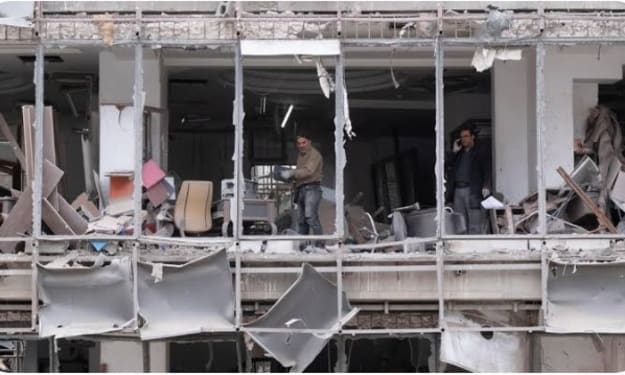
Middle East crisis live: Israel launches new attacks on ‘heart of Tehran’; US fighter planes mistakenly shot down in Kuwait. AI-Generated.
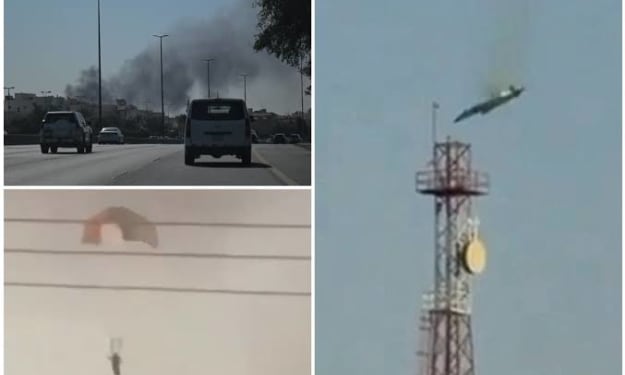
The Middle East is engulfed in a rapidly escalating conflict as joint Israel and United States military operations against Iran have expanded across the region, drawing in Gulf states and triggering chaotic engagements that include a rare friendly‑fire incident involving U.S. jets in Kuwait. The conflict, which began with large‑scale combined strikes on Iran’s military infrastructure and government targets, has entered a third day of intense violence. The Israeli Defense Forces (IDF) and U.S. forces have reportedly launched fresh attacks deep into Tehran, with explosions reported in multiple districts of the Iranian capital and Iran vowing to retaliate “regardless of the cost.” Israeli‑U.S. Strikes Deep in Tehran Israeli military sources said their air force carried out “broad wave” airstrikes targeting key strategic positions in the “heart of Tehran,” intensifying a campaign that began with a coordinated offensive involving hundreds of aircraft and missile launches. The joint operation aims at degrading Iran’s air defenses and military command structures after initial strikes reportedly killed high‑ranking officials. The strikes have been followed by repeated explosions across Tehran, underscoring the scale of the operation. While independent verification remains limited due to restricted access, multiple reports indicate that central districts of the capital have been rocked by heavy bombardment. Iran’s Regional Retaliation In response to the offensive, Iran has unleashed successive waves of missile and drone attacks aimed at Israeli territory, U.S. bases, and allied Gulf states. Explosions have been reported not only in Israel but also in other countries hosting American military assets, including Bahrain, Qatar, the United Arab Emirates, and Kuwait itself. The Iranian Islamic Revolutionary Guard Corps (IRGC) has described its actions as a legitimate defense against what it calls an aggressive campaign, asserting that all U.S. and Israeli targets across the region are legitimate military objectives and vowing to continue operations until its stated goals are met. Friendly‑Fire Incident in Kuwait Amid the swirl of attacks, a grave and unusual incident occurred in Kuwait when its air defense forces mistakenly shot down three U.S. fighter jets. According to United States Central Command, the aircraft—identified as F‑15E Strike Eagles—were downed when Kuwaiti defenses misidentified them as hostile while they were supporting coalition operations. All six aircrew ejected safely and were recovered in stable condition. Kuwaiti authorities have acknowledged the friendly‑fire mistake and are cooperating with U.S. military investigators to review procedures and prevent future errors. The incident, though non‑fatal, illustrates the confusion and heightened alertness sweeping across allied forces as the regional crisis unfolds. Regional Impacts and Civilian Consequences The conflict’s spillover has affected civilian populations and infrastructure beyond battlefields. Major cities across the Gulf region have reported explosions and air defense activations as Iranian missiles and drones targeted facilities and bases. Flights in and out of key hubs such as Dubai and Doha have been suspended due to airspace closures and safety concerns. Global markets have reacted sharply as well, with oil prices surging amid fears of broader disruption to energy exports through key transit routes like the Strait of Hormuz. Concerns over the safety of shipping lines and regional economic stability have sent shockwaves through international financial markets. Meanwhile, international leaders have urged restraint and called for diplomatic engagement to prevent further escalation. The United Nations, along with major powers worldwide, has expressed deep concern about the widening conflict and the risk of a broader regional war. Looking Ahead As fighting continues with no immediate sign of de‑escalation, military analysts warn that the dynamics of the conflict could evolve rapidly, with regional actors and global powers closely monitoring developments. The friendly‑fire episode in Kuwait highlights the risk of miscalculation amidst complex multinational operations, while repeated strikes in Tehran underscore the intensity of the U.S.–Israel campaign. For civilians across the Middle East, the escalation has brought renewed fear and disruption to daily life. Emergency services in multiple countries are on high alert, warning residents to seek shelter and stay informed amid intermittent missile alerts and explosions. The conflict’s trajectory remains uncertain, with world leaders pushing for urgent talks even as military actions continue unabated. As the crisis enters another critical phase, the international community watches anxiously, hopeful that diplomatic channels can avert a larger conflagration.
By Fiaz Ahmed about 12 hours ago in The Swamp